
I will tell a little story about this. The first time i went to the san juan range in Ouray/silverton area was in 2002. I had built my scrangler shortly before that. Was a pretty capable rig. Bit when i got there and signed up for trails with the all4 fun event i learned a lesson real quick like. First morning i went out about a half a mile and was over heated. Badly overheated. The old timers told me that electric cooling fan will never work at this altitude Mechanical fans work better and pull more air. So i limped back to town and commenced to resolving this situation. I drove 50 miles down to Durango and bought a 7 blade direct drive mechanical fan and a square trash can. For the lid. Came back and went to work. Installed that direct drive fan and built a makeshift fan shroud out of the trash can lid to fit my radiator. I then rewired that high dollar electric black max fan and put it in front of the radiator pushing air into the radiator. Worked perfect. I ran it the whole week without incident. Moral of the story. Make damn sure your cooling system is up to the task. Damn sure. Like over engineer it. And then worry about your fuel lines. Especially under the hood. Wrap them with heat protectors and get cool air flowing to your fuel lines. Its best to have you fuel pump in the tank if your injected. If not then get the pump as close to the tank as possible. Pumps are just that. A pump. Not a puller. If you are carburated. Try as best you can to protect your fuel lines from heat. The combination of heat and altitude cause vaporlocking. Carry a gallon of water to pour over you fuel lines if you lock up. Or cooler water. I cannot over stress these points. Go to work fellas. It will make your week go much better with preventative work rather than when you get there and hold up the whole group. Orange MikeThe following are some tips for getting your Scrambler ready for the trails of Colorado.
Preparing your Scrambler for the trails of the Colorado mountains requires focusing on high-altitude carburetor tuning, cooling system efficiency and reliable braking.
Mechanical & Trail Prep
Essential Gear
- Engine & Carburetor: Properly tune the carburetor for high elevation (7,000–13,000 ft) to prevent running too rich. Ensure a reliable ignition system.
- Cooling System: Ensure that your cooling system is in perfect condition with new hoses, sound radiator, proper thermostat and new radiator fluid. Steep inclines and thin air will cause over-heating on weak systems.
- Brakes & Steering: Properly functioning brakes are essential for the steep descents typical of the mountain trails. Check condition of pads and rotors, shoes and drums, hard and soft brake lines, master cylinder and the brake fluid itself. Replace, or upgrade, any questionable components before you hit the trails. A properly working emergency brake is a must have. Regarding steering, ensure that all steering linkage is in good condition and greased.
- Tires: While aggressive tires are not typically required for the trails we will be on, they do need to have good tread depth and relatively new. All-terrain tread patterns work well. Also include a good tire gauge that will read single digit pressures. Ideally, this gauge will allow for airing up and down. There will be sections of pavement on trail days so an air source for airing up at the end of the trails would be a good addition. CO2 tanks or portable compressors work well.
- Fluids: Check the following fluids: differentials, transmission, transfer case, power steering, master cylinder and coolant. Now would be a good time to fully service all fluids.
This list is not all-inclusive but should be a great starting point to get your Scrambler ready for the Ouray National!
- Recovery: It’s important that you have solid tow points both front and rear. A tow strap, or rope, with a #30k load rating and shackles (hard or soft) should be added to your kit. Tree saver strap. A winch is not required but does make a nice addition.
- Tools/Parts: Bring spare u-joints, axle shafts, belts, hoses, and fluids. A tool kit with wrenches, rachets, sockets, pliers, etc.
- Safety: Pack cold-weather gear (even in summer), sunscreen, and altitude sickness remedies. It is also recommended that you have a full first aid kit in the Jeep and any medications that you are currently taking.
- Communications: We will be using GMRS radios on the trails.
- Food & WATER: Bring plenty of water for all passengers. We will typically be eating on the trails so bring for lunch for you and your passengers. No alcohol on the trails.
- Full Top: The weather can change quickly in the mountains. Rain and even snow can roll in quickly. The ability to quickly add side windows to full soft tops, upper windows to half doors, etc, will keep your passengers warm and dry.
- Misc Gear: Leather work gloves. Flash lights. Charged fire extinguisher. Duct Tape. Rachet straps. Shovel. Nuts, bolts, screw assortment. Fuses and wire. Rain gear for all passengers. Maps or mapping app for phones/tablets.

You are using an out of date browser. It may not display this or other websites correctly.
You should upgrade or use an alternative browser.
You should upgrade or use an alternative browser.
2026 SOA Nationals - Event Announcement
- Thread starter Kaiser8
- Start date

- City
- Aurora
- State
- IL
IMPORTANT!
All Off-Highway Vehicles must have either a current or valid Colorado Registration Card and two Decals or one Colorado Off-Highway Vehicle Permit to operate in Colorado. This includes while in route, in staging areas and on public land roads and designated trails. Regardless of when they are purchased, both OHV Registrations and Permits are valid from April 1 through March 31 each year and are required annually.
Registration can be found here: https://cpw.state.co.us/register-off-highway-vehicle
You can register online and have the permit mailed to you, the website currently states 30 days for delivery. Or, you can purchase the permit once you get to Colorado. The Walmart or the CPW office in Montrose have them for purchase.
All Off-Highway Vehicles must have either a current or valid Colorado Registration Card and two Decals or one Colorado Off-Highway Vehicle Permit to operate in Colorado. This includes while in route, in staging areas and on public land roads and designated trails. Regardless of when they are purchased, both OHV Registrations and Permits are valid from April 1 through March 31 each year and are required annually.
Registration can be found here: https://cpw.state.co.us/register-off-highway-vehicle
You can register online and have the permit mailed to you, the website currently states 30 days for delivery. Or, you can purchase the permit once you get to Colorado. The Walmart or the CPW office in Montrose have them for purchase.

- City
- Cleveland
- State
- TN
So an already licensed/registered vehicle needs a second registration? Read the info on the site. Just another $$ grab... Typical...IMPORTANT!
All Off-Highway Vehicles must have either a current or valid Colorado Registration Card and two Decals or one Colorado Off-Highway Vehicle Permit to operate in Colorado. This includes while in route, in staging areas and on public land roads and designated trails. Regardless of when they are purchased, both OHV Registrations and Permits are valid from April 1 through March 31 each year and are required annually.
Registration can be found here: https://cpw.state.co.us/register-off-highway-vehicle
You can register online and have the permit mailed to you, the website currently states 30 days for delivery. Or, you can purchase the permit once you get to Colorado. The Walmart or the CPW office in Montrose have them for purchase.
- City
- Aurora
- State
- IL
I was talking to my jeeping buddies in Montrose and asked them whether we needed the permit or not. They're response was to get it because there are times when you don't know what type of "trail" you are actually on. They have seen people getting ticketed in areas that they thought didn't need permits but were actually on permit required trails. There is a list of trails in the area that need the permit, Black Bear is one as are most of the trails in Montrose. Like any .gov website, information is confusing, contradicting and difficult to find. When I was there a few years ago I bought the permit and never saw DNR, Forest Sevice, etc. Everyone's call on getting it or not.So an already licensed/registered vehicle needs a second registration? Read the info on the site. Just another $$ grab... Typical...


- City
- Joshua
- State
- Tx
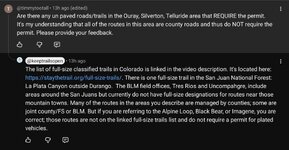
Great video. Chapter 10: road vs motorized trail clears up some of the confusion.This link has good info explaining Colorado OHV Permit / Registration.
- City
- Joshua
- State
- Tx

- City
- Farmington
- State
- NM
Being that I live close to CO I just get the permit. The cost is not that high. I have 4 Jeeps will all of them get to Colorado this year maybe not, but then, maybe they will. I just get the permit for all of them! Then if I am up there and get a wild a hair to go check something out I don't have to be worried about if I need it or not.

Belizeit
CJ-8 Member
- City
- River Ridge
- State
- La
Ok I registered this morning for the event. I will mail the fee to George asap. Got my room already . Will get my off-road stickers there after I arrive @ Whale-mart. Looking forward to doing my Colorado bucket list item so I can check that one off. 

- City
- Cincinnati
- State
- Oh
Is there a raffle thread yet? I have a few things to add.
- City
- Joshua
- State
- Tx
A friend is bulldozing some of the passes. This is California gulch. It's typically 50-60ft deep from wind swept snow. He said it's maybe 20ft deep this year.
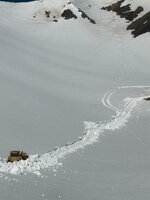
Top of engineer.
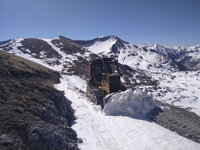
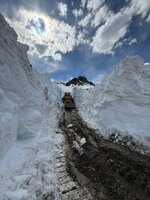
Top of engineer.
- City
- Joshua
- State
- Tx
Money. Sooner than passes are open sooner people come to spend money in the towns.Interesting. I’m surprised that they would even attempt to clear snow this deep and this early.


- City
- Birmingham
- State
- AL
Well, I am not going to be able to make the National in Ouray. I had an unexpected, but very welcome job change. The only negative on this change is that I won’t be able to get the week of the National off. But I look forward to making many Nationals in the next few years. Canceled my accommodations in Ouray. Maybe Jake can bring my t-shirts back to Bama for me. See y’all next time .
- City
- Aurora
- State
- IL
In past years, i have put mine on the windshield.So I received my Colorado off road permit. Where do you apply it? Windshield? Back bumper?