• Notice for iPhone users: DO NOT use the image size reduction option when uploading photos to the forum. This causes portrait images to post as landscape. We have added a warning to the image insert pop-up as well.

Help educate a non gear head

redking11

Scrambler Junkie
Lifetime Member
City
Farmington
State
NM
So I asked these questions in the "I bought another scrambler" thread but was told not to hijack the tread so I'll ask them here and see if I can get some answers:


Can someone help educate an non gear head.

1. Why is rack an pinion steering bad? What is the better alternative and why? After a quick wiki read, I'm under the impression that rack and pinion means there is a circular gear that moves a straight bat with teeth back and forth.

2. Second, what is bad with the column shifter /& floor shifter, what are these exactly? A typical stick shift for a manual or a floor shifter for an automatic transmission? and once again, what is the better alternative and why?

3. Why is a spring over 2.5" lift bad? what is better, why?

Thanks for the help and sorry for the noob questions but I have to learn somehow. I really wish I had spent more time in a garage as a kid.
 
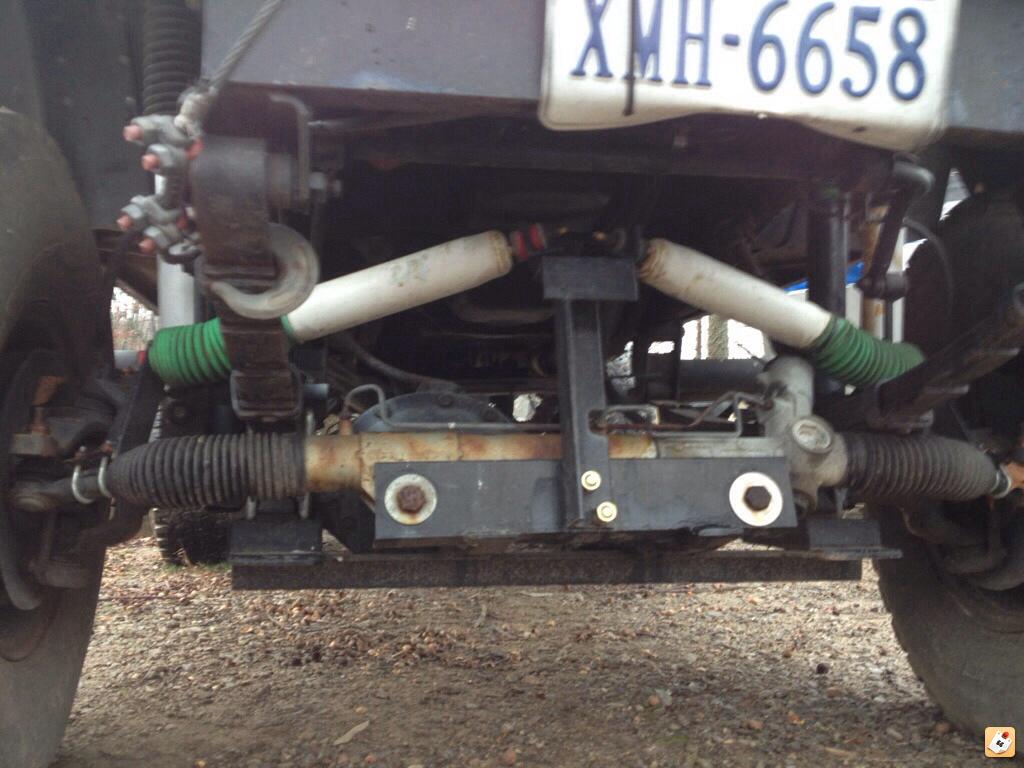
Nothing wrong with it rack and pinion per se in the right application. I think most would prefer it in an independent front suspension (IFS), but Jeeps have solid axles. On the thread you are talking about there was nothing safe about that rack and pinion system. On an IFS the rack is mounted to the frame; the rack does not move, the wheels do. In the thread, the rack would move with the suspension. You would need some kind of slip joint in shaft going back to the column. I did not see any pics in the original thread, but I can not imagine the interference that would result in trying to do this. That shaft would probably make contact with the motor mount (among other things). Also like a driveshaft if it was extended to far it could separate leaving you with no steering - that is bad. Basically, it boils down to good ways to fix the steering on a lifted vehicle and bad ways. The way this rack was installed was very bad and not safe.

I don't really understand what your question is on #2.

SOA plus 2.5" springs is just a lot of lift. SOA move the springs from under the axle to on top to the axles. It can be done safely and if you actually NEED that much lift do it. Many people go SOA because they think it is cheap. If you really price it out, the cost of SOA will be the same as a quality bolt on SUA kit.
 
I'm not sure I'm the best person to answer, but I'll take a stab!!

So I asked these questions in the "I bought another scrambler" thread but was told not to hijack the tread so I'll ask them here and see if I can get some answers:


Can someone help educate an non gear head.

1. Why is rack an pinion steering bad? What is the better alternative and why? After a quick wiki read, I'm under the impression that rack and pinion means there is a circular gear that moves a straight bat with teeth back and forth.

Rack and pinion steering is not bad, it is bad for a jeep on 35" ties with 7" of lift. Rack and pinion steering is on nearly every passenger car built today. The system is very precise and allows for very fine control with great feel for the road, this precision is also why it is not well suited for our application. Jeep CJs with large tires require a system that can allow for axles to articulate and have some play and flexibility between tires. The system that comes on our cjs uses a gearbox with a rotating arm connected to linkages that have joints to pivot the knuckle.

2. Second, what is bad with the column shifter /& floor shifter, what are these exactly? A typical stick shift for a manual or a floor shifter for an automatic transmission? and once again, what is the better alternative and why?

3. Why is a spring over 2.5" lift bad? what is better, why?

A spring over 2.5 inch lift also isn't bad.....it is just very difficult to do correctly without lots of intelligent design, planning and experience. Any spring under lift would be simpler to do correctly. This topic is well discussed on 4x4 forums on the webs, you could literally read for days on the topic.

Thanks for the help and sorry for the noob questions but I have to learn somehow. I really wish I had spent more time in a garage as a kid.
 
2. Second, what is bad with the column shifter /& floor shifter, what are these exactly? A typical stick shift for a manual or a floor shifter for an automatic transmission? and once again, what is the better alternative and why?

Well you got good answers to the first and last question, so I'll answer what I think you want to know on #2.

Really this just shows what is in my opinion, a "half-***" job. The jeep started life with an automatic. These were column shifts in the CJs. It was changed to a Manual transmission, thus the floor shifter, however the PO kept the column shifter in place along with the floor shifter. So it is something unneeded that is just hanging out there to get in the way. Other than early CJ-2as I think all manual shift jeeps were floor shift. I don't think automatics were floor shifters until the YJ. So a correct CJ would have either a column shifter for automatic, and floor shifter for a manual, but not both.

The only floor shifted factory automatic CJs that I know of were the Alaskan Postals.
 
And exported RHD CJs ;)

The column shift thing was a pick a part from another manufacturer, in this case GM. When automatics were first offered in 1976 with the introduction of the CJ7 , AMC went with what they were already using in FSJs, the GM sourced column. This same column lasted all the way till 86, with a few minor tweaks along the way. In YJs the column remained, with more changes, but still shifted the same way and was a column affair until the YJs end. When the TJ came out, it went to the floor.
 
Last edited:
Fixed it for you:

Many people go SOA because they think it is cheap. If you really price it out, the cost of SOA will be MORE THAN a quality bolt on SUA kit, and will take you more time to research and put together than just buying an SUA lift kit. There really is no "SOA" kit either, as the kits you see advertised generally just consist of spring perches and u-bolts. A properly and safely engineered SOA system requires welding, setting pinion angles, possible caster adjustments, and addressing extreme steering angles, in addition the everything required for a tall SUA kit: driveshafts, brake lines, shocks, pitman arm, swaybar links, new springs, new u-bolts, etc.. AND going SOA will require you to address axle wrap. Because people go SOA with a variety of springs using a variety of axles with a variety of spring perches, it's impractical to have a one-size-fits-all u-bolt (or shock). SOA systems really do require that you research the individual parts and put your own suspension together. When properly done, they are just as safe as SUA, but many people hack-together SOA and call it a day. I don't want to be anywhere near them on a highway.
 
Fixed it for you:

me3y4e8a-1.jpg


Sent from my iPhone
 
I suppose that's one way to deal with steering in an SOA application!

But, . . . NO!
 
Haha. !!
On a serious note thou. , I may need some professional help from guys like you and BAD KARMA in the future


Sent from my iPhone
 
Back
Top