• Notice for iPhone users: DO NOT use the image size reduction option when uploading photos to the forum. This causes portrait images to post as landscape. We have added a warning to the image insert pop-up as well.

Dammit! Transfer Case is leaking like a sieve. Please help me as I remove it.

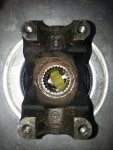
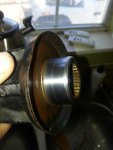
I cleaned up the rear end of the yoke with a scotch pad. you can see a line on it, and it does slightly catch a fingernail when drug across. I'm assuming this is ok unless told otherwise. 20140215_121039_resized.jpg
 
Hey man, breathe in through the nose, out through the mouth... In through the nose, out through the mouth... There you go... This is how you learn. I was freaked out when I did my first seal change on my motorcycle forks but now I've done a dozen. It sucks when you don't know exactly what parts are what, how much force is too much, "Am I missing a step?", etc.. Once you get this buttoned up you'll know how to change the next seal with out nearly as much confusion and frustration. Come back from the ledge man, come back from the ledge.
 
I cleaned up the rear end of the yoke with a scotch pad. you can see a line on it, and it does slightly catch a fingernail when drug across. I'm assuming this is ok unless told otherwise.
Again, it's not easy to tell from a photo, but it may not be a bad idea to buff that line out with some steel wool (or a brillo pad). The smoother the surface, the longer the seal will last.

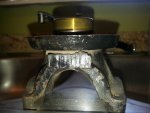
As for the burrs on the housing, the main thing is you don't want to scratch the new seal when you install it. The metal to metal contact area has to be free from all scratches or it will leak for sure. As someone mentioned above, a Dremel tool will clean that edge up pretty easy. If you don't have a Dremel, a half round file will work too. Probably a good idea to finish it off will some steel wool also.

I have a dremel and will get on it! I havnt destroyed the tcase yet. Life is good. I hope the engine mounts are ok after the trans was unsupported.
 
Also, you can apply a very light film of silicone in the housing just prior to tapping the new seal in place.
 
Last edited:
Old ones out: there is a $10 seal puller you can buy at most parts stores. Be careful not to mar the cast iron when you're pulling it out.

New ones in: I bought a small length of PVC pipe the same diameter as the seal from Ace for about $1.50. Use that to slowly and evenly drive the new seal into place.

This information is all out there on googles. There's all sorts of write-ups on disassembly and reassembly.

The question is still out there - what have you got supporting all this with the pan out?
I like the PVC pipe idea. This would work very well installing the new seal in the tranny just because of how he has it positioned on the ground
 
Expound please?

Since you have a metal housing and a metal seal and you are concerned about scratches allowing leaks. You can apply a very thin layer of RTV silicone then use the PVC pipe to tap the new seal in place. The silicone will dry and fill in any scratches.
 
Since you have a metal housing and a metal seal and you are concerned about scratches allowing leaks. You can apply a very thin layer of RTV silicone then use the PVC pipe to tap the new seal in place. The silicone will dry and fill in any scratches.

More detail. Would you apply the RTV on the inside of the housing with a finger before inserting the seal, or would you put the seal in first then apply the RTV to where the seal and the housing meet around the edges? The second seems better to me so that rtv doesn't get pushed into the bearings behind the seal
 
I would put a very thin layer in the housing with my finger or a very thin layer on the outside diameter of the seal. The key is very very thin layer. If you just put the silicone on the outside it would be pushed out by the oil.
 
I would put a very thin layer in the housing with my finger or a very thin layer on the outside diameter of the seal. The key is very very thin layer. If you just put the silicone on the outside it would be pushed out by the oil.

I'm assuming you would recommend Permatex - ultra black. Not real silicone.
 
So glad I can provide you with some entertainment Rusty. Waiting on the seals to arrive in the mail, I'm sure things will get exciting again once they do.
It's not just me, this thread has been read close to 1500 times at this point, there are a lot of folks tracking this one. I'm sorry if it's frustrating for you at this point, but it's baptism be fire and so far your holding up OK. I appreciate the fact that you had the balls to dive right in, maybe over your head just a little, but you haven't given up. Hang in there, I really can't wait to see what happens next....you are going to do fine.
 
After this the next crisis will probably seem smaller. And you'll have another shifter to play around with! I'm not gonna lie to you, I think getting the damn thing unbolted and out of the jeep would be the worst part!
 
I keep learning, for instance, as advised I sanded the outer edge of the Tcase where I made dents getting the old seal out. In hind sight I should have stuffed a cloth or paper towel in front of the bearing before sanding so that metal dust from the sanding would not get into the bearings. Always in hindsight! You would think that college would teach you to think ahead and foresee problems! Well my question is this, should I worry about some metal dust getting o the bearings? I wiped a way what I could see as best I could.
 
No metal dust would be preferable. However, if it was fine dust, it should get collected on the magnetic drain plug with no serious problems. I wouldn't worry too much about it.
 
Back
Top