• Notice for iPhone users: DO NOT use the image size reduction option when uploading photos to the forum. This causes portrait images to post as landscape. We have added a warning to the image insert pop-up as well.

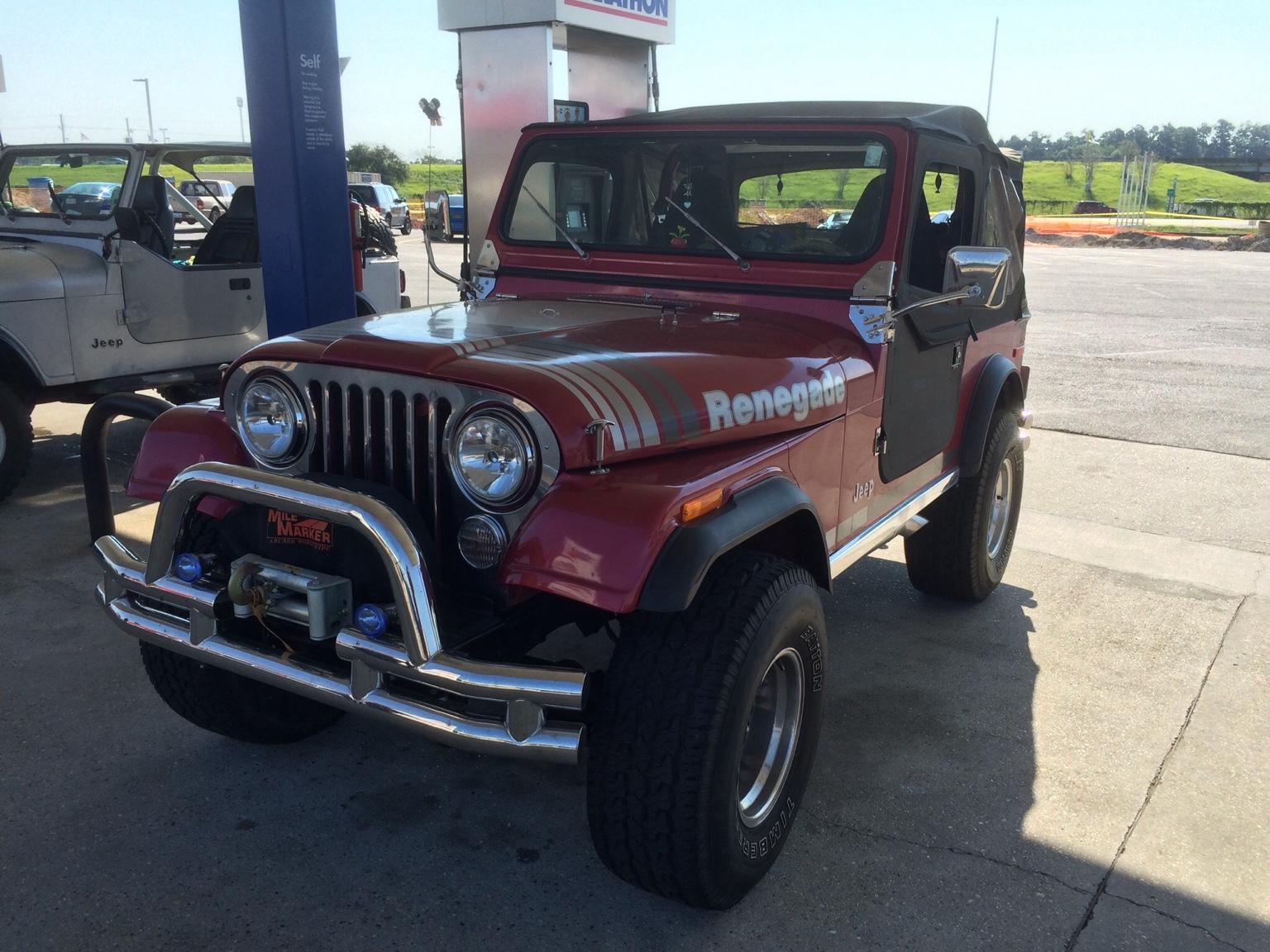
Spankrjs' 1984 Long Term Project

Just an FYI they make a filter that is threaded on engine side and barbed on tank side(like you made). I believe it was for the impala. I ran it in exact same spot as you have yours. Which Bilsteins are you running? On my wifes grand it did not take much of a load to have the same kind of issues you are talking about. Drove and rode fine empty.

Thanks for the info on the filter, a slightly shorter set up will help some :cheers::thumbsup::wave:

I am running 5125 series Bilsteins. They ride great, really smooth/soft. You may be right on the "loaded issues", maybe valved a bit too soft for when its loaded :shrug:
 
Tires and pressure good?

Sent from my SCH-I605


Tires are fairly new, maybe 12,000 miles, no funny wear. Tires ride pretty smooth, no alignment issues, tracks straight with no pulling or "crab walking".

I usually run 25psi, which after driving at sustained high speeds for a few hours, increases pressure to around 28psi. I even experimented, increased rear pressure to 30psi, then 35, no change in the handling. Actually feels more skittish with higher tire pressure.
 
Last edited:
I "think" we are supposed to go to the "Rock the Ozarks" thing, September 23, not 100%, I will update :thumbsup:

Kansas Krawl @ Kansas Rocks park Sept 24.
You could come on up for it too!
 
Finished tearing down the front suspension and steering, no issues were found, which is good :shrug:

1) Both center pins were fine, except a bit long, replaced with new pins
2) New U-bolts
3) No broken springs/bolts/bushings
4) Shocks good
5) Wheel bearings fine
6) Ball joints good

I should get it back on the road soon, hopefully the extra leafs in the back will make it a bit more stable :shrug::fingerscrossed:
 
Took the Scrambler on a quick ride last night, a few first impressions of the added leaves:

You can feel the difference. It definitely firmed the rear end up some, but the ride is not hard or harsh. The Scrambler does not exhibit the drastic body roll that it had before, even with the front sway bar hooked up. The Jeep feels much more "planted/solid", if that makes sense :twocents:

All in all, I am very happy with this modification :thumbsup: I will report back once I pack it back up and go to Missouri and back.

Another note - You could add these same leafs to the front RE spring packs, too. So, if the front starts sagging, this might cure that issue.

My red Scrambler has been running the same RE springs for over 30,000 miles, which involved lots of off roading on rocks. I am sure these springs have sagged some. I might add a leave to all four packs in the future, much cheaper then all new spring packs :twocents:


I also: changed oil, fixed gas gauge, and rotated tires. It is just about ready for its next road trip :fingerscrossed::thumbsup:
 
It's been about two weeks/250 miles/almost one tank of gas since the new fuel filter/ add a leaves. So far, so good.

I really like the add a leaves, they firmed the rear end up just right. The ride is still nice and smooth, but more planted.

I have been working this Scrambler the last two weeks, more yard clearing:

IMG_20160907_191848192_zpsqhitwx7b-1.jpg


This Scrambler will be heading up to SMORR in two weeks. That will probably be it's last long trip with me.

I need to get back to working on my Red Scrambler, potential new engine install, and the "other" red Scrambler in the yard.

That's it for now :thumbsup:
 
If you have troubles on the way I can cover you from about Clarksdale MS to Wynne AR.

You go up I55 through Memphis or ???
 
If you have troubles on the way I can cover you from about Clarksdale MS to Wynne AR.

You go up I55 through Memphis or ???

Thanks!!!! Well, hot fuel issue started again, every two hours. Then, every hour. Turned around to head home around Oxford, fuel pump died on a back road. Changed it out in the ditch, runs great again, headed home, too late to continue north :fingerscrossed:
 
Going to Ocean Springs first thing in the morning. If I see a scrambler along side the road I will pull over and help[emoji106]🏼


Sent from my iPad
 
Is it possible the pump needs to be mounted lower to reduce the NPSH?

Or raise the pickup slightly (I know this reduces effective fuel capacity)?

I know fuel pumps typically don't publish NPSH, and it would be even harder to calculate with such a short distance, small lines, and inexact measurements.....


SUBJECT : Cavitation

Cavitation means that cavities are forming in the liquid that we are pumping. When these cavities form at the suction of the pump several things happen all at once.

-We experience a loss in capacity.
-We can no longer build the same head (pressure)
-The efficiency drops.
-The cavities or bubbles will collapse when they pass into the higher regions of pressure causing noise, vibration, and damage to many of the components.

The cavities form for five basic reasons and it is common practice to lump all of them into the general classification of cavitation. This is an error because we will learn that to correct each of these conditions we must understand why they occur and how to fix them. Here they are in no particular order :

-Vaporization
-Air ingestion
-Internal recirculation
-Flow turbulence
-The Vane Passing Syndrome

Vaporization .

A fluid vaporizes when its pressure gets too low, or its temperature too high. All centrifugal pumps have a required head (pressure) at the suction side of the pump to prevent this vaporization. This head requirement is supplied to us by the pump manufacturer and is calculated with the assumption that fresh water at 68 degrees Fahrenheit (20 degrees Centigrade) is the fluid being pumped.

Since there are losses in the piping leading from the source to the suction of the pump we must determine the head after these losses are calculated. Another way to say this is that a Net Positive Suction Head is Required (N.P.S.H.R.) to prevent the fluid from vaporizing.

We take the Net Positive Suction Head Available (N.P.S.H.A.) subtract the Vapor Pressure of the product we are pumping, and this number must be equal to or greater than the Net Positive Suction Head Required.

To cure vaporization problems you must either increase the suction head, lower the fluid temperature, or decrease the N.P.S.H. Required. We shall look at each possibility:

Increase the suction head

-Raise the liquid level in the tank
-Raise the tank
-Mount the pump lower
-Reduce the piping losses.

These losses occur for a variety of reasons that include :

-The system was designed incorrectly. There are too many fittings and/or the piping is too small in diameter.
-Solids have built up on the inside of the pipe.
-A suction strainer is clogged.
-Be sure the tank vent is open and not obstructed.
-Something is stuck in the pipe
-The inside of the pipe, or a fitting has corroded.
-A bigger pump has been installed and the existing system has too much loss for the increased capacity.
-Lower the fluid temperature
-Insulate the piping
-Be careful of discharge recirculation lines, they can heat up the suction fluid.
-Reduce the N.P.S.H. Required

 
52e59e7ba748c6f0f0a01fab4d007380-1.jpg
8e5be4cde82a72adeb9a3df1dce2d803-1.jpg
. I did end up seeing a CJ8 & also CJ7 along the road at a gas station


Sent from my iPad
 
This is why I decided to go with a pump inside the tank so I wouldn't have to worry about overheating. I even go as far as refueling at 1/4 tank so the fuel pump is always in the fuel.
 
Right never run below 1/4 tank with in tank pump other wise you will burn up the pump from over heating. My buddy has replaced many Cherokee pumps for that reason


Sent from my iPad
 
Thanks!!!! Well, hot fuel issue started again, every two hours. Then, every hour. Turned around to head home around Oxford, fuel pump died on a back road. Changed it out in the ditch, runs great again, headed home, too late to continue north :fingerscrossed:

Well that stinks. Glad you made it home ok.
 
Is it possible the pump needs to be mounted lower to reduce the NPSH?

Or raise the pickup slightly (I know this reduces effective fuel capacity)?

I know fuel pumps typically don't publish NPSH, and it would be even harder to calculate with such a short distance, small lines, and inexact measurements.....


SUBJECT : Cavitation

Cavitation means that cavities are forming in the liquid that we are pumping. When these cavities form at the suction of the pump several things happen all at once.

-We experience a loss in capacity.
-We can no longer build the same head (pressure)
-The efficiency drops.
-The cavities or bubbles will collapse when they pass into the higher regions of pressure causing noise, vibration, and damage to many of the components.

The cavities form for five basic reasons and it is common practice to lump all of them into the general classification of cavitation. This is an error because we will learn that to correct each of these conditions we must understand why they occur and how to fix them. Here they are in no particular order :

-Vaporization
-Air ingestion
-Internal recirculation
-Flow turbulence
-The Vane Passing Syndrome

Vaporization .

A fluid vaporizes when its pressure gets too low, or its temperature too high. All centrifugal pumps have a required head (pressure) at the suction side of the pump to prevent this vaporization. This head requirement is supplied to us by the pump manufacturer and is calculated with the assumption that fresh water at 68 degrees Fahrenheit (20 degrees Centigrade) is the fluid being pumped.

Since there are losses in the piping leading from the source to the suction of the pump we must determine the head after these losses are calculated. Another way to say this is that a Net Positive Suction Head is Required (N.P.S.H.R.) to prevent the fluid from vaporizing.

We take the Net Positive Suction Head Available (N.P.S.H.A.) subtract the Vapor Pressure of the product we are pumping, and this number must be equal to or greater than the Net Positive Suction Head Required.

To cure vaporization problems you must either increase the suction head, lower the fluid temperature, or decrease the N.P.S.H. Required. We shall look at each possibility:

Increase the suction head

-Raise the liquid level in the tank
-Raise the tank
-Mount the pump lower
-Reduce the piping losses.

These losses occur for a variety of reasons that include :

-The system was designed incorrectly. There are too many fittings and/or the piping is too small in diameter.
-Solids have built up on the inside of the pipe.
-A suction strainer is clogged.
-Be sure the tank vent is open and not obstructed.
-Something is stuck in the pipe
-The inside of the pipe, or a fitting has corroded.
-A bigger pump has been installed and the existing system has too much loss for the increased capacity.
-Lower the fluid temperature
-Insulate the piping
-Be careful of discharge recirculation lines, they can heat up the suction fluid.
-Reduce the N.P.S.H. Required


I "might" be able to slightly lower the pump, but not by much. I could probably hang it below the cross member, but that would be a slight drop, might be worth it:twocents:
 
Back
Top