• Notice for iPhone users: DO NOT use the image size reduction option when uploading photos to the forum. This causes portrait images to post as landscape. We have added a warning to the image insert pop-up as well.

Zinc oil additive for flat tappet 258??

MomoJeep

Basic User
City
Seattle
State
WA
I have never gotten a conclusive answer to this question... Some say today's oils are NOT good enough for a flat tappet engine. That a zinc/ddp additive is needed. Other's say buy a high-quality oil and you'll be ok. I don't want to risk it. Does anyone know for sure if there are modern oils that good enough for flat tappet?

If so, which ones?
 
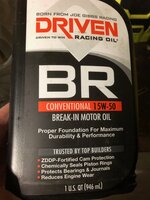
This stuff is what the shop I got my engine work done at recommended. This is the break in oil he said to use. image.jpeg I did get 240 K miles on my 4. Banger with Castrol and it was still running well
 
I run Valvoline 20w-50 Racing Oil, plenty of the good stuff in it. I run conventional, NOT synthetic. They also make it in 10w-30. Hesco built both my engines, that is what they recommend, so that's what I use. A bit pricey but I guess worth it :twocents::shrug:
 
I've been under the belief that Rotella diesel oil still contains plenty of zinc for flat tappet engines, just not recommended for catalytic convertors.
The additive formulations don't have that problem.
Cool, thanks! Are you saying the additives don't have the problem of being bad for cat converters?
 
Cool, thanks! Are you saying the additives don't have the problem of being bad for cat converters?
I don't think the ZDDP will cause issues with a cat. Lead is the problem for cats, not zinc I don't believe. Even if zinc were an issue, I wouldn't think it would be a factor unless you're burning oil.

I've run Rotella for years in my flat tappet engines without additive though and have had no issues. I run it now in my 351w with holley sniper and high performance cat and no issues yet after about 6000 miles since installing the cat.
 
Lol, I wish I got paid every time I see this discussion. Ok, so my 89 Chevy 1500 (flat tappet cam) had 320,000 miles on it when I sold it in perfect running condition. It ONLY ever saw conventional Valvoline 10W-30. My 94 Toyota pickup with 460,000 miles and my 93 Corolla with 390,000 miles saw conventional, then synthetic, then semi synthetic, then whatever I had laying around. Both ran great, no leaks, no problems. When I was a Toyota Tech I saw a lot of them with 300,000 to 500,000 miles or more and still running very strong. One camry had 700,000 miles and he always bounced back and forth between synthetic and conventional. All Toyotas (that I'm aware of) ONLY run flat tappets/shims. No hydraulic roller. No one I know of ever ran any kind of additive. Same with when I worked at Chevy and Dodge/Jeep. Many, many high mileage rigs out there running either conventional or synthetic with no additives or anything else special in their 4.0L, 350s, 258s, 5SFE, etc. I have had HUNDREDS of engines apart and not one of them EVER because of cam/lifter wear. This whole zinc additive thing was probably a lot more important back in the day when oils weren't as good. In today's world I run either Castrol, Valvoline, or Mobil and regularly bounce back and forth between synthetic and conventional (depends on my mood) in everything and have had ZERO issues. I have yet to see ANY evidence to say otherwise. I call 100% BS on anyone that says they had cam problems due to not having enough zinc. Every one I've ever seen is due to improper break in after a fresh rebuild or oil starvation.

Just my 2 cents.

 
I don't think the ZDDP will cause issues with a cat. Lead is the problem for cats, not zinc I don't believe. Even if zinc were an issue, I wouldn't think it would be a factor unless you're burning oil.

I've run Rotella for years in my flat tappet engines without additive though and have had no issues. I run it now in my 351w with holley sniper and high performance cat and no issues yet after about 6000 miles since installing the cat.
Cool, thanks! Are you saying the additives don't have the problem of being bad for cat converters?
I found this article, take it for what it's worth.

https://www.hyperlube.com/blog/engine/the-effects-of-zinc-oil-additives-on-older-engines/

I'd have to agree with Chamba on the oil burning comment.
Also, if you read further it kind of explains what Ron84cj has experienced.

:shrug: :shrug:
 
Something else to add, since magazine articles and various people make it sound like flat tappets haven't been used in decades and are ancient history. How many 90s vintage Chevy trucks and suburbans do you see on the road yet? I sure see a lot. Those all came flat tappet up until 99. Only the F body's and corvettes got the roller lifters. Lets get into the Jeep world. The 232, 258, and 4.0L all use flat tappet lifters all the way up to 2006. I know that most if not all even had the same part number. There too, how many Wranglers and Cherokees in the 90s and 2000s do you see especially with high mileage? A LOT. I can go on and on with this list but this serves my point. I find it very hard to believe that the majority of people driving the vehicles I mentioned are running additives or anything special. Ok, rant over. I feel better. Lol
 
Lol, I wish I got paid every time I see this discussion. Ok, so my 89 Chevy 1500 (flat tappet cam) had 320,000 miles on it when I sold it in perfect running condition. It ONLY ever saw conventional Valvoline 10W-30. My 94 Toyota pickup with 460,000 miles and my 93 Corolla with 390,000 miles saw conventional, then synthetic, then semi synthetic, then whatever I had laying around. Both ran great, no leaks, no problems. When I was a Toyota Tech I saw a lot of them with 300,000 to 500,000 miles or more and still running very strong. One camry had 700,000 miles and he always bounced back and forth between synthetic and conventional. All Toyotas (that I'm aware of) ONLY run flat tappets/shims. No hydraulic roller. No one I know of ever ran any kind of additive. Same with when I worked at Chevy and Dodge/Jeep. Many, many high mileage rigs out there running either conventional or synthetic with no additives or anything else special in their 4.0L, 350s, 258s, 5SFE, etc. I have had HUNDREDS of engines apart and not one of them EVER because of cam/lifter wear. This whole zinc additive thing was probably a lot more important back in the day when oils weren't as good. In today's world I run either Castrol, Valvoline, or Mobil and regularly bounce back and forth between synthetic and conventional (depends on my mood) in everything and have had ZERO issues. I have yet to see ANY evidence to say otherwise. I call 100% BS on anyone that says they had cam problems due to not having enough zinc. Every one I've ever seen is due to improper break in after a fresh rebuild or oil starvation.

Just my 2 cents.
Thanks for this, it's very helpful.. Can't beat first hand experience!

In my case, I had a head go bad after 25k miles. I don't know why. But I really DON'T want to go through that again! Mechanic said the top of the cam lobes have a slight angle to them (by design) so that the lifters get rotated. In my case the this cam angle was gone.
How did he determine the taper was gone? Did he just look at it or actually measure it? The reason I ask is it can be hard to tell just by looking at it. We're only talking about .001-.003.
 
Lol, I wish I got paid every time I see this discussion. Ok, so my 89 Chevy 1500 (flat tappet cam) had 320,000 miles on it when I sold it in perfect running condition. It ONLY ever saw conventional Valvoline 10W-30. My 94 Toyota pickup with 460,000 miles and my 93 Corolla with 390,000 miles saw conventional, then synthetic, then semi synthetic, then whatever I had laying around. Both ran great, no leaks, no problems. When I was a Toyota Tech I saw a lot of them with 300,000 to 500,000 miles or more and still running very strong. One camry had 700,000 miles and he always bounced back and forth between synthetic and conventional. All Toyotas (that I'm aware of) ONLY run flat tappets/shims. No hydraulic roller. No one I know of ever ran any kind of additive. Same with when I worked at Chevy and Dodge/Jeep. Many, many high mileage rigs out there running either conventional or synthetic with no additives or anything else special in their 4.0L, 350s, 258s, 5SFE, etc. I have had HUNDREDS of engines apart and not one of them EVER because of cam/lifter wear. This whole zinc additive thing was probably a lot more important back in the day when oils weren't as good. In today's world I run either Castrol, Valvoline, or Mobil and regularly bounce back and forth between synthetic and conventional (depends on my mood) in everything and have had ZERO issues. I have yet to see ANY evidence to say otherwise. I call 100% BS on anyone that says they had cam problems due to not having enough zinc. Every one I've ever seen is due to improper break in after a fresh rebuild or oil starvation.

Just my 2 cents.
Ron84cj, what is your opinion on how to properly break-in a new rebuild on a 258? I have about 2000 on a new rebuild and never thought about it other than new fresh oil and filter after 1k.
 
Ron84cj, what is your opinion on how to properly break-in a new rebuild on a 258? I have about 2000 on a new rebuild and never thought about it other than new fresh oil and filter after 1k.
On any fresh rebuild, THAT is when I use break in additive along with conventional oil, NOT SYNTHETIC. That first 30 minutes is critical. The cam and lifters establish a wear pattern. If your engine has dual valve springs, take out the inner springs for break in. The split second the engine fires bring it up to 2000 rpm and never let it go below that. Vary the rpms between 2000-2500 rpm for 30 minutes. Shut it off, put your inner springs back in, and and do an oil change. CONVENTIONAL oil ONLY! Then drive it. DO NOT BABY IT! The rings need to seat properly. That doesn't mean do burnouts everywhere, but you should have a fairly heavy foot on the skinny pedal. After 100 miles change oil, then again at 1000 miles. If you want to switch to synthetic I recommend you wait until at least 5,000-6,000 miles.
 
Last edited:
On any fresh rebuild, THAT is when I use break in additive along with conventional oil, NOT SYNTHETIC. That first 30 minutes is critical. The cam and lifters establish a wear pattern. If your engine has dual valve springs, take out the inner springs for break in. The split second the engine fires bring it up to 2000 rpm and never let it go below that. Vary the rpms between 2000-2500 rpm for 30 minutes. Shut it off, put your inner springs back in, and and do an oil change. CONVENTIONAL oil ONLY! Then drive it. DO NOT BABY IT! The rings need to seat properly. That doesn't mean do burnouts everywhere, but you should have a fairly heavy foot on the skinny pedal. After 100 miles change oil, then again at 1000 miles. If you want to switch to synthetic I recommend you wait until at least 5,000-6,000 miles.
I personally would wait longer than 5-6K.
 
Lol, I wish I got paid every time I see this discussion. Ok, so my 89 Chevy 1500 (flat tappet cam) had 320,000 miles on it when I sold it in perfect running condition. It ONLY ever saw conventional Valvoline 10W-30. My 94 Toyota pickup with 460,000 miles and my 93 Corolla with 390,000 miles saw conventional, then synthetic, then semi synthetic, then whatever I had laying around. Both ran great, no leaks, no problems. When I was a Toyota Tech I saw a lot of them with 300,000 to 500,000 miles or more and still running very strong. One camry had 700,000 miles and he always bounced back and forth between synthetic and conventional. All Toyotas (that I'm aware of) ONLY run flat tappets/shims. No hydraulic roller. No one I know of ever ran any kind of additive. Same with when I worked at Chevy and Dodge/Jeep. Many, many high mileage rigs out there running either conventional or synthetic with no additives or anything else special in their 4.0L, 350s, 258s, 5SFE, etc. I have had HUNDREDS of engines apart and not one of them EVER because of cam/lifter wear. This whole zinc additive thing was probably a lot more important back in the day when oils weren't as good. In today's world I run either Castrol, Valvoline, or Mobil and regularly bounce back and forth between synthetic and conventional (depends on my mood) in everything and have had ZERO issues. I have yet to see ANY evidence to say otherwise. I call 100% BS on anyone that says they had cam problems due to not having enough zinc. Every one I've ever seen is due to improper break in after a fresh rebuild or oil starvation.

Just my 2 cents.
You really should do some more investigation or reading if you want to call BS on cam problems. Specifically, the American Engine Rebuilder's Association (AERA) Bulletin #TB2333 addresses this specific issue. There also is quite a bit of other information out there that relates to this issue. Comp Cams also addressed this issue with their bulletin.... https://www.compcams.com/pub/media/wysiwyg/CompCams/FlatTappetCamTechBulletin.pdf Back somewhere around 2005 we had a couple of cams get wiped at the shop for no good reason. We build performance engines and do a lot of them along with installing them and the break in side so it's not like our procedures ever changed. So we contacted the AERA to find out what was going on and they mentioned the zinc levels were cut way back(unknown to the users in the industry) and shortly afterwards the bulletin came out. They recommended using Rotella T because apparently the had not pulled the zinc out of that oil(yet). Not too long after that, even Rotella cut back their zinc additive. Now we only use specific high content break in oil and add the additive to every oil change with no further issues.
Also, your experience with your vehicles may also be skewed. The total mileage does not indicate how many miles were accrued while using the older style oils relative to miles accrued using the newer oils. The type of driving of the vehicles also can impact wear too. If there are more miles on the road driving vs sitting in traffic at idle, that can change wear or wear patterns. The analogy is kind of like trying to push a very heavy cardboard box across a smooth concrete floor. It is very difficult to get it moving initially but gets a lot easier once it gets going. At idle, the components have less inertia to keep going as it would at a higher rpm. Now your valve spring pressures need to be taken into account. If your engine has high mileage, your spring pressures are quite a bit lower than where they started out life at. Everything is relative.....
 
mysunnshine, if you look at my previous post I did say I use break in additive on a fresh rebuild for break in. Once properly broken in I have never used any additive nor have my customers that I'm aware of. I have never had a cam failure with any of my builds. If you wish to stick with an additive for the life of an engine then great. I just firmly believe it's not necessary. I have done a hefty amount of reading on the subject and I am simply sharing my experiences on the matter. I have spoken to comp cams several times through the years regarding this issue and every time they tell me the additive is only needed for proper break in. The last time I had a conversation with them about this was about a year ago. So it's not like I'm just holding on to info from decades ago. Yes, springs fatigue a little through the years. But not to the point where that is the determining factor whether or not a cam is going to live. I'm not sure about by you, but in my area damn near every other vehicle on the road is a 90s vintage Chevy truck, Suburban, or Tahoe. They are all over the place constantly being driven, bought, sold, and driven by different people with different driving styles. They pulled zinc out of oil a good number of years ago at this point. If the (new) oil is so bad then why aren't all these trucks killing cams? I would certainly think we would be seeing a lot of failures after all these years. I had the engine in my 98 Camry completely apart about 2 or 3 years ago. I replaced every gasket and seal including the valve seals. While I was in there I checked my valve lash. Not only was it in spec it was very much on the tight side. This was at 200,000 miles of very mixed driving through its life. My wife was easy on it and me...not so much.

For the record, I'm not trying to act like a smart a$$ here. I'm only sharing my opinion and experiences on the subject. If anyone doesn't trust it that's completely fine. Do whatever you feel is best for your engine. If someone just wants an additive every time for a peace of mind, then absolutely go for it.
:cheers:
 
How did he determine the taper was gone? Did he just look at it or actually measure it? The reason I ask is it can be hard to tell just by looking at it. We're only talking about .001-.003.
The machine shop determined the taper was gone. They measured it.

It was a Comp cam ("rv"). There were stainless steel valve springs.

Also, I drove under a heavy load, 3000 mile road trip, long long hours each day through hot summer weather and over mountain passes. But Istill don't think this should have caused it alone. This was 20,000 miles after a rebuild and I was not using zinc additive, nor was I paying much attention to which brand of oil I was buying.
 
Back
Top