• Notice for iPhone users: DO NOT use the image size reduction option when uploading photos to the forum. This causes portrait images to post as landscape. We have added a warning to the image insert pop-up as well.

4.0L MPI vapor lock & fuel rail heat shielding

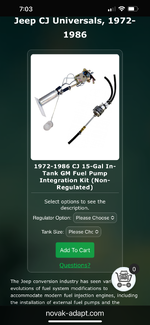
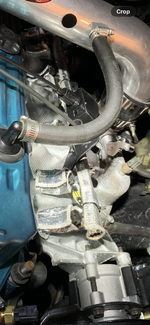
I fought vapor lock problems for quite a while. It seemed to only happen at elevations above 3000 feet, and warm weather. I also installed a heat shield, insulated my fuel rail, as well as my fuel lines. I even rerouted my fuel lines to the passenger side, and crossed over under the Radiator to the driver side. None of this worked. I finally figured out my fuel pump was getting really hot ( my temp gun said that my fuel pump was around 120) When I purchased the Mopar Fuel Injection kit from Hesco, the kit instructions tell you to mount it in front of the fuel tank. This is also above the rear axle and exhaust. A lot of heat gets trapped in this area, and the fuel pump gets really hot….. at least mine did. I ended up buying an in tank fuel pump from Novac. It’s made for CJ tanks and Fuel Injection systems. This completely solved my problem.
 

Attachments

  • IMG_0682.png
    IMG_0682.png
    679.2 KB · Views: 6
I fought vapor lock problems for quite a while. It seemed to only happen at elevations above 3000 feet, and warm weather. I also installed a heat shield, insulated my fuel rail, as well as my fuel lines. I even rerouted my fuel lines to the passenger side, and crossed over under the Radiator to the driver side. None of this worked. I finally figured out my fuel pump was getting really hot ( my temp gun said that my fuel pump was around 120) When I purchased the Mopar Fuel Injection kit from Hesco, the kit instructions tell you to mount it in front of the fuel tank. This is also above the rear axle and exhaust. A lot of heat gets trapped in this area, and the fuel pump gets really hot….. at least mine did. I ended up buying an in tank fuel pump from Novac. It’s made for CJ tanks and Fuel Injection systems. This completely solved my problem.
WOW...! Thank you for this information. I have the same setup a you describe (Mopar/HESCO). This saves me a lot of time and work! I was planning to re-route to the passenger side, but now I won't bother! I can further validate your solution in that it's my *fuel pump* that starts to get noisy before the vapor lock happens. Being so hot explains why it gets noisy..!

I had previously thought that in front of the tank and up above was a better location because it so much easier to replace. But in 12-15 years, I've never had to replace that pump! Does the in-tank pump have the same reliability!?
 
Question,

When you re-routed to passenger side, I'm assuming you moved the external pump to the passenger side as well..? Did it still get too hot even thought it was no longer directly above the exhaust?
 
When I rerouted to the passenger side, I did not move the pump. Once I realize that the fuel pump was getting hot, I decided that an internal pump was a better answer. My pump was also getting really loud when it would heat up. I just changed it to the internal pump once I realize the problem. I was told with the external pump you needed to keep it as close to the tank as possible, because it wasn’t really made for pulling fuel, more for pushing. With the pump inside the tank now, you can’t even hear it.
I’ve been running the internal pump for about three-four years, with no problems.
About two years ago I decided to convert my other Scrambler to the internal pump as well. After about six months of running that Jeep, I did have a failure. I dropped the tank and realized one of the fuel lines burst. It was a short hose that connected the pump to the s sending unit. I called Novak, and they explained to me that their manufacturer switched to a different fuel line that turned out to be non-submersible fuel line. They sent me the proper fuel line, and a new pump at no charge. I repaired the old pump, and reinstalled it. I put the new pump on the shelf for a spare.
 
Quick note, on my second Scrambler, I did not reroute the fuel lines, only changed the fuel pump to internal. No problems with vapor locking.
 
I used a flexible covering to prevent vapor lock on my 4.0 when I dod my swap. I believe the brand is DEI

Hopefully you can see it in my pic. Has a cover for the fuel rail, covers for the injectors, and a shield for the manifold.


IMG_3550.png
 
I used a flexible covering to prevent vapor lock on my 4.0 when I dod my swap. I believe the brand is DEI

Hopefully you can see it in my pic. Has a cover for the fuel rail, covers for the injectors, and a shield for the manifold.


View attachment 120777
I did the same thing. I bought a couple of rolls of the DEI heat shield/insulation. Helped a little, but didn’t cure in my case. I ended up taking it all off because I was afraid I wasn’t getting airflow to the components to help cool. I felt like I was trapping heat on the injectors and fuel rail. I did leave the heat shield in place. I purchased the heat shield from dodge/Mopar

I think everybody’s situation/ altitude and climate are different. I was experiencing vapor lock in the high desert with temperatures in the 80s and 90s. Low speeds, idling around. Also high altitude, Sierra’s. 7-9000 feet of elevation. Low speed, windy roads. Very little airflow to cool things off.

I never experienced vapor lock, driving down the highway, or cruising down the back roads. With a pump in the tank now, I have not experienced vapor lock at all.
 
I have never had vapor lock myself so I have no idea if what I did helps or not. I did it before I ever got the motor started.
 
When I rerouted to the passenger side, I did not move the pump. Once I realize that the fuel pump was getting hot, I decided that an internal pump was a better answer. My pump was also getting really loud when it would heat up. I just changed it to the internal pump once I realize the problem. I was told with the external pump you needed to keep it as close to the tank as possible, because it wasn’t really made for pulling fuel, more for pushing. With the pump inside the tank now, you can’t even hear it.
I’ve been running the internal pump for about three-four years, with no problems.
About two years ago I decided to convert my other Scrambler to the internal pump as well. After about six months of running that Jeep, I did have a failure. I dropped the tank and realized one of the fuel lines burst. It was a short hose that connected the pump to the s sending unit. I called Novak, and they explained to me that their manufacturer switched to a different fuel line that turned out to be non-submersible fuel line. They sent me the proper fuel line, and a new pump at no charge. I repaired the old pump, and reinstalled it. I put the new pump on the shelf for a spare.
Thanks for the info! In my case (a) I really dislike dropping the fuel tank and (b) I go over-landing for days sometimes, in remote areas with a spare parts kit. I really like ease of serviceability. Also, it seems too much heat going into the fuel delivery system can happen at multiple locations. So I am wondering, if you had moved your external fuel pump to the right side along with the re-route, do you think it still would have gotten too hot?

Has anyone done the passenger side re-route (also moving the external pump to that side)?
 
Thanks for the info! In my case (a) I really dislike dropping the fuel tank and (b) I go over-landing for days sometimes, in remote areas with a spare parts kit. I really like ease of serviceability. Also, it seems too much heat going into the fuel delivery system can happen at multiple locations. So I am wondering, if you had moved your external fuel pump to the right side along with the re-route, do you think it still would have gotten too hot?

Has anyone done the passenger side re-route (also moving the external pump to that side)?
At one point, I actually had the pump mounted behind the tank. This was a lot better, but eventually it’s still vapor locked on a hot day. I chalked it up to no airflow to cool the pump. I never tried mounting it on the passenger side. It’s worth a try. I kept the electric pump in place, in case the in tank pump goes out.

If you move it to the passenger side, let us know how it works.
 
At one point, I actually had the pump mounted behind the tank. This was a lot better, but eventually it’s still vapor locked on a hot day. I chalked it up to no airflow to cool the pump. I never tried mounting it on the passenger side. It’s worth a try. I kept the electric pump in place, in case the in tank pump goes out.

If you move it to the passenger side, let us know how it works.
Hey I was noticing your handle "High Sierra".. I met a guy with a Scrambler once years ago when I was driving mine up through the Lone Pine, Big Pine, Bishop area.. Maybe that was you?
 
At one point, I actually had the pump mounted behind the tank. This was a lot better, but eventually it’s still vapor locked on a hot day. I chalked it up to no airflow to cool the pump. I never tried mounting it on the passenger side. It’s worth a try. I kept the electric pump in place, in case the in tank pump goes out.

If you move it to the passenger side, let us know how it works.
So you ran two electric pumps simultaneously?

Yes, if I move it to the passenger side, I'll update on how it goes. In fact, I'm planning to give my Scrambler new phase of build coming up soon. It'll be the 3rd iteration... Best version yet, maybe!
 
Hey I was noticing your handle "High Sierra".. I met a guy with a Scrambler once years ago when I was driving mine up through the Lone Pine, Big Pine, Bishop area.. Maybe that was you?
It could’ve been me, but I don’t remember meeting another Scrambler owner. I live on the west side of the Sierra’s, but I have spent some time in the lone pine area.

I didn’t run two electric pumps together, I just left the electric pump, mounted and unhooked after I installed the in tank pump. I figured if I had a failure, I could hook the old pump up in a pinch.
 
WOW...! Thank you for this information. I have the same setup a you describe (Mopar/HESCO). This saves me a lot of time and work! I was planning to re-route to the passenger side, but now I won't bother! I can further validate your solution in that it's my *fuel pump* that starts to get noisy before the vapor lock happens. Being so hot explains why it gets noisy..!

I had previously thought that in front of the tank and up above was a better location because it so much easier to replace. But in 12-15 years, I've never had to replace that pump! Does the in-tank pump have the same reliability!?
Wow, I have had to replace mine (mounted in the same place) multiple times since I put in the 4.0.

My big thing about in-tank pumps, having helped a couple people drop tanks to replace them, was that I wasn't ever going to put one in unless I had an access hatch in the bed to get to it from above. That rule kept me from ever going with one.

When planning/buying everything for my stroker swap, I was looking at the Genright tank/skid combo and saw the "you may also be interested in"...


I now have one of these sitting with the tank/skid and a Tanks Inc in-tank fuel pump setup waiting to go in.
 
It could’ve been me, but I don’t remember meeting another Scrambler owner. I live on the west side of the Sierra’s, but I have spent some time in the lone pine area.

I didn’t run two electric pumps together, I just left the electric pump, mounted and unhooked after I installed the in tank pump. I figured if I had a failure, I could hook the old pump up in a pinch.
GREAT PLAN!
 
Wow, I have had to replace mine (mounted in the same place) multiple times since I put in the 4.0.

My big thing about in-tank pumps, having helped a couple people drop tanks to replace them, was that I wasn't ever going to put one in unless I had an access hatch in the bed to get to it from above. That rule kept me from ever going with one.

When planning/buying everything for my stroker swap, I was looking at the Genright tank/skid combo and saw the "you may also be interested in"...


I now have one of these sitting with the tank/skid and a Tanks Inc in-tank fuel pump setup waiting to go in.
Nice access hatch!

My fuel pump is the original from HESCO. I was told they are very tough and reliable. Which brand/type of pump were you using that had to be replaced frequently?
 
Nice access hatch!

My fuel pump is the original from HESCO. I was told they are very tough and reliable. Which brand/type of pump were you using that had to be replaced frequently?
Part store equivalent of whatever it was... E3000? Stock Ford replacement that everyone used for this application. Note that those replacements were over a LOT of miles driving around the country. I wouldn't really complain about any of them going "too soon" with the way I used the Jeep and, like you said, this isn't really the perfect application for it and sitting in a harsh environment :shrug:

For example, one was in a part store parking lot in ND on the way to the Black Hills National Scramble after driving most of the way from MI.
 
One thing to note about the externals getting overly loud, I had that happen on my 78 Cherokee when I first swapped on a FAST TBI EFI with an external pump. Turned out that the PO had tried to seal the sending until up with WAY too much RTV and blobs of it were floating in the tank. One sucked up into the pickup and was partialy blocking it. They get loud when they're starved too and I wonder if the pickup lines in the stock tank are marginally too small for this kind of pump.

Just saying that it doesn't have to be heat if they're loud.
 
For what it’s worth, I have a friend who back in the day when Cherokees were everywhere you looked ( late 80s - early 2000s ) said to tell my wife ( Cherokee 96 ) to never run the fuel tank below 1/4 full. He had changed out way to may pump in tanks. He said it’s the fuel that cools the pump. In 20 years we never had to change one. :thumbsup:
 
Back
Top