• Notice for iPhone users: DO NOT use the image size reduction option when uploading photos to the forum. This causes portrait images to post as landscape. We have added a warning to the image insert pop-up as well.

Spankrjs' 1984 Long Term Project

After 2 1/2 hours seems hard to believe there would be much difference in temperature between 65 mph and 75 if the engine is not over heating


Sent from my iPad

Engine never goes higher then 200. I am "assuming" that little bit of extra speed, requiring that little bit more fuel flow, causes the issue :shrug: If I stay at 70 MPH, no problem.

The 350 that was in my Scram was out of a truck and it did have braided flex line down along the trans. The feed line threaded into a filter with a short rubber line connecting to the hard line. The return threaded into a barb with short hose to the return. Not sure what year the 350 was out of but I think it was the first year with serpentine belt.

I'm not a "Chevy Expert", but I believe that all the TBI rigs have the serpentine set up, and I believe '88 was the first year for TBI in trucks. From some "research", the '88-'90 model trucks used the rubber braided lines, '91 and up TBI trucks used the hard lines all the way to the TBI.

I am leaning toward the hard lines from the TBI all the way down the transmission. I will then tie them into my existing frame mounted hard lines with a short section of rubber hose, to allow for movement. I think this is my best option, but I need to go to the junk yard tomorrow to verify/check clearances :fingerscrossed:
 
So when you have this issue, do you think that the pump mounted in front and above the tank can not "suck" fuel up from the sender? You know where I'm going with this......LOL

Maybe so :cool: I have heard some people will mount a low pressure electric pump, 4-5psi, between the tank and external pump, to eliminate this issue. I think before I do that, which adds more complexity/failure points, I would go the "in tank" pump route :twocents:

But, if the fuel is getting hot, wouldn't mounting the pump in hot fuel make the issue worse :shrug:

My problem is right at the edge, 99% of the time, no problem. I "think" re-routing the fuel lines will give me that little bit I need to eliminate the issue. If not, well, re-routing the fuel lines can't hurt anything. An in tank pump would be the next avenue to explore.

If my issue is "vapor lock", it must be a slight problem. The engine never dies, no hot re-start problems, and if I slow down a bit, the problem disappears. New cold fuel always fixes the issue, so :shrug:


And a light bulb goes on.
I just couldn't help myself.

LOL :rotfl: :wave:
 
How much do you think the high temperature of the exhaust under the Jeep contributes to vapor lock of the fuel pump? Have you ever used an infrared temperature gun to check the underside? Heat rises and that is where your pump is. It also does not have direct outside air contact either. So now the fuel starts to vaporize causing aeration. But....if you put the entire system under pressure(pump in the tank), the boiling point increases. Of course 45-60psi is better than 25 but something is better than nothing. Now throw some E10 fuel in the mix and it gets worse.....Just saying.....

Sent from my SM-G920V
 
If you scan the computer, you will probably see positive fuel trims the closer it gets to vapor lock. 😉

Sent from my SM-G920V
 
My Stump Jumper with the 5.3L Vortec requires 58lbs pressure and has a return line.. I ran braided fuel line with Alum AN fittings front to back and most of it is less than 6 inches away from the exhaust pipe. So far I have had no problems with fuel issues except that I am running a Jeep YJ pump in a GenRight fuel tank and I believe the pump only supplies 52 lbs of fuel pressure.
But my point is that braided line may supply more heat protection than rigid lines.
 
How much do you think the high temperature of the exhaust under the Jeep contributes to vapor lock of the fuel pump? Have you ever used an infrared temperature gun to check the underside? Heat rises and that is where your pump is. It also does not have direct outside air contact either. So now the fuel starts to vaporize causing aeration. But....if you put the entire system under pressure(pump in the tank), the boiling point increases. Of course 45-60psi is better than 25 but something is better than nothing. Now throw some E10 fuel in the mix and it gets worse.....Just saying.....

Sent from my SM-G920V

15psi

Sent from my SM-G920V


The fuel pump is never really "hot", you can place your hand on it without getting burned. It is "warm", but not terrible.

The pump sits on the front gas tank cross member, facing air flow, so it does get air movement around it. But, you are right, it is "hot" under chassis/road heated air.

My fuel lines run on the PS rail, my exhaust runs down the DS. But, the exhaust pipe does come close to the side of the gas tank/skid plate, just like factory. The gas tank is plastic, skid plate is metal, I wonder how much heat transfer occurs there?? The exhaust pipe ends past the tank, so no direct exhaust heat blowing on the tank.

I agree about putting the pump in the tank would help to raise the boil off point. I am just "hoping" :fingerscrossed: that re-routing the fuel lines will keep enough heat out of the system to keep the fuel below the boil off point :fingerscrossed:

If not, in tank pump it is :cheers:

Around home I can easily obtain "pure gas", so that's what I use when I'm around home. Going cross country, I just use the crap corn gas :(

Before I changed the lines, I should have hauled 20 gallons of pure gas with me, and start out with all pure gas. That would get me out of the "heat zone". At least I could have determined if the difference between corn/pure gas was enough to trigger the "problem". But, too late now :banghead:


If you scan the computer, you will probably see positive fuel trims the closer it gets to vapor lock. 😉

Sent from my SM-G920V

Hmmm, need to try this :cheers:
 
My Stump Jumper with the 5.3L Vortec requires 58lbs pressure and has a return line.. I ran braided fuel line with Alum AN fittings front to back and most of it is less than 6 inches away from the exhaust pipe. So far I have had no problems with fuel issues except that I am running a Jeep YJ pump in a GenRight fuel tank and I believe the pump only supplies 52 lbs of fuel pressure.
But my point is that braided line may supply more heat protection than rigid lines.

My metal lines, that run from the tank to the fire wall, stay cool. But, the under hood/on top the engine metal lines get hot. I might insulate the new metal lines, from the back of the TB to right past the fire wall, to help block the radiant heat. I am lucky in that I have single 3" exhaust pipe on the driver side, fuel lines on the passenger side. If I run the lines straight out the back, the fuel lines will never be close to the exhaust at all.

Unfortunatly, the TBI only runs on like 15lbs of pressure. I can see where higher pressure systems could kind of "push through" slight vaporization. I don't think I want to put a higher pressure pump on. I maybe could, the regulator is at the TB, it might not hurt :shrug:

You could be right, maybe the braided lines would be better under the hood, would be interesting to find out :thumbsup:

I know you are down here with me in the "hot", so you the temperatures I am talking about :thumbsup: The only time I have problems is on really long/interstate trips. Have you burnt through a whole tank of gas yet on a non-stop interstate run yet??
 
I am with mysunnshine on this one.
The low pressure caused by outside tank pump that is sucking fuel up through the stock sender, combined with the higher temp is probably causing aeration at pump. Not enough to stop the pump, but enough to impact fuel pressure.
I did the math on mine to see how long fuel was in rail/lines. If you have a 25-30gph pump (as the caprice engine had stock) the fuel only stays in a 60" long hard fuel line (like at/around your engine) for less than 3 seconds. I am curious if moving them will stop the problem, improve it, or just postpone how long it takes to start.

I had the same problem with my external pump set up. Ran perfect and would suck tank dry except on high temp South Carolina days when I ran down the highway a bunch. Something that helped me was putting an extension on the end of the return tube on the sender inside the tank. I think this helped because it kept that warmed up stream of gas being pumped back in tank - comes in high up in the tank and lands down low - from making lots of bubbles that may get sucked up and it greatly increases vapor content in tank which retains more heat. I put a piece of submersible hose on end of sender return and hose clamped it to intake tube down low with end resting on bottom of tank. It helped a lot but wasn't 100% fix.

Like you I wanted to use the stock tank. Didn't want to bugger it up with some kind of rigged pump/sender that was gravity fed but unprotected from debris hazards. So I put in one of GM's fuel sender assemblies, like this: https://www.summitracing.com/parts/atx-e3501m
This has the fuel pump down in a plastic cup that acts like a sump in a tank that doesn't have a sump or baffles.
The cup fills 2 ways so the pump is always submerged: 1 - when the pump runs there is a second pre-filtered intake on bottom of cup that works like a self priming syphon and pulls fuel into cup. 2 - The return fuel from the engine comes into the plastic top of the assembly and runs down into the cup through the 3 spring loaded metal tubes that connect top and bottom of the assembly.

It just so happens the assembly for a mid 00's Silverado with 6.0l engine is 13.5 inches tall and the 20 gal jeep tank is 12.5 inches tall. So I cut a hole that put cup at lowest part of tank, made a flange and lock ring, and ta-da. In tank pump with sump and it all fits with stock fuel level sender so stock gauge can work. If anyone wants to see I will look for pictures and write it up.
 
Another possible problem with using the Jeep fuel tank is where your return line dumps the gas in the tank. If it is too close to the pick up tube the return line may be causing aeration which only get worse as the fuel level lowers. An exterior fuel pump naturally gets hotter than a pump submerged in fuel and is naturally less efficient when sucking fuel than one pushing fuel.
All reason I decided to install my pump in the tank. An added benefit is you can't even hear the pump if it's in the tank.
 
I am with mysunnshine on this one.
The low pressure caused by outside tank pump that is sucking fuel up through the stock sender, combined with the higher temp is probably causing aeration at pump. Not enough to stop the pump, but enough to impact fuel pressure.
I did the math on mine to see how long fuel was in rail/lines. If you have a 25-30gph pump (as the caprice engine had stock) the fuel only stays in a 60" long hard fuel line (like at/around your engine) for less than 3 seconds. I am curious if moving them will stop the problem, improve it, or just postpone how long it takes to start.


I had the same problem with my external pump set up. Ran perfect and would suck tank dry except on high temp South Carolina days when I ran down the highway a bunch. Something that helped me was putting an extension on the end of the return tube on the sender inside the tank. I think this helped because it kept that warmed up stream of gas being pumped back in tank - comes in high up in the tank and lands down low - from making lots of bubbles that may get sucked up and it greatly increases vapor content in tank which retains more heat. I put a piece of submersible hose on end of sender return and hose clamped it to intake tube down low with end resting on bottom of tank. It helped a lot but wasn't 100% fix.

Like you I wanted to use the stock tank. Didn't want to bugger it up with some kind of rigged pump/sender that was gravity fed but unprotected from debris hazards. So I put in one of GM's fuel sender assemblies, like this: https://www.summitracing.com/parts/atx-e3501m
This has the fuel pump down in a plastic cup that acts like a sump in a tank that doesn't have a sump or baffles.
The cup fills 2 ways so the pump is always submerged: 1 - when the pump runs there is a second pre-filtered intake on bottom of cup that works like a self priming syphon and pulls fuel into cup. 2 - The return fuel from the engine comes into the plastic top of the assembly and runs down into the cup through the 3 spring loaded metal tubes that connect top and bottom of the assembly.

It just so happens the assembly for a mid 00's Silverado with 6.0l engine is 13.5 inches tall and the 20 gal jeep tank is 12.5 inches tall. So I cut a hole that put cup at lowest part of tank, made a flange and lock ring, and ta-da. In tank pump with sump and it all fits with stock fuel level sender so stock gauge can work. If anyone wants to see I will look for pictures and write it up.


If it delays the problem for 2.5 more hours I will run out of gas, that would be great :thumbsup: But, I'm not 100% sure if the supply/return line relocation can delay the issue for that long, but I will try it :fingerscrossed:

I wish there was an easy/safe way to monitor the fuel pressure when the problem occurs, it would be interesting to see.

Please post up a write up on your in tank pump set up, I might have to go that way :cheers:

I read some other forum posts on GM car web sites that said relocation of the return line, even a deflector, fixed their issue. One guy posted photo's of a GM in tank deflector that was not installed on first year TPI equipped cars, but was added to later years. This was on stock/in tank pump set ups, so definitely interesting idea.

If I go with an in tank pump, I definitely want my stock gas gauge operational, since it currently works accurately.

I have not researched on in tank pumps, but I wonder if a stock 4cyl YJ TBI fuel pump/pick up assembly would work??
 
Another possible problem with using the Jeep fuel tank is where your return line dumps the gas in the tank. If it is too close to the pick up tube the return line may be causing aeration which only get worse as the fuel level lowers. An exterior fuel pump naturally gets hotter than a pump submerged in fuel and is naturally less efficient when sucking fuel than one pushing fuel.
All reason I decided to install my pump in the tank. An added benefit is you can't even hear the pump if it's in the tank.

I am still :fingerscrossed: that relocating my lines will cause enough temperature change to prevent the problem. But, if I have to drop the tank, even if I fix the problem with the relocated lines, I will definitely look into modifying the return line :thumbsup:

I can just hear my pump at idle, I can't hear it over all the other noise once you start driving. I have "lucked out" so far on having quiet external pumps :fingerscrossed: Some of my buddies are running Walbro external pumps, they are louder then the whole Jeep :rotfl:

I never thought about the "return fuel fall" effect. On a full tank, not a problem, the return line is probably submerged. Once the fuel level goes down, fuel is falling further, causing more turbulence.
 
My red Scrambler, with Mopar MPI installed on the stock 258, does not have this problem at all. I am running an external pump on it, and the fuel supply/return lines run down the driver side frame rail near the exhaust, exposed to more heat then on the tan V8 Scrambler.

Both engines run about the same temperature, 195 -200, kind of interesting :shrug:

1) Red Scrambler has higher fuel pressure......
2) Tan Scrambler engine is larger, maybe more heat from the larger mass ???
3) Red Scrambler has a manual, Tan Scrambler has an auto, more heat from the auto ???
4) Both Scrambler running identical factory 20 gallon plastic tanks/OEM sending units
5) Tan Scrambler uses stock tank skid/Red Scrambler uses thicker aftermarket tank skid
6) The inside of Tan Scrambler gets hotter then the red Scrambler, more radiant heat from V8 vs. I6 ?????
7) 4.10 gears/33" tires on both, about the same RPM range in both once in over drive
8) Winch on the front of red Scrambler, no winch on the front of tan Scrambler

The only real "heat advantage" the red Scrambler has over the Tan Scrambler is the higher fuel pressure. Maybe that is just enough "fix" to keep this problem from happening on this Scrambler???

I am still :fingerscrossed: that the relocated fuel lines on the Tan Scrambler will be just enough "fix" to keep the problem from happening :fingerscrossed:

If not, looks like an in tank pump :shrug:
 
If I go with an in tank pump, I definitely want my stock gas gauge operational, since it currently works accurately.

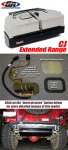
This is another reason I went with the YJ unit, I wanted a sending unit that worked. so far so good using the SpeedHut gauge cluster.
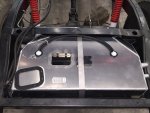
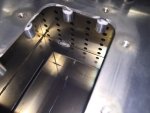
I didn't take a picture of the unit with the fuel pump attached
 

Attachments

  • 006 (2).JPG
    006 (2).JPG
    173.3 KB · Views: 144
  • 001 (6).JPG
    001 (6).JPG
    135.3 KB · Views: 144
  • GST1003new_multi_md.jpg
    GST1003new_multi_md.jpg
    100.9 KB · Views: 145
spankrjs I want to do the Mopar MPI on a 258 I'm rebuilding. Where did you find the best place to get that at? Thanks


Sent from my iPad
 
I think the lines straight out and down will work. Sleeve them and done. I did move my pump from the front side of the tank to the passenger side for ease of replacement. Maybe some more air flow with it on the side? I also wrapped the exhaust by the fuel tank to try to keep heat transfer from happening. FYI first years of TBI had belts. My Suburban did. And a friend of mine has one in a Land Cruiser with them. Not that it pertains to anything in this discussion.
 
This is another reason I went with the YJ unit, I wanted a sending unit that worked. so far so good using the SpeedHut gauge cluster.
I didn't take a picture of the unit with the fuel pump attached

If I was starting from scratch, that looks like a nice setup :cheers:
 
spankrjs I want to do the Mopar MPI on a 258 I'm rebuilding. Where did you find the best place to get that at? Thanks


Sent from my iPad

I lucked out and bought my kit from a member of this site when I was building my red Scrambler. He had bought the kit and never installed it, I think he swapped in a V8 IIRC. Sorry I couldn't be more helpful :shrug:
 
I think the lines straight out and down will work. Sleeve them and done. I did move my pump from the front side of the tank to the passenger side for ease of replacement. Maybe some more air flow with it on the side? I also wrapped the exhaust by the fuel tank to try to keep heat transfer from happening. FYI first years of TBI had belts. My Suburban did. And a friend of mine has one in a Land Cruiser with them. Not that it pertains to anything in this discussion.

I am really hoping the line relocation will work :fingerscrossed:

Interesting info on the V belt TBI set up, I was incorrectly assuming all the TBI vehicles came with the serpentine set up :cheers:
 
Back
Top