- City
- West Bend
- State
- WI
I finally started a build thread! I probably should have a long time ago but in all honesty I was a bit embarrassed with how slow moving it was. Although I had it running and driving this past year, there is still a lot to do. What year is it? Now that's a very entertaining question. The title says 82 but in reality it's a range from 77 to 03. Starting 10 years ago I bought quite a few junk scramblers and cj7s and parted them out. I kept what I wanted and sold or traded the rest. So it was kind of a self funding project.
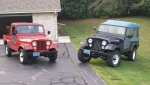
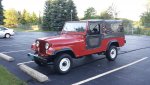
Here is a pic of how the blue one looked this past year before I tore it back apart. The red jeep we had since 1990, she's only got 28,000 original miles.
Here is a pic of how the blue one looked this past year before I tore it back apart. The red jeep we had since 1990, she's only got 28,000 original miles.


 All I know is we plugged it off and it ran great again.
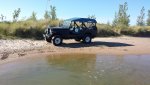
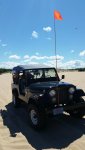
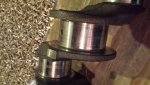
 I get it home, tore it apart and saw this.
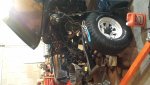
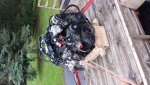
 So this gave me a good excuse to swap in a chevy 5.3L. I will have a good 100 more horsepower and still should get similar gas milage. My 04 suburban routinely gets in the neighborhood of 18 mpg. I see no reason my jeep shouldn't get at least that. I bought a 5 3L with 75,000 on it from a local yard. I got the complete motor with the accessories, harness, and starter for $500.


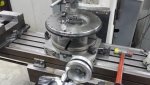
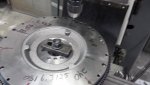
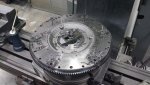
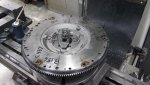
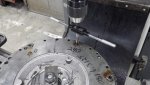
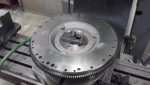
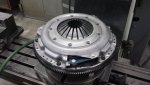
 Any year 4.8/5.3 you can bore it out to 3.898 to make it a 5.7L. So basically an iron LS1. The 99s and 2000s used iron heads instead of aluminum. The crankshaft on the old GEN 1 engines (350s, etc.) stick out .400" further rearward than LS engines. The 99-2000 4.8 and 6.0L when coupled to a manual trans also stuck out .400" further than the 4.8/5.3/6.0 with automatics. Yes, you read that right. They ran different cranks for the autos and manuals in 99 and 2000. Here is a pic of a 99 flywheel (left) and a 2001 flywheel (right) side by side on the crank mounting surface on 2" blocks for comparison. The location of the starter ring shows the .4" difference.