

You are using an out of date browser. It may not display this or other websites correctly.
You should upgrade or use an alternative browser.
You should upgrade or use an alternative browser.
1984 SL, Yard Scrambler II
- Thread starter Jeep Addict
- Start date


- City
- Baton Rouge
- State
- La
Looking good. 
Can't wait to pick it up. wait, don't I have to offer it for sale before I'm told I'm selling it
Can't wait to pick it up. wait, don't I have to offer it for sale before I'm told I'm selling it

- City
- Biloxi
- State
- MS
Looking good.
Can't wait to pick it up. wait, don't I have to offer it for sale before I'm told I'm selling it
Oh well, guess its going back to LA

- City
- Biloxi
- State
- MS
Did a little bit of work to this one this past Saturday.
My buddy Nathan took the gas tank parts to the car wash, they look much better now.
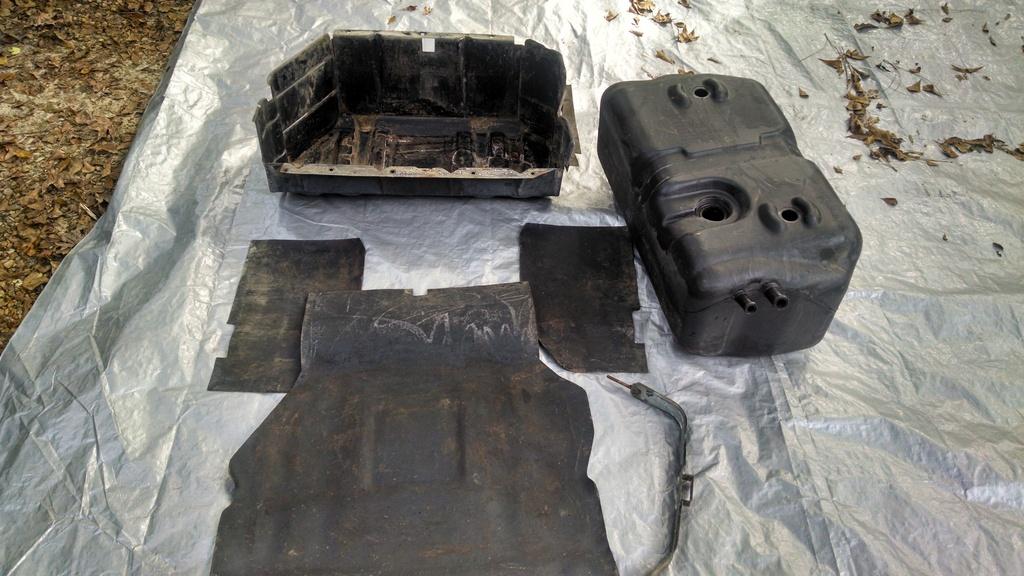
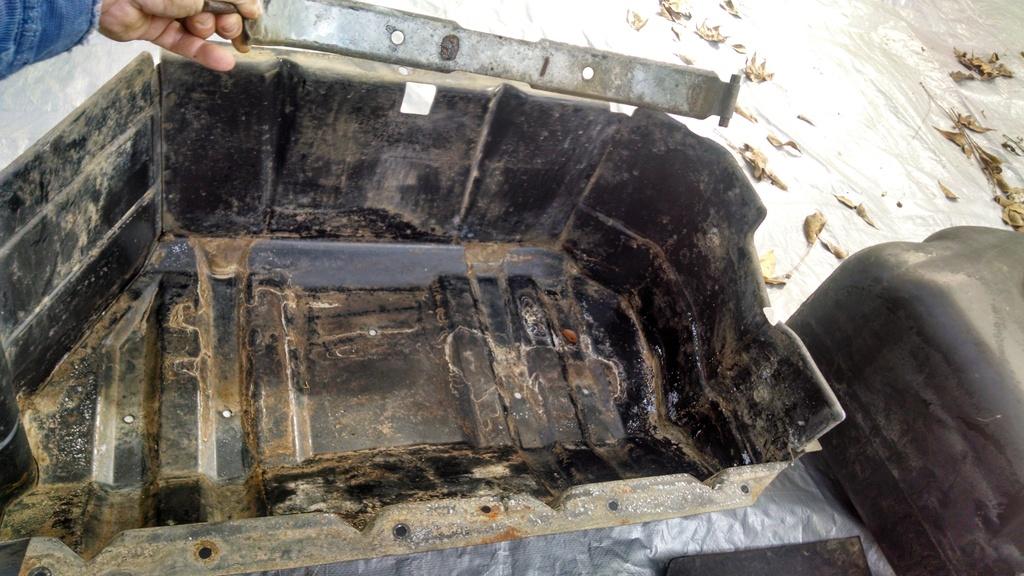
No rust inside the skid plate, or on the strap.
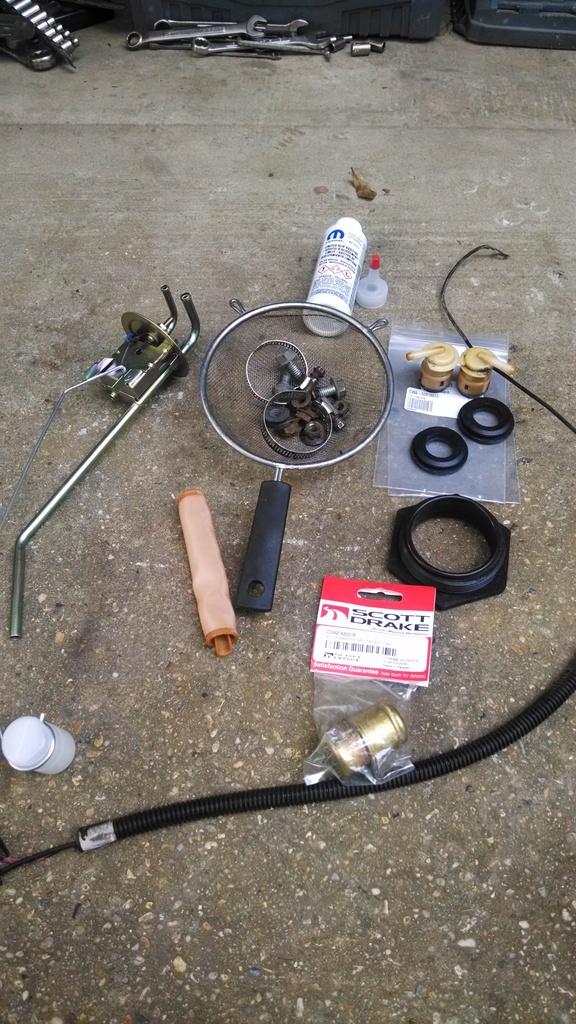
Some new vent valve grommets, new sending unit, new brass float. Cleaned up the original wiring harness, valves, nuts and bolts. Bottle of LSD Additive for the rear Trac-Lok.
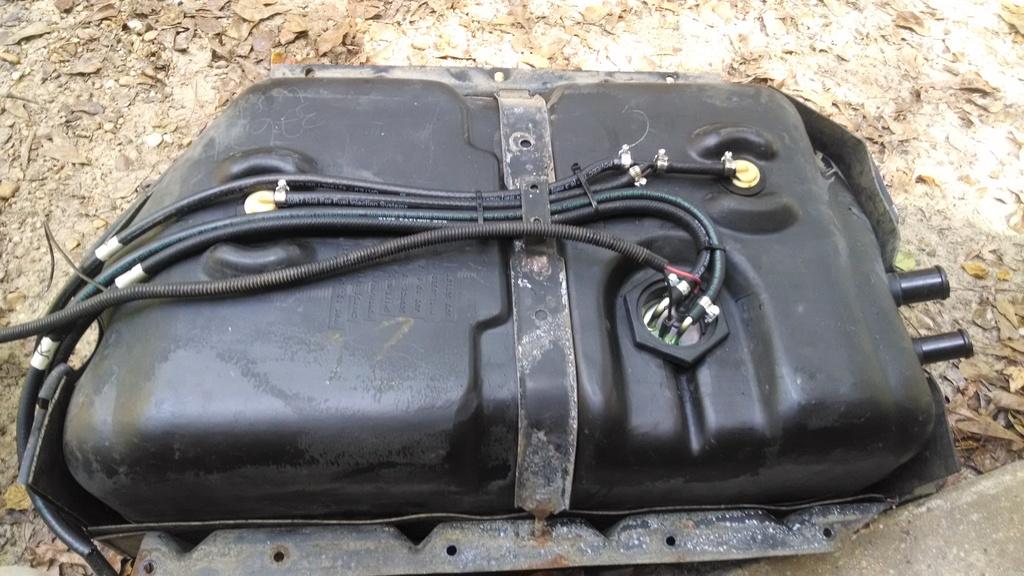
And all that stuff installed into the gas tank.
I also removed the bolted on front brush guard thingy, looks much better IMO. Looks better without my tan hard top, need to swap out the tops soon.
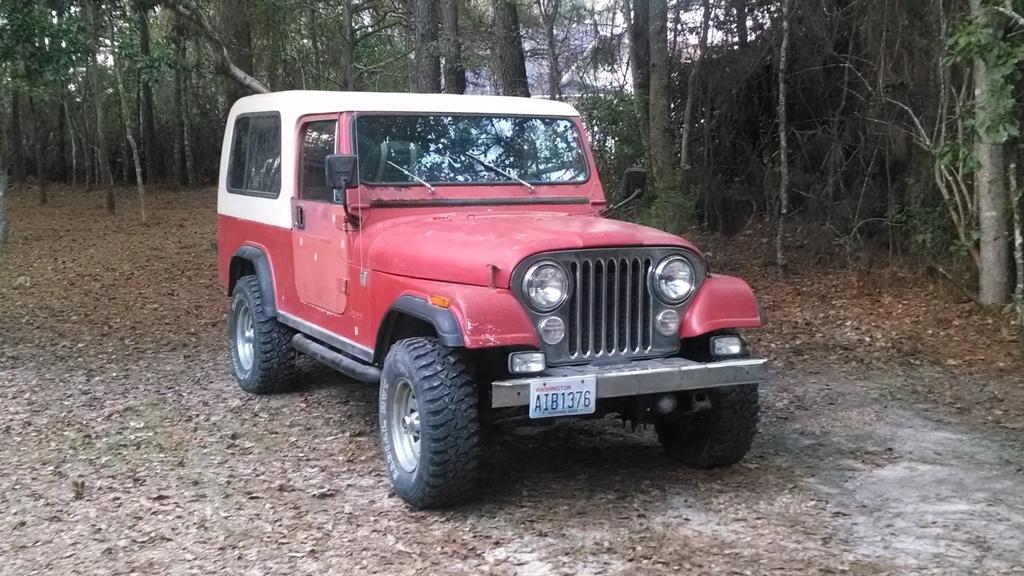
With the freshly cleaned out gas tank, and some new gas, the Scrambler is running better. But, it still isn't running as well as it should.
Started investigating the previous owners HEI distributor, and checking the timing, again. The mechanical advance at 1,600 RPM is at 8 degrees, which should be OK. But, at idle, it was still at 8 degrees. So, I switched the vacuum advance line from ported to manifold vacuum, much better. Smoothed the idle out, showing between 16-20 degrees at idle IIRC.
But, it still does not accelerate smoothly at light/moderate pedal input. I need to recheck the timing, mechanical, at various RPM ranges and compare it to stock. Then, compare how much advance this distributor is throwing at the engine at given manifold pressures, and compare to stock.
Just a theory right now, but I am thinking this thing is not advancing like a stock distributor. Will investigate and update. It is running better now, but not where is should be, about 70% there, if that makes sense
My buddy Nathan took the gas tank parts to the car wash, they look much better now.
No rust inside the skid plate, or on the strap.
Some new vent valve grommets, new sending unit, new brass float. Cleaned up the original wiring harness, valves, nuts and bolts. Bottle of LSD Additive for the rear Trac-Lok.
And all that stuff installed into the gas tank.
I also removed the bolted on front brush guard thingy, looks much better IMO. Looks better without my tan hard top, need to swap out the tops soon.
With the freshly cleaned out gas tank, and some new gas, the Scrambler is running better. But, it still isn't running as well as it should.
Started investigating the previous owners HEI distributor, and checking the timing, again. The mechanical advance at 1,600 RPM is at 8 degrees, which should be OK. But, at idle, it was still at 8 degrees. So, I switched the vacuum advance line from ported to manifold vacuum, much better. Smoothed the idle out, showing between 16-20 degrees at idle IIRC.
But, it still does not accelerate smoothly at light/moderate pedal input. I need to recheck the timing, mechanical, at various RPM ranges and compare it to stock. Then, compare how much advance this distributor is throwing at the engine at given manifold pressures, and compare to stock.
Just a theory right now, but I am thinking this thing is not advancing like a stock distributor. Will investigate and update. It is running better now, but not where is should be, about 70% there, if that makes sense
- City
- Biloxi
- State
- MS
Took some accurate timing/tachometer readings last night. This is what I have, some random internet sourced base line readings are first:
No Vacuum Advance Idle - 8 -10 I am at 8 NO CENTRIFUGAL ADVANCE UNTIL 1,200 RPM
1,000 to 1,200 RPM No Vacuum Advance - barely kicking in I am at 12 MAYBE 2 DEGREES ADVANCE
1,800 RPM No Vacuum Advance - 18 degrees I am at 24 10 DEGREES
2,600 RPM No Vacuum Advance - 22 degrees I am at 24 12 DEGREES
3,000 RPM No Vacuum Advance - 25 degrees I am about an inch past 24 degrees 12 DEGREES, and it drops off after this
The stuff in italics is for a 1982 distributor, 49 state, mechanical advance curve. This current distributor is way off.
From the above, I would think that my centrifugal advance is coming in way too soon, and all the way in way too soon.
Gets worse, see below:
Ported Vacuum hooked up idle - 8 - 10 I am at 8
Ported Vacuum hooked up 1,000 to 1,200 RPM - barely kicking in I am at 20
1,800 RPM Ported Vacuum hooked up - 24 I am at 30
2,600 RPM Ported Vacuum hooked up - 32 Well past the end of the scale
3,000 RPM Ported Vacuum hooked up - 35 Well past the end of the scale
I will have to record ported vacuum readings at specific RPM's and compare the advance I am getting to what the FSM vacuum advance curve shows. Just a guess, but the vacuum advance is going to be way off, too.
IF my internet sourced average figures are OK or close to correct, I would ASSUME that this distributor's advance curve is way off for a stock 258
As an experiment, I set the base timing at 0, disconnected the vacuum advance. The engine did accelerate more smoothly, but the centrifugal advance would still come in too soon.
I guess I need to see about installing different springs/stops on the centrifugal advance, and installing an adjustable vacuum advance can
Please feel free to comment. I am not a distributor/timing expert, but this is my data, let me know what you think
This distributor appears to be one of those Made In China eBay $85.00 specials. It has no markings or numbers anywhere.
Personally, I feel the $300 for a D.U.I. distributor is a good deal. Made in America, and the timing curves are set for each distributors application. I had one of these on a 304, loved it.
I guess you get what you pay for
If this current distributor cost $85, and I now have to add an aftermarket adjustable advance can, plus find some springs/stops for the centrifugal advance, plus all the time involved screwing with it, was it really a "good deal"
Last edited:

sdsupilot
CJ-8 Member
- City
- OKC
- State
- OK
I had a similar issue with a $75 eBay HEI distributor for a Ford 351W. It ran great sometimes, other times poorly. I could never get the timing set correctly. If correct at idle, it was way too far advanced when revved up. Tried different springs, different vacuum sources. Burned up a coil and the HEI module. We finally broke down and bought a more name brand HEI from Summit. It cost well over twice as much, but with that distributor we set the timing and it has ran great ever since.
Not to be overly negative about the cheap HEI sets, but just wanted to share my experience to maybe save you some time.
Not to be overly negative about the cheap HEI sets, but just wanted to share my experience to maybe save you some time.

Kane
CJ-8 Member
- City
- Berlin
- State
- ct
I made an HEI from a junk yard chevy 6 cylinder dizzy and am running into the same deal. I think my lack of power is part this and the crap Holley 2 barrel. this winter I am installing my Howell fuel injection and then if the power doens tpick up i am going to ditch the chevy dizzy and buy a DUI unit.

- City
- God's Country
- State
- AR
What about putting a stock dist on there with the Team Rush/ TFI upgrade? I ran a Jacob's pack back in the day, and couldn't tell any benefit from that over just using the bigger cap, rotor, wires, and hotter coil from the Ford upgrade.
- City
- Biloxi
- State
- MS
I had a similar issue with a $75 eBay HEI distributor for a Ford 351W. It ran great sometimes, other times poorly. I could never get the timing set correctly. If correct at idle, it was way too far advanced when revved up. Tried different springs, different vacuum sources. Burned up a coil and the HEI module. We finally broke down and bought a more name brand HEI from Summit. It cost well over twice as much, but with that distributor we set the timing and it has ran great ever since.
Not to be overly negative about the cheap HEI sets, but just wanted to share my experience to maybe save you some time.
Know what you mean about the cheap stuff, I never would have bought this crap distributor

This POS distributor came already installed on this Scrambler by a previous owner, so I am going to try to modify the timing curve. I ordered $60 worth of stuff from Summit, so hopefully I can fix it. That's all I'm going to spend on it.
With the mechanical advance being double what a stock 258 should be, I might have to weld up/find different plates

If it were mine, I would just buy a DUI and be done with it
You definitely get what you pay for

The good news, the engine seems to run well, has 20" of vacuum at idle, so hopefully just this screwed up distributor is the only issue
- City
- Biloxi
- State
- MS
I made an HEI from a junk yard chevy 6 cylinder dizzy and am running into the same deal. I think my lack of power is part this and the crap Holley 2 barrel. this winter I am installing my Howell fuel injection and then if the power doens tpick up i am going to ditch the chevy dizzy and buy a DUI unit.
I might go to the junk yard and see if I can find a 6 cylinder distributor. I imagine the timing stuff would be closer to what a Jeep six cylinder needs. The current stuff must be for a drag race car/space shuttle

I am running GM TBI on my 350 Scrambler, love it. But, mine is stock, so the computer controls the timing, no vacuum advance, limited mechanical advance. How does the Howell control the timing, I've always been curious/confused about that
- City
- Biloxi
- State
- MS
What about putting a stock dist on there with the Team Rush/ TFI upgrade? I ran a Jacob's pack back in the day, and couldn't tell any benefit from that over just using the bigger cap, rotor, wires, and hotter coil from the Ford upgrade.
That would be an option, but the previous owners ripped all the stock stuff out, including the wiring

It is still possible, I have old distributors/ignition stuff floating around. Not sure on the wiring, maybe. But, it would be a bunch of work, lots of time. At this point, if I can't get the current crappy HEI to work, a D.U.I. unit would be the easiset option, but also a $300 option. If it were mine, I would have already ordered the D.U.I.
But, I like a challenge, so I am going to spend some time, little bit of money, on the current crap set up. Maybe I can get it working correctly
Maybe not We will see
Kane
CJ-8 Member
- City
- Berlin
- State
- ct
I might go to the junk yard and see if I can find a 6 cylinder distributor. I imagine the timing stuff would be closer to what a Jeep six cylinder needs. The current stuff must be for a drag race car/space shuttle
I am running GM TBI on my 350 Scrambler, love it. But, mine is stock, so the computer controls the timing, no vacuum advance, limited mechanical advance. How does the Howell control the timing, I've always been curious/confused about that
The only mod you need to make on the Chevy dizzy is to swap a factory Jeep gear over to it because the gear are cut opposite of each other. The Jeep gear is a few thousands bigger so you need to wrap some metal shim stock inside the gear to keep is centered. The Howell will not control the timing but it is one component of my engine that is causing the lack of power it should have.
- City
- Biloxi
- State
- MS
The only mod you need to make on the Chevy dizzy is to swap a factory Jeep gear over to it because the gear are cut opposite of each other. The Jeep gear is a few thousands bigger so you need to wrap some metal shim stock inside the gear to keep is centered. The Howell will not control the timing but it is one component of my engine that is causing the lack of power it should have.
Appreciate the info
If I pull a junk yard distributor, it will just be for parts, i.e. springs, weights, plates, etc.
- City
- Biloxi
- State
- MS
Took some more readings last night, and graphed them out on a copy of the FSM timing curves.
All reading were taken with the engine warmed up, base idle set at 650 RPM, initial timing set at 6 degrees advance.
I am "assuming" that the mechanical advance chart numbers have subtracted out the initial timing. For example, at 1,600 RPM I had total timing of 20, subtract out the initial 6, plotted 14. I assume this is the correct procedure Mechanical advance readings recorded with vacuum advance disconnected and plugged.
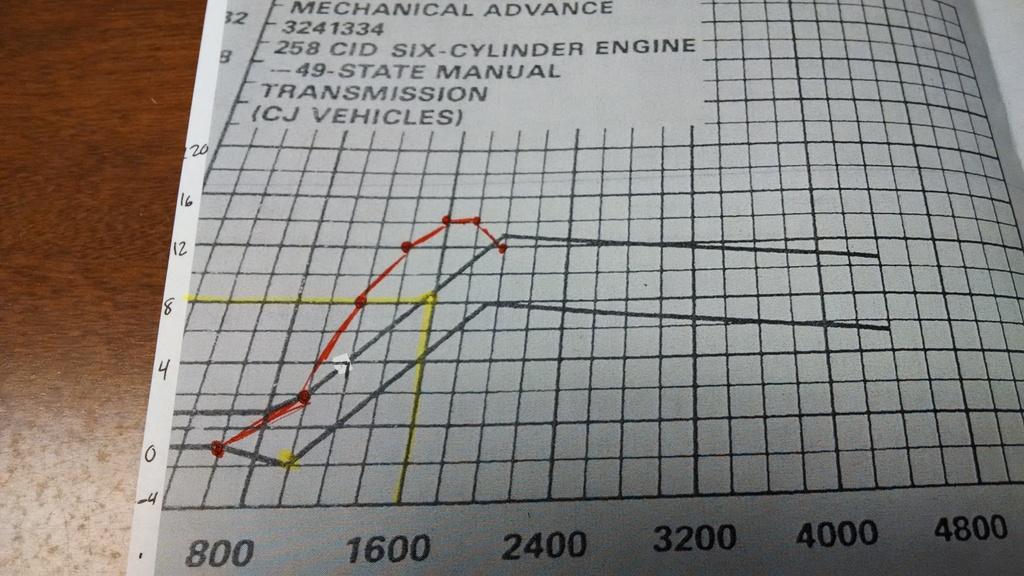
This kind of confirms my thoughts. The mechanical timing advance is coming in right off idle, when it should be flat. Also, from 1,000 RPM on up to 1,600 RPM, it has too much advance, and the advance is reaching its highest level a bit too soon in the RPM range.
The below results, from the vacuum advance, was not what I expected. All readings taken with the engine at a 650 RPM idle. I used a vacuum pump to provide vacuum to the advance unit. Same as above, I recorded the total timing, subtracted out the 6 degrees of initial timing, and recorded the amount of total timing coming from the vacuum advance.
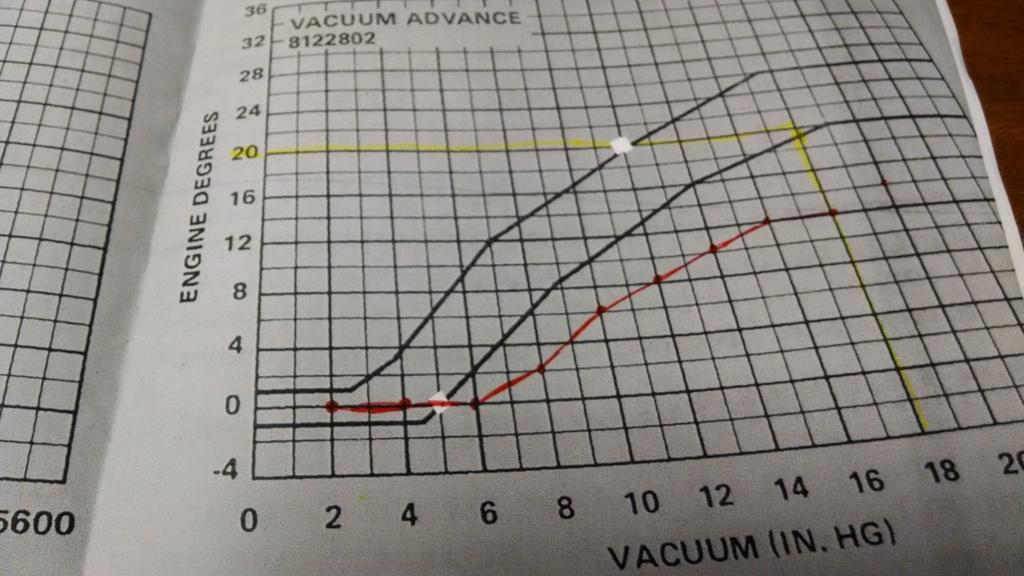
It would appear to me that the current vacuum advance can is not providing enough advance through out the curve, and it is not allowing for enough total advance at the higher vacuum readings.
So, the mechanical is too high, the vacuum advance is too low, put them together, maybe the total timing is within an acceptable range I kind of think so.
This engine is a bit rough from idle to around 1,200 RPM, where the mechanical advance is advancing too much. When I retarded the initial timing to around 0-2 degrees, the throttle response/rough patch almost went away. I could not retard the engine below 0, it would spit out the carb.
So, I am going to try to slow down the initial mechanical advance, with I guess slightly stiffer springs.
I can install the adjustable vacuum advance can on there and dial in some more vacuum advance, too.
Assuming I am on the correct path, any comments/criticism appreciated
All reading were taken with the engine warmed up, base idle set at 650 RPM, initial timing set at 6 degrees advance.
I am "assuming" that the mechanical advance chart numbers have subtracted out the initial timing. For example, at 1,600 RPM I had total timing of 20, subtract out the initial 6, plotted 14. I assume this is the correct procedure
Mechanical advance readings recorded with vacuum advance disconnected and plugged.
This kind of confirms my thoughts. The mechanical timing advance is coming in right off idle, when it should be flat. Also, from 1,000 RPM on up to 1,600 RPM, it has too much advance, and the advance is reaching its highest level a bit too soon in the RPM range.
The below results, from the vacuum advance, was not what I expected. All readings taken with the engine at a 650 RPM idle. I used a vacuum pump to provide vacuum to the advance unit. Same as above, I recorded the total timing, subtracted out the 6 degrees of initial timing, and recorded the amount of total timing coming from the vacuum advance.
It would appear to me that the current vacuum advance can is not providing enough advance through out the curve, and it is not allowing for enough total advance at the higher vacuum readings.
So, the mechanical is too high, the vacuum advance is too low, put them together, maybe the total timing is within an acceptable range
I kind of think so.This engine is a bit rough from idle to around 1,200 RPM, where the mechanical advance is advancing too much. When I retarded the initial timing to around 0-2 degrees, the throttle response/rough patch almost went away. I could not retard the engine below 0, it would spit out the carb.
So, I am going to try to slow down the initial mechanical advance, with I guess slightly stiffer springs.
I can install the adjustable vacuum advance can on there and dial in some more vacuum advance, too.
Assuming I am on the correct path, any comments/criticism appreciated


mysunnshine
Legacy Registered User
- City
- Phoenix
- State
- AZ
So it's only set up with 23 degrees of total mechanical advance(including base timing)? If that's the case, you are missing out on a lot of WOT power.
Sent from my SM-G920V
Sent from my SM-G920V
- City
- Baton Rouge
- State
- La
Any updates on this one?
- City
- Biloxi
- State
- MS
I had the same issue. My jeep was on the Dyno. It needed different springs in the distributer. took a couple sets. to get it right. then ran awesome.
A dyno would probably give the best results. I am just doing it in the yard, stationary, so no load situation.
So it's only set up with 23 degrees of total mechanical advance(including base timing)? If that's the case, you are missing out on a lot of WOT power.
Sent from my SM-G920V
According to the FSM, that's where it is supposed to be. This is just a stock 258, stock cam, stock exhaust, stock carb, etc. If you take the base advance, plus mechanical, plus vacuum, I am all in around 36 degrees now. But, at WOT, yes, only around 23 degrees. How much more does/can a stock 258 need
Any updates on this one?
Yes, will update soon
More tuning led to big improvements, fixing an unexpected mechanical problem really has this thing running great now 
mysunnshine
Legacy Registered User
- City
- Phoenix
- State
- AZ
When I recurved the HEI in my old Scrambler with the stock rebuild, I found on the dyno that it made the best power with 28 degrees timing.
Sent from my SM-G920V
Sent from my SM-G920V
- City
- Biloxi
- State
- MS
When I recurved the HEI in my old Scrambler with the stock rebuild, I found on the dyno that it made the best power with 28 degrees timing.
Sent from my SM-G920V
Mechanical Advance and Initial Timing Only, Vaccuum advance was additional, correct