- City
- Redmond
- State
- OR
The factory installed CJ hubs perform locking duties within the hub body, torque is transferred from the axle shaft to the hub body. The hub body is secured to the bearing hub with 5 or 6 bolts. All the torque is transferred through these bolts. Without the bolts the hub would rotate freely on the bearing hub. That’s why the bolts tend to loosen and break. Here’s the CJ hub.Can you show how the warn hub engages this?
What is the difference between intenally and externally splined hubs?
I have superwinch hubs; I know what those look like (I seem to break the little springs)
I went with ARP studs and ultra high end locking washers...
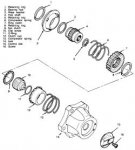
The hub conversion kit replaces the bearing hub with one that mimics the stronger design of a D44, for example. The bearing hub has internal splines, and is about 3.5” in diameter. The locking hub has a body with external splines that mates with the bearing hub internal splines. The hub also has an internal splined piece that mates with the axle shaft. There is a third piece that locks the outer body with the inner body when engaged. All torque is transferred through splined components. This is a lot stronger and more secure arrangement. Here’s a cutaway of the Warn setup.
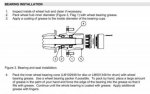
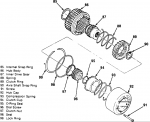 In the second picture, 86 is splined to the bearing hub, 87 is splined to the axle, and 89 locks them together when engaged. The first pic is how it all goes together on a CJ axle.