• Notice for iPhone users: DO NOT use the image size reduction option when uploading photos to the forum. This causes portrait images to post as landscape. We have added a warning to the image insert pop-up as well.

Replace Mopar MPFI with Carb

Back in January I messed around with checking my fuel pressure:


1) After sitting for two weeks without starting, put the gauge on the fuel rail, turned the key on, held 40psi for 5 minutes, no bleed down.

2) Started the Scrambler up, fuel pressure stayed around 35psi while idling for 5 minutes.

3) Disconnected vacuum line from FPR, pressure shot up to 43psi.
 
If you disconnect the vacuum line to the fuel pressure regulator, you will increase the fuel pressure everywhere but WOT. The higher the vacuum, the more responsive the FPR will be if connected. Your fuel trims may also limit out because it's going to need to pull the "extra" fuel out that will be added if the vacuum is disconnected.

I only suggested disconnecting the vacuum line to the FPR as a way to see if it makes a difference in the OP's pinging condition prior to spending $$$$ for an adjustable fuel pressure regulator.

Yes, at WOT, it won't make a difference, but at something less than WOT, the OP might see a decrease in pinging and if so, spending $$$ on an adjustable fuel pressure regulator might be worth it.

Still though, if he is using the wrong heat range spark plug, he should not be trying to compensate by changing the timing or increasing fuel pressure.... that will simply hide the root cause, needlessly contribute to decrease performance and/or fuel economy and potentially contribute to premature engine wear (detonation and higher temps).

Getting the spark plug heat range correct is the first step and the reason why I listed it as #1.
Please note: Even HESCO recommends a lower heat range (9) when using its MPI conversion than what the OEM spec heat range is (12) on the 1995 YJ where MPI is OEM.
 
Wow, a lot to digest, i went with the HESCO recommended heat range 9 plugs with the head and efi, im not seeing a temp increase on the dtock gauge but it may not have the fidelity to see it. Also, if i understand correctly, lower vacuum to the FPR will increase fuel pressure? Since im at 7000 ft, my vacuum is already down 15%? Ill have to put the gauge on that too i guess

Thanks guys, quite an education for me....
 
The vacuum regulator will be less drop the fuel pressure less at altitude than at(or below) sea level. At altitude you already make less cylinder pressure than at sea level. So imagine how bad your detonation issue would be if you dropped down to 2000 or less altitude. At 7K ft in altitude, you have already lost 1.4 points of compression relative to sea level.
 
Also, if i understand correctly, lower vacuum to the FPR will increase fuel pressure?

Yes, lower vacuum increases fuel pressure.

And Mysunnshine is correct that at WOT, the vacuum will be less thereby increasing fuel pressure. However, I don't know whether or not zero vacuum (i.e., atmospheric pressure) closes the fuel return line orifice completely on the 1995 YJ MPI system. I suspect that is does not close it completely otherwise my adjustable FPR wouldn't have solved my detonation problem.

The OP reported a lot of pinging. That leads me to believe that the pinging is not just at WOT. Therefore, increasing spring pressure (thereby requiring more vacuum) on the AFR would increase fuel pressure.

At WOT, the butterfly valve is wide open therefore the intake vacuum is lower (or said another way, the intake atmospheric pressure increases from something negative to something closer to atmospheric pressure). When that happens at WOT, there is less vacuum. When there is less vacuum pulling the FPR diaphragm against the preset spring, the diaphragm closes down (probably not completely) the orifice to the fuel return line. When there is less fuel returning to the tank, there is more fuel pressure.

An adjustable fuel pressure regulator can help address pinging. But like I said earlier, if displacement was increased when the engine was rebuilt, he might just need a bigger injectors.

Since injectors and Adj FPR are expensive, it's worth experimenting with the vacuum line disconnected (but the vacuum line plugged).

Just my 2 cents

That is, at WOT, the pressure is the vacuum line is close to/equal to atmospheric pressure which is the same thing as disconnecting the vacuum line to the FPR. At idle or something less than WOT where the throttle body plates are not Wide Open, the engine creates a vacuum (negative pressure) which opens the fuel pressure regulator to return fuel to the fuel tank which thereby reduces fuel pressure in the fuel rail.

So when an adjustable fuel pressure regulator is installed, the owner can adjust he spring tension
 
I think a better understanding is that there are two area of operation of a vacuum regulated FPR. The first is static rail pressure which is set as a baseline or 0 point. Most older MPFI vehicles are set at about 42-45psi(which we will use 42 psi as a reference here). The second area is the vacuum regulated portion which generally is a 1:1 ratio for boost or vacuum. Generally speaking, if you pull 10 psi of vacuum on the regulator, then you just dropped the rail pressure by approximately 10psi. So now your operational fuel rail pressure right before the regulator will be 32 psi. So if you bumped up your static pressure to 50 psi, then your fuel volume output from the injectors will be higher for the same requested injector opening time from the ECU. The problem with doing that is that that volume increase is thru the ENTIRE operation range. So if you were trying to settle down detonation in the midrange area, then you just jammed a lot more fuel in at wide open throttle(open loop) where it probably already was over fueled. Most canned tunes err to the rich side already. The problem with a higher fuel pressure at idle and cruise is closed loop operation. The ECU will always pull the fuel right back out that you just jammed in with the fuel pressure increase to 50 psi because the ECU's closed loop job is to trim the fuel to 14.7:1(or close depending on the tune). So now because the fuel pressure went up nearly 20%, your fuel trims will go negative nearly the same amount. There will be a point where the ECU will limit out on the amount of long term fuel trim(LTFT) and set a code. Most of the older ECU's change from closed loop to open loop operation at about 80% throttle. So until it goes out of CL and gets into power enrichment mode, it'll be prone to detonation. But by pulling some timing out by retarding the crank position sensor location, you can help the midrange detonation. I say that because you can't get into the tune to change any of the parameters(fuel or spark) especially in the midrange where you drive it all the time. You can however change the CPS location slightly for your specific combination.
 
I think a better understanding is that there are two area of operation of a vacuum regulated FPR. The first is static rail pressure which is set as a baseline or 0 point. Most older MPFI vehicles are set at about 42-45psi(which we will use 42 psi as a reference here). The second area is the vacuum regulated portion which generally is a 1:1 ratio for boost or vacuum. Generally speaking, if you pull 10 psi of vacuum on the regulator, then you just dropped the rail pressure by approximately 10psi. So now your operational fuel rail pressure right before the regulator will be 32 psi. So if you bumped up your static pressure to 50 psi, then your fuel volume output from the injectors will be higher for the same requested injector opening time from the ECU. The problem with doing that is that that volume increase is thru the ENTIRE operation range. So if you were trying to settle down detonation in the midrange area, then you just jammed a lot more fuel in at wide open throttle(open loop) where it probably already was over fueled. Most canned tunes err to the rich side already. The problem with a higher fuel pressure at idle and cruise is closed loop operation. The ECU will always pull the fuel right back out that you just jammed in with the fuel pressure increase to 50 psi because the ECU's closed loop job is to trim the fuel to 14.7:1(or close depending on the tune). So now because the fuel pressure went up nearly 20%, your fuel trims will go negative nearly the same amount. There will be a point where the ECU will limit out on the amount of long term fuel trim(LTFT) and set a code. Most of the older ECU's change from closed loop to open loop operation at about 80% throttle. So until it goes out of CL and gets into power enrichment mode, it'll be prone to detonation. But by pulling some timing out by retarding the crank position sensor location, you can help the midrange detonation. I say that because you can't get into the tune to change any of the parameters(fuel or spark) especially in the midrange where you drive it all the time. You can however change the CPS location slightly for your specific combination.

Why can't the program be hacked and modified like people do with the TBI chips:shrug:
 
Why can't the program be hacked and modified like people do with the TBI chips:shrug:

You can but Mopar in general are a big PITA to tune. Not all of the Mopar ECU's are tuneable. I prefer to stay away from them myself because you end up wasting time researching if it's compatible or not along with the tuning software. My guess is that the PCM used here just does not have enough request from people for custom tuning for them to justify the cost of cracking the code and developing the software interface.
 
Mysunnshine - Just curious, do you have MPI? Have you had MPI detonation issues? How did you solve it?
I'm interpreting your posts that you are critical of using an adjustable FPR as a solution. Is this what you are intending?

I can't disagree with you on how FPRs and the PCM work.

However, as a reader, it feels disingenuous to use examples of:
- PSI increases 2x-3x larger than what was necessary to solve my detonation problem.
- Assuming the detonation is mid range only (anytime I have seen detonation, the detonation never went a way at higher ranges).
- concluding that increased fuel pressure will result in codes (which they could, but highly unlikely unless the ridiculous pressure increase mentioned is used for the given fuel injectors).

When I had the MPI ping, it was mid range on up through WOT. Increasing by a couple psi solved my detonation problem. (IIRC it was a 2 psi or possibly a 3 psi increase, not the 5-8 psi increase you are using as an example).

I'm just trying to pass along some experience I had that worked when I followed HESCO's advice. I thought that was the purpose of this forum.

Peace


Wow.....Aren't we bent up this morning...... I also am posting up my personal real-world experiences. I do custom EFI installations and tuning for a living. I've installed and tuned systems on everything from an industrial 2 cylinder, a natural gas fueled 6 cylinder, to a 2000+hp turbo mustang. Take my information as you will but these are my personal experiences. If you would like, I can go as far as doing a video documentary of different fuel pressures and the related fuel trims and detonation changes. I have a dyno and have that ability if you would like. I did a similar experiment on my old SBC I pulled out of my Jeep to show the power differences of the carb, Howell TBI, and MPFI a few years ago. I really don't want to get into a pissing match here but I can and have the ability to show how the minimal fuel pressure changes(2-3psi) really don't effect fueling during closed loop operation. If you run your system in open loop without O2 feedback, then the fuel pressure will make a change.

Let me know what you would like me to do-

Peace
 
Wow.....Aren't we bent up this morning......

Thanks for helping me understand with whom I am speaking.

So for future readers with the MPI conversion and detonation condition, this thread has:
- valid EFI academic theory
- first hand experience following HESCO's advice to install an adjustable fuel pressure regulator.

The OEM Fuel injectors are: http://www.jeep4.0performance.4mg.com/tech_specs.html
Model Year, ...Part #, ...........Colour, .....Fuel Pressure, ...Static Flow,
94-'95, ........53030343, .........Tan, ...............39psi, .................21.0lb/hr

My experience was that HESCO's advice was spot-on. Note though, my MPI was all new parts on a prior owner's 5K old ATK reman. If you pulled used parts to build your MPI on an old block, you might have other things causing/contributing to your detonation.

In hindsight, it looks like I only needed only a small increase in flow rate derived from increased fuel pressure given the nature of my setup:
- MPI built from new parts
- correct lower temp spark plugs
- Cone filter CAI that is also hooked directly to the outside (i.e., it's not sucking hot air and engine bay dirt from the engine compartment)
- 4.0 HO head (with the accompanying tube header which replaced the restrictive OEM exhaust manifold)
- prior owner's recent ATK reman (spotless & smooth/not pitted piston head surface to go along with the spotless HO headswap).
 
2) Fuel pressure. Lower the fuel pressure, the leaner the air/fuel mixture and hotter the burn. When I put an adjustable fuel pressure regulator on mine and increased the fuel pressure, I solved my pinging problem.

In hindsight, it looks like I only needed only a small increase in flow rate derived from increased fuel pressure given the nature of my setup:


So let me get this right.... You're saying that by increasing your fuel pressure 2-3 psi resolved your detonation issues at part throttle right? Are you thinking that during closed loop operation that there now is more fuel getting put into the cylinders and by doing that a richer fuel ratio than the commanded 14.7:1 is produced fixing the detonation itself? I understand that a richer fuel mixture can stop detonation but I hate to tell you that it's not going to get any richer than the commanded 14.7:1 during closed loop operation. The O2 sensor's job is to monitor the mixture and the ECU will ALWAYS change the fuel mixture to get to the pre-programmed commanded A/F ratio. It's 50 state EPA legal so it's going to used closed loop with a 14.6 to 14.7:1 commanded A:F ratio.

Have you ever thought that other issues may have resolved your pinging such as E10(ethannol emissions fuel) fuels, vaporlocking fuel pump causing a loss of fuel pressure while in operation, a restricted fuel tank venting system, etc.........
 
Mysunnshine -
I'm sorry I can't give you an answer or all the details from 10 years ago as to why HESCO's recommendation of installing an adjustable fuel pressure regulator solved my detonation problem.

Perhaps you should contact HESCO to learn why HESCO recommends installing to remove detonation when using their MPI kit for the 258?

I suspect you will have better success with them than by continuing to seek answers from me.

Detonation (Pinging) is pretty is easy to observe. It has been ~10 years since I installed their adjustable fuel pressure regulator and I have not had detonation. The only exception is when I accidentally force it (e.g., by being in 4th gear at 15 mph) which I avoid at all costs.

I observed it before the AFR and I don't have it now.

Finally, a quick Google search revealed this. Perhaps this would be helpful as background when you call HESCO?
(Of course as you probably know, lots of people have lots of theories on the internet. I can't speak for the validity of this, but the increase fuel pressure comment from this EFI seller seems to correlate with HESCO's overall recommendation that increased fuel pressure can have an impact in certain situations. Perhaps this is from what I am benefitting:)

"By raising fuel pressure, more fuel is forced out the metering orifice per pulse width. Thus, someone who has performed modifications to their vehicle (i.e. low restriction exhaust, improved air induction, increased boost, etc.) may be near the flow limits of their stock fuel injectors. By increasing fuel pressure, a few more lbs/hr of fuel flow may be squeezed through the injectors to meet engine demand."
http://performancefuelsystems.com/InjectorFlowRatesatDifferentPressures-TechCorner.htm

Quite honestly, I do not wish to remove for you my AFR in order to recreate for you the exact conditions I had before the AFR.

Good Luck to you. Peace,
Jim
 
I guess it's time to do a video to show that increasing fuel pressure during closed loop conditions does not alter the air/fuel ratio which in turn will not effect detonation because the A/F ratio is not going to a richer condition. All I want to do here is ensure that there is accurate information posted on here and document with data why the FPR will not change detonation events. Maybe when it's done, we can send a link to HESCO to show them that they are giving out poor misleading information to their customers with closed loop detonation issues.

:headbang: :popcorn: :cheers:
 
Last edited:
I guess it's time to do a video to show that increasing fuel pressure during open loop conditions does not alter the air/fuel ratio which in turn will not effect detonation because the A/F ratio is not going to a richer condition. All I want to do here is ensure that there is accurate information posted on here and document with data why the FPR will not change detonation events. Maybe when it's done, we can send a link to HESCO to show them that they are giving out poor misleading information to their customers with closed loop detonation issues.

:headbang: :popcorn: :cheers:

You are right regarding Open Loop. But my detonation problem that was solved was in closed loop at less than WOT.

Closed Loop (partial throttle) is where most driving is done, where manufactures calibrate their EEC software and where my detonation problem was solved.

Geesh.
 
You are right regarding Open Loop. But my detonation problem that was solved was in closed loop at less than WOT.

Closed Loop (partial throttle) is where most driving is done, where manufactures calibrate their EEC software and where my detonation problem was solved.

Geesh.

Sorry...It was a typo....... It is now edited.....
 
Quote Originally Posted by mysunnshine View Post
I guess it's time to do a video to show that increasing fuel pressure during open loop conditions does not alter the air/fuel ratio which in turn will not effect detonation because the A/F ratio is not going to a richer condition. All I want to do here is ensure that there is accurate information posted on here and document with data why the FPR will not change detonation events. Maybe when it's done, we can send a link to HESCO to show them that they are giving out poor misleading information to their customers with closed loop detonation issues.

:headbang: :popcorn: :cheers:

Mysunnshine,
Did someone or HESCO say that increased fuel pressure increases the air/fuel ratio in closed loop?

Could it be that the reduction/elimination of detonation has to do with how well fuel is atomized at higher velocities (i.e., higher fuel pressures)?

As I understand it, 703 injectors with the same flow rate as the stock injectors have better atomization (and favorable performance) due to having four holes vs. one hole. (http://www.jeepforum.com/forum/f13/definitive-injector-swap-how-1305456/)

When I ask "Professor Google: about fuel velocity and atomization, I get all kinds of studies returned to me.
The common theme among them is that higher velocity = increase atomization (smaller droplet size) which means more fuel surface area.

Would more fuel surface area result in less unburned fuel?

Since detonation is defined as unburned end gas combusting under heat and pressure, would less unburned fuel mean that there is less likely to be detonation (ping)?

Assuming the PCM is getting accurate inputs, would the same amount of fuel be dispensed but just in a shorter pulse width maintaining the 14.7:1 air/fuel mixture ratio?

If so, then wouldn't you and HESCO both be correct?

That is, you would be correct that the air/fuel ratio does not change, and HESCO is correct that a slightly higher fuel pressure would minimize detonation.

If this hypothesis turns out to be true, I imagine that there is an upper limit at which increased fuel pressure has unintended negative consequences. Since my experience following HESCO advice was only a few psi, could it be that is the reason why I saw a reduction in detonation?

I'm certainly not the expert that you are... what are your thoughts?
Could "X" amount of increase fuel pressure result in better atomization?

 
Mysunnshine,
Did someone or HESCO say that increased fuel pressure increases the air/fuel ratio in closed loop?

No...You are the one that said that your 2-3psi increase in fuel pressure(flow rate) fixed your part throttle detonation. With closed loop operation, it will ALWAYS target 14.6-14.7:1. So yea, your increased injector "flow rate" would have been pulled right back out by the ECU during closed loop operations. That's how it works...... If you dropped your fuel pressure 5 psi, your closed loop fuel trims would go to the positive side instead of negative(taking away the fuel). Everything is based off of the speed density fuel map that somebody built already. But that's the root problem actually. Not every engine is the same and there are WAY too many factors that can alter the fuel requirements for an engine. That's why I firmly believe that you had an external change that changed your detonation issue because the fuel flow rate didn't change at all.......


Could it be that the reduction/elimination of detonation has to do with how well fuel is atomized at higher velocities (i.e., higher fuel pressures)?

As I understand it, 703 injectors with the same flow rate as the stock injectors have better atomization (and favorable performance) due to having four holes vs. one hole. (http://www.jeepforum.com/forum/f13/definitive-injector-swap-how-1305456/)

When I ask "Professor Google: about fuel velocity and atomization, I get all kinds of studies returned to me.
The common theme among them is that higher velocity = increase atomization (smaller droplet size) which means more fuel surface area.

Would more fuel surface area result in less unburned fuel?

Since detonation is defined as unburned end gas combusting under heat and pressure, would less unburned fuel mean that there is less likely to be detonation (ping)?

Assuming the PCM is getting accurate inputs, would the same amount of fuel be dispensed but just in a shorter pulse width maintaining the 14.7:1 air/fuel mixture ratio?

If so, then wouldn't you and HESCO both be correct?

That is, you would be correct that the air/fuel ratio does not change, and HESCO is correct that a slightly higher fuel pressure would minimize detonation.

If this hypothesis turns out to be true, I imagine that there is an upper limit at which increased fuel pressure has unintended negative consequences. Since my experience following HESCO advice was only a few psi, could it be that is the reason why I saw a reduction in detonation?

I'm certainly not the expert that you are... what are your thoughts?
Could "X" amount of increase fuel pressure result in better atomization?

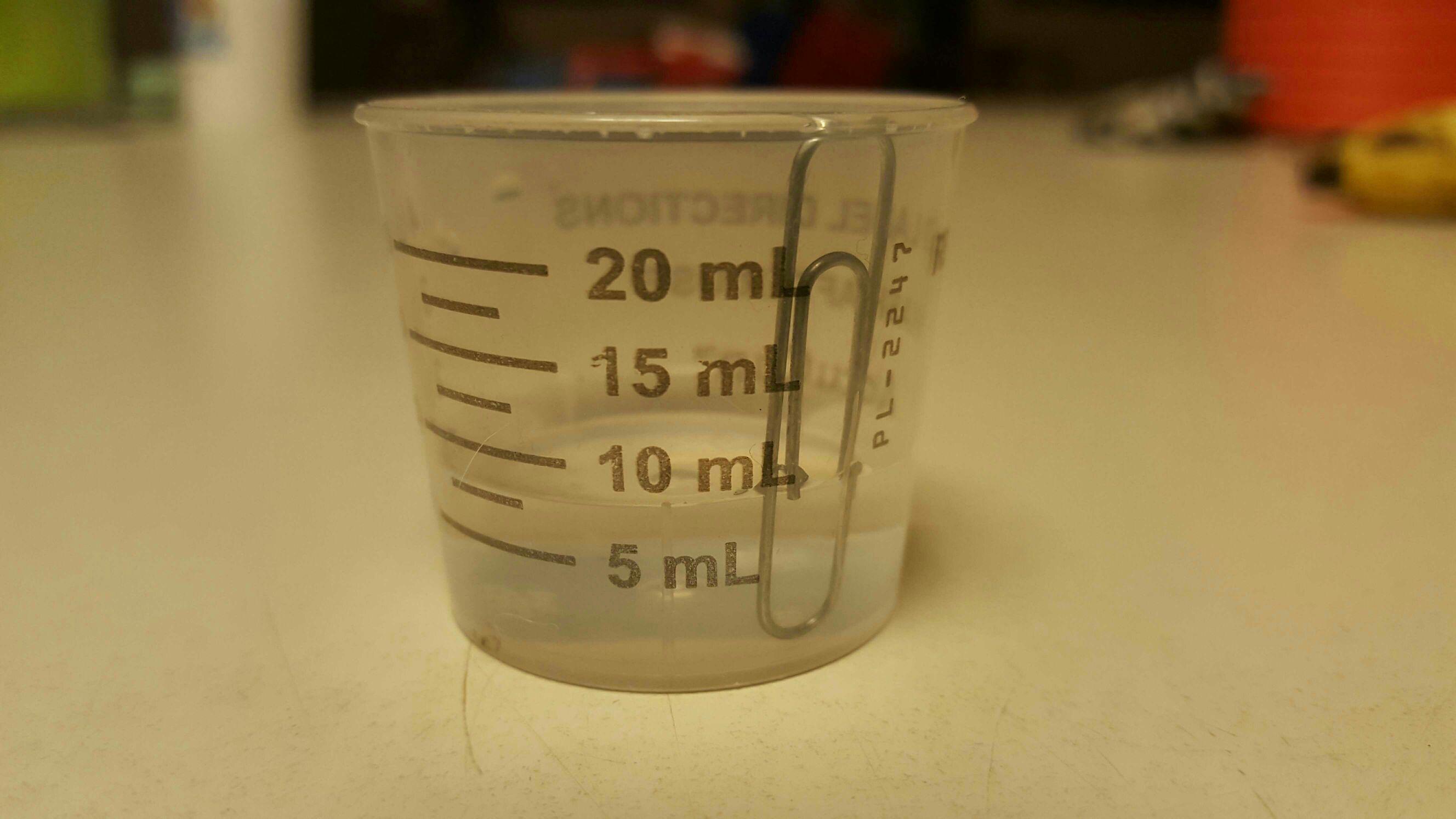
The minimal change in fuel pressure that you used is so ever slight that it is nearly unnoticeable. You need to spend some time on Injector Dynamic's website. Paul Yaw is a cool dude and is UBER smart on tuning and his injector characterization. I worked with him a few times on the dyno when his shop was 2 streets north of us. He has a REALLY good injector calculator that has flow rates with fuel pressure changes. Even RC fuel injection has a cool flow rate calculator relative to fuel pressure-http://www.rceng.com/technical.aspx So if you put in your 21lb/hr(220.5cc/min) and go from 42psi to 45psi, you only gained 7cc/minute. That's not much of a volume increase to better the atomization. Now if you went from 43psi to 58psi, then you may stand a chance. If I have a choice on a project, I'll always stay away from the Ford style injectors. We have an injector flow bench and the pencil stream from them is like a fire hose relative to the Delphi style.
 
Here is what 7cc's volume looks like.
8909e2a37fc7db11c9c288816eab419f-1.jpg


Sent from my SM-G920V
 
Back
Top