

You are using an out of date browser. It may not display this or other websites correctly.
You should upgrade or use an alternative browser.
You should upgrade or use an alternative browser.
spankrjs's Biloxi, MS '83 Scrambler
- Thread starter spankrjs
- Start date


- City
- Biloxi
- State
- MS
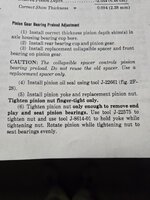
Time to install the pinion yoke and set the pinion bearing preload. A few words from the FSM. NOTE - These numbers are for the pinion ONLY, before you install the differential/ring gear. This is pinion ONLY rotating torque.

Tool I use to check the rotating torque, 1/4" drive torque wrench. INCH pounds, NOT Feet!

The other day when I installed the old yoke I stopped short when tightening up the pinion yoke nut, still had some in and out movement. You can see here, new yoke on the pinion, still has some more to go.

So, you have one shot at this, you want to sneak up on the 17-25 inch pounds. That being said, it is not easy to get there. I tightened the new yoke down with my 1/2" impact, holding the yoke with my hand. Tightened, turn pinion around some, tighten some more. I briefly torqued the nut on the highest setting until the socket would not turn anymore. This got me to the crush sleeve, before it starts to collapse.

I put grease/oil on the part of the yoke that rides on the seal, aviation sealant on the internal yoke spline to keep oil from seaping up the splines.
So, I am going to say right before the crush sleeve starts to smoosh, I checked the rotational torque, about 10 inch pounds.

At 10 inch pounds you will feel a bit of drag, and obviously no more in and out movement as you have eliminated any end play and you are now starting to preload the bearings.
At this point, no more impact, too hard to control IMO. I broke out the 3/4" inch drive big ratchet and a huge pipe wrench to hold the yoke.

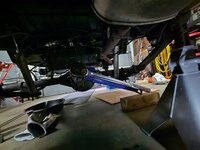
This is where patience comes into play. It takes big tools and a lot of torque to get your rotational torque number. The trick is, for me anyway, just tighten a little at a time, check, repeat. No way to turn that ratchet under the Jeep laying on the ground. I actually go step on the handle standing outside of the Jeep on the driverside. It takes that much force to crush the sleeve. So, I might only turn that socket 5 to 10 degrees at most, stop, then go back under and check the rotational torque. I think I made 6 back and forth trips. Sounds PIA, but if you exceed your value you have to remove the pinion, install a new collapsible spacer, start over again.
Finally got it. This is rotational torque, both directions. It will take a bit more to get initial movement from a stop, but not much.


I'm at 20 inch pounds, specs call for 17 to 25. I'm happy where I'm at. The jump from 10 to 20 inch pounds doesn't sound like much but it can easily be felt when turning the pinion yoke. I checked the torque spinning the yoke a full 360 degrees in both directions. I'm rock steady at 20 all the way around and I don't have any rough spots. Initial torque to get it to start turning probably around 25 to 30 inch pounds.
Calling this part done.
Tool I use to check the rotating torque, 1/4" drive torque wrench. INCH pounds, NOT Feet!
The other day when I installed the old yoke I stopped short when tightening up the pinion yoke nut, still had some in and out movement. You can see here, new yoke on the pinion, still has some more to go.
So, you have one shot at this, you want to sneak up on the 17-25 inch pounds. That being said, it is not easy to get there. I tightened the new yoke down with my 1/2" impact, holding the yoke with my hand. Tightened, turn pinion around some, tighten some more. I briefly torqued the nut on the highest setting until the socket would not turn anymore. This got me to the crush sleeve, before it starts to collapse.
I put grease/oil on the part of the yoke that rides on the seal, aviation sealant on the internal yoke spline to keep oil from seaping up the splines.
So, I am going to say right before the crush sleeve starts to smoosh, I checked the rotational torque, about 10 inch pounds.
At 10 inch pounds you will feel a bit of drag, and obviously no more in and out movement as you have eliminated any end play and you are now starting to preload the bearings.
At this point, no more impact, too hard to control IMO. I broke out the 3/4" inch drive big ratchet and a huge pipe wrench to hold the yoke.
This is where patience comes into play. It takes big tools and a lot of torque to get your rotational torque number. The trick is, for me anyway, just tighten a little at a time, check, repeat. No way to turn that ratchet under the Jeep laying on the ground. I actually go step on the handle standing outside of the Jeep on the driverside. It takes that much force to crush the sleeve. So, I might only turn that socket 5 to 10 degrees at most, stop, then go back under and check the rotational torque. I think I made 6 back and forth trips. Sounds PIA, but if you exceed your value you have to remove the pinion, install a new collapsible spacer, start over again.
Finally got it. This is rotational torque, both directions. It will take a bit more to get initial movement from a stop, but not much.
I'm at 20 inch pounds, specs call for 17 to 25. I'm happy where I'm at. The jump from 10 to 20 inch pounds doesn't sound like much but it can easily be felt when turning the pinion yoke. I checked the torque spinning the yoke a full 360 degrees in both directions. I'm rock steady at 20 all the way around and I don't have any rough spots. Initial torque to get it to start turning probably around 25 to 30 inch pounds.
Calling this part done.
Last edited:
- City
- Biloxi
- State
- MS
More fun, time to install the differential carrier into the axle housing.
I suspected the old carrier bearings were probably worn when I initially removed the carrier from the housing. It did not fall out, but I was able to snatch it out with my hands. With good bearings you usually need to gently pry the carrier out.
When all this is set up from new, you install the carrier and shim side to side for the contact pattern AND to eliminate any lateral play. Once that is done each carrier bearing is shimmer slightly more to preload these bearings. This is why you generally need to pry the carrier out of the axle housing.
I got it installed, not too much drama. Lots of lube on the bearings, shims, and bearing journals. Trick is to insert it evenly, kind of roll it up into place, and keep the shims even with the bearings.
I do NOT beat on the bearings to fully seat the carrier. I get it good and straight, even side to side, then loosely install the bearing journals to keep the carrier from popping back out. I will smack the ring gear with a plastic mallet and gently draw the carrier into place with the bearing journal bolts. It will take some effort but if everything is straight it's not too tough.
Carrier installed fully. I then removed the journals and bolts for red Loctite on the four bolts.

Shims even with bearings on both sides, fully inserted.


Bolts reinstalled and torqued to 87 foot pounds.

Checking ring and pinion back lash.

Gauge zeroed out.

And my back lash.

I'm at 5 thousandths, a bit tighter then the inital check. Makes sense to me it is a hair tighter due to the play in the pinion and carrier bearings. I'm at the tight end of acceptable, but with all new bearings, I'm happy.
That concludes the fiddly part of all this. A metric shit ton of work for four bearings!!
I suspected the old carrier bearings were probably worn when I initially removed the carrier from the housing. It did not fall out, but I was able to snatch it out with my hands. With good bearings you usually need to gently pry the carrier out.
When all this is set up from new, you install the carrier and shim side to side for the contact pattern AND to eliminate any lateral play. Once that is done each carrier bearing is shimmer slightly more to preload these bearings. This is why you generally need to pry the carrier out of the axle housing.
I got it installed, not too much drama. Lots of lube on the bearings, shims, and bearing journals. Trick is to insert it evenly, kind of roll it up into place, and keep the shims even with the bearings.
I do NOT beat on the bearings to fully seat the carrier. I get it good and straight, even side to side, then loosely install the bearing journals to keep the carrier from popping back out. I will smack the ring gear with a plastic mallet and gently draw the carrier into place with the bearing journal bolts. It will take some effort but if everything is straight it's not too tough.
Carrier installed fully. I then removed the journals and bolts for red Loctite on the four bolts.
Shims even with bearings on both sides, fully inserted.
Bolts reinstalled and torqued to 87 foot pounds.
Checking ring and pinion back lash.
Gauge zeroed out.
And my back lash.
I'm at 5 thousandths, a bit tighter then the inital check. Makes sense to me it is a hair tighter due to the play in the pinion and carrier bearings. I'm at the tight end of acceptable, but with all new bearings, I'm happy.
That concludes the fiddly part of all this. A metric shit ton of work for four bearings!!
- City
- Biloxi
- State
- MS
Moved the axle shafts on to the bench to start carefully cleaning the old sealant off the brake backing plates.
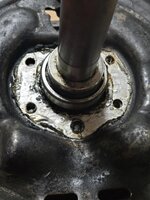
Came out well. Very fiddly doing this with the bearing in the way. No way to remove the bearings without destroying them. And, you don't want all this crap in the grease.

And this is where I started thinking too much. When the axles were still installed in the Jeep, no end play, which is what you want. With them on the bench, AND the outer races off, I noticed how much vertical play there is in the rollers.


I was like what the hell!! A quick glance and I assumed the press ring wasn't pressed all the way down to the inner bearing race. So, I'm thinking these bearings are shot. WRONG. The lock ring was all the way down to the inner bearing race. My dumb ass wasn't thinking "Oh yeah the outer race is off that's why the rollers have so much play". I also didn't stop to think that there was no way these bearings would have lasted this long if they were not installed correctly. Until I took the first one off......
Oh well, let's install new axle bearings and seals on Moser axles while we're at it!!
This is how I remove the lock rings and bearing off of semi floating axles. Axles are heat treated so a torch should NOT be used. Ask me how I know about this...
On the work bench.

Center punch the lock ring.

Drill a little hole.
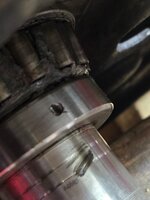
Drill a bigger hole. I use lot's of oil, cobalt drill bits. Don't drill all the way through the lock ring into the axle shaft. Get close but don't hit the shaft!

Finally, use a sharp chisel, split the little bits of metal on either side of the hole you drilled. It won't take much. Once that metal is split, the ring is so weakened, and it is still under a metric shit ton of stress due to being pressed onto the shaft, it will make a neat "ting" sound as it fractures all the way through on its own. You can then slide it off by hand.

Came out well. Very fiddly doing this with the bearing in the way. No way to remove the bearings without destroying them. And, you don't want all this crap in the grease.
And this is where I started thinking too much. When the axles were still installed in the Jeep, no end play, which is what you want. With them on the bench, AND the outer races off, I noticed how much vertical play there is in the rollers.
I was like what the hell!! A quick glance and I assumed the press ring wasn't pressed all the way down to the inner bearing race. So, I'm thinking these bearings are shot. WRONG. The lock ring was all the way down to the inner bearing race. My dumb ass wasn't thinking "Oh yeah the outer race is off that's why the rollers have so much play". I also didn't stop to think that there was no way these bearings would have lasted this long if they were not installed correctly. Until I took the first one off......
Oh well, let's install new axle bearings and seals on Moser axles while we're at it!!
This is how I remove the lock rings and bearing off of semi floating axles. Axles are heat treated so a torch should NOT be used. Ask me how I know about this...
On the work bench.
Center punch the lock ring.
Drill a little hole.
Drill a bigger hole. I use lot's of oil, cobalt drill bits. Don't drill all the way through the lock ring into the axle shaft. Get close but don't hit the shaft!
Finally, use a sharp chisel, split the little bits of metal on either side of the hole you drilled. It won't take much. Once that metal is split, the ring is so weakened, and it is still under a metric shit ton of stress due to being pressed onto the shaft, it will make a neat "ting" sound as it fractures all the way through on its own. You can then slide it off by hand.
- City
- Biloxi
- State
- MS
And now the bearings. I wiped as much grease off as I can. I use a Dremel cut off wheel and cut the outer cage.

Once cut, I pry the outer cage off, remove the rollers, and the brake backing plate.


After that, inner bearing race time. Same as the lock ring, this inner race is under a bunch of stress. I use the same Dremel cut off wheel, start cutting across the inner race like so.

You don't have to go all the way through. Get close. Get the chisel, split the metal on the two ends where it is thickest. You will hear the same neat "ting" sound as the inner race finishes it's own destruction on its own. It will then slide off by hand.

No fuss, not muss, and no damaged axle shafts.
More clean up needed before proceeding any further. Make sure you keep the correct backing plate with the correct axle shaft!!!

That's it for now!!!

Once cut, I pry the outer cage off, remove the rollers, and the brake backing plate.
After that, inner bearing race time. Same as the lock ring, this inner race is under a bunch of stress. I use the same Dremel cut off wheel, start cutting across the inner race like so.
You don't have to go all the way through. Get close. Get the chisel, split the metal on the two ends where it is thickest. You will hear the same neat "ting" sound as the inner race finishes it's own destruction on its own. It will then slide off by hand.
No fuss, not muss, and no damaged axle shafts.
More clean up needed before proceeding any further. Make sure you keep the correct backing plate with the correct axle shaft!!!
That's it for now!!!

- City
- Biloxi
- State
- MS
A little more piddling around tonight.
Cleaned some parts.

Contents of the Moser bearing and seal replacement kit. Note - this stuff has some type of oil/grease coating on it, I reckon to stop corrosion.
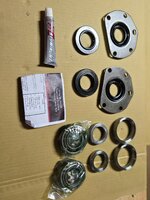
I'll do a step by step install once I get done with all the prep work. For now, working backwards. Figured I might as well install new inner oil seals while I'm at it. To change them, have to remove the previously installed Moser bearing spacer things.
Bearing spacer is silver and outboard, seal is inner and black.


This is a chicken or egg situation. You can't get the slide hammer between the inner seal and outer ring because the outer ring is pushed to the face of the seal. You can't slide hammers them both out at the same time because the seal in thinner and will just deform.
So, destroying the seal with the ring in place, being careful not to damage the axle housing.

Removed, rest in pieces.

After that PIA detour, slide hammer made quick work of the bearing spacer thing.


Need to repeat this step on the other side, a little bit more clean up work, and then finally I can start to reassemble and install the axle shafts.
That's it for now.
Cleaned some parts.
Contents of the Moser bearing and seal replacement kit. Note - this stuff has some type of oil/grease coating on it, I reckon to stop corrosion.
I'll do a step by step install once I get done with all the prep work. For now, working backwards. Figured I might as well install new inner oil seals while I'm at it. To change them, have to remove the previously installed Moser bearing spacer things.
Bearing spacer is silver and outboard, seal is inner and black.
This is a chicken or egg situation. You can't get the slide hammer between the inner seal and outer ring because the outer ring is pushed to the face of the seal. You can't slide hammers them both out at the same time because the seal in thinner and will just deform.
So, destroying the seal with the ring in place, being careful not to damage the axle housing.
Removed, rest in pieces.
After that PIA detour, slide hammer made quick work of the bearing spacer thing.
Need to repeat this step on the other side, a little bit more clean up work, and then finally I can start to reassemble and install the axle shafts.
That's it for now.
- City
- Biloxi
- State
- MS
Cleaned up the outer axle housing ends tonight.

This housing is in great shape. No evidence of a spun bearing. Two things to note:
1) The inner chamfer inside the tube, this is what the inner seal must be installed against.
2) There is a slight "step" in this area of the housing, it appears as a line/ridge, about 3/4" in from the outer face of the axle housing. The ID of the housing gets tighter past this ridge. The bearing, Moser or OEM, sits outboard of this "step".

I always install inner oil seals on AMC 20 axles. You can leave them out and let the differential oil lubricate the bearings, I prefer greasing the bearings. And the inner seal will help prevent the outer seal from leaking out gear oil. In a perfect world the AMC 20 would not leak gear oil past the outer seals. This is not a perfect world.
Spring faces the differential.

The outer seal has a rubber coating along the edge, black like the rest of the sealing material. This should seal the outer ID of the seal to the ID of the axle tube.

I always put a thin coat of RTV where this seal goes, extra sealing insurance. I used some Grey Permatex I had on hand.
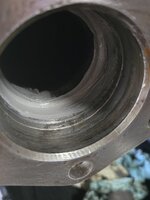
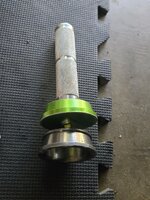
Using one of my old bearing pieces from my press supply box and the handy seal driver to install the inner seals. You want to make sure you install these seals straight and true.

Installed.

Just my OCD, just checking to verify it is installed straight and true.

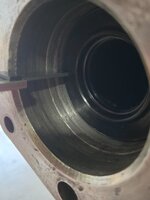
That black rubber coating on the OD of the seal wiped the excess RTV off the ID of the tube when I installed the seal, basically wiped the housing clean.
This housing is in great shape. No evidence of a spun bearing. Two things to note:
1) The inner chamfer inside the tube, this is what the inner seal must be installed against.
2) There is a slight "step" in this area of the housing, it appears as a line/ridge, about 3/4" in from the outer face of the axle housing. The ID of the housing gets tighter past this ridge. The bearing, Moser or OEM, sits outboard of this "step".
I always install inner oil seals on AMC 20 axles. You can leave them out and let the differential oil lubricate the bearings, I prefer greasing the bearings. And the inner seal will help prevent the outer seal from leaking out gear oil. In a perfect world the AMC 20 would not leak gear oil past the outer seals. This is not a perfect world.
Spring faces the differential.
The outer seal has a rubber coating along the edge, black like the rest of the sealing material. This should seal the outer ID of the seal to the ID of the axle tube.
I always put a thin coat of RTV where this seal goes, extra sealing insurance. I used some Grey Permatex I had on hand.
Using one of my old bearing pieces from my press supply box and the handy seal driver to install the inner seals. You want to make sure you install these seals straight and true.
Installed.
Just my OCD, just checking to verify it is installed straight and true.
That black rubber coating on the OD of the seal wiped the excess RTV off the ID of the tube when I installed the seal, basically wiped the housing clean.
- City
- Biloxi
- State
- MS
Installed the Moser bearing spacers next. These pieces are the back stop for the axle bearings, preventing the bearings from riding too deep in the axle housing.
The raised lip/edge faces the outside of the axle tube, like so.

I wiped a little oil around the inside of the axle housing, used the same install tools that were used on the inner oil seals to install these bearing spacers.

Installed. This piece should be touching the face of the inner axle oil seal when it is fully installed.

Now the part that can be a PIA. After these inner bearing spacers are installed you need to test fit the axle bearings inside the axle tube. You do this BEFORE pressing the bearings on the axles. Moser wants the bearings to protrude outside the axle housing, .02 to .08. I believe this is so the brake backing plate, when installed and tightened down, will put a slight load on the bearing, preventing the inner portion of the bearing from separating from the outer race.
The axle bearings will be pressed on to the axle shafts like so, the line on the OD of the bearing race goes toward the outside of the housing.

This will put the inner bearing race, the side the sticks out, facing the differential. This extended inner bearing race is what the lock ring will be pressed against. This keeps the lock ring from binding the bearing up.


Moser instructions, specifying bearing stick out dimension.
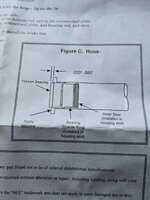
I wiped a little oil on the OD of the bearing, squared it up to the axle housing, pushed it in until it sits hard against the bearing spacer you previously installed. You want the bearing to fit snugly inside the axle housing. If it just slips in and out, or falls out, your axle housing is probably too damaged to proceed. I had to push hard on this bearing to go in, with my hand. I could pull it back out by hand, but was not super easy.
Bearing installed.

The bearing should stick out of the axle housing a little bit.

The raised lip/edge faces the outside of the axle tube, like so.
I wiped a little oil around the inside of the axle housing, used the same install tools that were used on the inner oil seals to install these bearing spacers.
Installed. This piece should be touching the face of the inner axle oil seal when it is fully installed.
Now the part that can be a PIA. After these inner bearing spacers are installed you need to test fit the axle bearings inside the axle tube. You do this BEFORE pressing the bearings on the axles. Moser wants the bearings to protrude outside the axle housing, .02 to .08. I believe this is so the brake backing plate, when installed and tightened down, will put a slight load on the bearing, preventing the inner portion of the bearing from separating from the outer race.
The axle bearings will be pressed on to the axle shafts like so, the line on the OD of the bearing race goes toward the outside of the housing.
This will put the inner bearing race, the side the sticks out, facing the differential. This extended inner bearing race is what the lock ring will be pressed against. This keeps the lock ring from binding the bearing up.
Moser instructions, specifying bearing stick out dimension.
I wiped a little oil on the OD of the bearing, squared it up to the axle housing, pushed it in until it sits hard against the bearing spacer you previously installed. You want the bearing to fit snugly inside the axle housing. If it just slips in and out, or falls out, your axle housing is probably too damaged to proceed. I had to push hard on this bearing to go in, with my hand. I could pull it back out by hand, but was not super easy.
Bearing installed.
The bearing should stick out of the axle housing a little bit.
- City
- Biloxi
- State
- MS
Using a caliper to measure the "little bit ".


I'm within spec, so good to go. I will check this measurement in several places. Don't be surprised is the measurement varies a little bit from spot check location to spot check location.
The PIA part, potentially, but necessary: IF the bearing is sticking out too far, you must remove the spacer rings and machine down the back side of them to obtain the proper stick out dimension. This means destroying your previously installed inner axle oil seals. Then taking these spacer rings to a machine shop and having them professionally shortened.
I have had this happen once, on one of JeepAddicts 1982 CJ-7 Jamborees. Luckily, the guy that had a shop next to his place turned these parts down for me. So, it does happen, maybe just not that often, not sure?
I removed the bearings from the axle housing and have them soaking in solvent to remove the packaging grease. I will then repack these bearing prior to pressing them onto the axle shafts.
Quick notes on my axle shafts, which have about 20k miles on them. You can see where the seals ride on the shafts, there are marks. These are just marks, nothing that catches a finger nail, so good to go.

Will try to finish up the install over the next few evenings, that's it for now.
I'm within spec, so good to go. I will check this measurement in several places. Don't be surprised is the measurement varies a little bit from spot check location to spot check location.
The PIA part, potentially, but necessary: IF the bearing is sticking out too far, you must remove the spacer rings and machine down the back side of them to obtain the proper stick out dimension. This means destroying your previously installed inner axle oil seals. Then taking these spacer rings to a machine shop and having them professionally shortened.
I have had this happen once, on one of JeepAddicts 1982 CJ-7 Jamborees. Luckily, the guy that had a shop next to his place turned these parts down for me. So, it does happen, maybe just not that often, not sure?
I removed the bearings from the axle housing and have them soaking in solvent to remove the packaging grease. I will then repack these bearing prior to pressing them onto the axle shafts.
Quick notes on my axle shafts, which have about 20k miles on them. You can see where the seals ride on the shafts, there are marks. These are just marks, nothing that catches a finger nail, so good to go.
Will try to finish up the install over the next few evenings, that's it for now.
- City
- Biloxi
- State
- MS
Got home late today, but did at least manage to finish cleaning the packing grease out of the new bearings, then packed them with my favorite wheel bearing grease.


Stored the freshly packed bearings inside plastic bags for now, hope to get these bearing pressed on the axle shafts tomorrow night.

That's it for now.
Stored the freshly packed bearings inside plastic bags for now, hope to get these bearing pressed on the axle shafts tomorrow night.
That's it for now.
- City
- Biloxi
- State
- MS
Time to press the bearings on to the axle shafts.
I lube up the shaft where the seals/bearings ride with some grease/oil mixture.

I reinstalled the outer metal dust shields next. I think this parts main function is to protect the outer axle seal from damage when you are messing with the drum brake parts/springs.
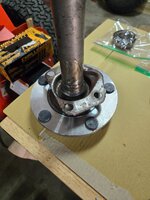
Outer axle seal goes next, spring faces the differential. I pack the spring side with grease since it rides against the bearing. A little extra reservoir of grease.


I put a thin coat of RTV on the outer face of the brake packing plate, where the outer oil seal plate rides. Note sure how much good it will do but what the hell.
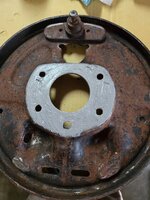
Brake backing plate slides down the shaft next.

You can see how the lip of the outer seal fills up the hole in the brake backing plate, sealing the outer face of the axle bearing.

Slide the bearing down the shaft next, note it's orientation.

My finger is pointing to the "stop" that the bearing must be pressed down to.

I press the axle down through the new bearing. I use an old split Moser bearing lock ring to act as a bearing press tool, works perfect.

You can probably press the new bearing and the new lock ring on at the same time, not sure. I always do them separately.
I lube up the shaft where the seals/bearings ride with some grease/oil mixture.
I reinstalled the outer metal dust shields next. I think this parts main function is to protect the outer axle seal from damage when you are messing with the drum brake parts/springs.
Outer axle seal goes next, spring faces the differential. I pack the spring side with grease since it rides against the bearing. A little extra reservoir of grease.
I put a thin coat of RTV on the outer face of the brake packing plate, where the outer oil seal plate rides. Note sure how much good it will do but what the hell.
Brake backing plate slides down the shaft next.
You can see how the lip of the outer seal fills up the hole in the brake backing plate, sealing the outer face of the axle bearing.
Slide the bearing down the shaft next, note it's orientation.
My finger is pointing to the "stop" that the bearing must be pressed down to.
I press the axle down through the new bearing. I use an old split Moser bearing lock ring to act as a bearing press tool, works perfect.
You can probably press the new bearing and the new lock ring on at the same time, not sure. I always do them separately.
- City
- Biloxi
- State
- MS
Pressing the axle down through the new bearing.

I then remove the old split lock ring, press on the new lock ring.
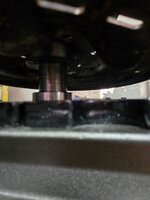
Pressed on.

You might notice a slight gap and think the lock ring is not pressed all the way down.

This is normal. With the ring pressed all the way down there will appear to be a gap because the bearings inner race sticks out further on the back/lock ring side. Below is an uninstalled bearing and lock ring, note the same gap caused by the bearings inner race stick out.

Next, time to install the axle shafts. I place more grease around the outer face of the inner oil seal, inside the bearing spacer ring. Just enough to make a little extra grease reservoir. Use a pretty generous smudge of RTV on the out side face of the axle where the backing plate rides. Since the Moser bearing stick out causes the backing plate to bow out slightly, I go a little heavy on the RTV. Just try to keep it out of the axle grease.

Carefully slide the axle shaft into the housing, torque the top lock nuts to 35 foot pounds. I used new nuts.

Not the best pictures, but due to the bow in the brake backing plate due to the bearing stick out you won't have a bunch of excess RTV squeeze out along the outer edges of the parts, unless you went super heavy with the RTV. This is OK. The brake backing plate/seal will be smooshed tight against the bearing, which is in the center.


I then remove the old split lock ring, press on the new lock ring.
Pressed on.
You might notice a slight gap and think the lock ring is not pressed all the way down.
This is normal. With the ring pressed all the way down there will appear to be a gap because the bearings inner race sticks out further on the back/lock ring side. Below is an uninstalled bearing and lock ring, note the same gap caused by the bearings inner race stick out.
Next, time to install the axle shafts. I place more grease around the outer face of the inner oil seal, inside the bearing spacer ring. Just enough to make a little extra grease reservoir. Use a pretty generous smudge of RTV on the out side face of the axle where the backing plate rides. Since the Moser bearing stick out causes the backing plate to bow out slightly, I go a little heavy on the RTV. Just try to keep it out of the axle grease.
Carefully slide the axle shaft into the housing, torque the top lock nuts to 35 foot pounds. I used new nuts.
Not the best pictures, but due to the bow in the brake backing plate due to the bearing stick out you won't have a bunch of excess RTV squeeze out along the outer edges of the parts, unless you went super heavy with the RTV. This is OK. The brake backing plate/seal will be smooshed tight against the bearing, which is in the center.
- City
- Biloxi
- State
- MS
Repeat for the other side, finished.

Quick note about the centering block used with the original two piece axles. In the picture below, you can see how far the Moser axle shaft splines into one of the differential side gears.

Not a lot of splines showing past the end of the axle shaft. Hard to take a picture, but the OEM centering block actually rides inside the side gears. So, most of the time with the Moser axle shafts, this centering block will prevent the second shaft from sliding in all the way.

Used some Aviation Selant and glued a new cork gasket to the axle housing.

When I was cleaning up the OEM differential cover, I noticed this line. I saw two of these marks. No big deal except one of them is at what was the bottom of the cover AND it appears to be a little crack in the sheet metal on the round part, not the flange. This would explain my tiny leak back here.
Bottom of the cover in the below picture was the top end, where the surface rust is present.
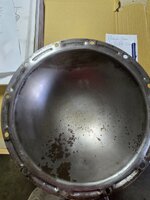
You can just make out where the line in the flange looks like a tear in the sheet metal on the round part of the cover.

No big deal, I plan on draining the rear end oil out in 500 miles, so I will install a different cover then. I plan on breaking in the new rear axle bearings, just like you break in a new ring and pinion set up.
Cover reinstalled with the original Torx bolts, torqued to 20 foot pounds.

Will jump on the drum brake reinstallation tomorrow, then finally on to round two of this little adventure.
One other quick note - with the new Trac-Lok clutch plates installed, both shafts turn the same direction now when I turn one axle, like a spool. So, hopefully this will help this LSD's performance a bit.
Also, don't fill the axle all the way up with oil until the RTV fully cures, usually 24 hours. The inner seals should keep oil out of the outer bearings, but better safe than sorry.
That's it for now.
Quick note about the centering block used with the original two piece axles. In the picture below, you can see how far the Moser axle shaft splines into one of the differential side gears.
Not a lot of splines showing past the end of the axle shaft. Hard to take a picture, but the OEM centering block actually rides inside the side gears. So, most of the time with the Moser axle shafts, this centering block will prevent the second shaft from sliding in all the way.
Used some Aviation Selant and glued a new cork gasket to the axle housing.
When I was cleaning up the OEM differential cover, I noticed this line. I saw two of these marks. No big deal except one of them is at what was the bottom of the cover AND it appears to be a little crack in the sheet metal on the round part, not the flange. This would explain my tiny leak back here.
Bottom of the cover in the below picture was the top end, where the surface rust is present.
You can just make out where the line in the flange looks like a tear in the sheet metal on the round part of the cover.
No big deal, I plan on draining the rear end oil out in 500 miles, so I will install a different cover then. I plan on breaking in the new rear axle bearings, just like you break in a new ring and pinion set up.
Cover reinstalled with the original Torx bolts, torqued to 20 foot pounds.
Will jump on the drum brake reinstallation tomorrow, then finally on to round two of this little adventure.
One other quick note - with the new Trac-Lok clutch plates installed, both shafts turn the same direction now when I turn one axle, like a spool. So, hopefully this will help this LSD's performance a bit.
Also, don't fill the axle all the way up with oil until the RTV fully cures, usually 24 hours. The inner seals should keep oil out of the outer bearings, but better safe than sorry.
That's it for now.
- City
- Biloxi
- State
- MS
Time to reassemble the drum brakes. Certain parts are specific to a certain side.
One side components.

Note to myself so I keep it straight.

The self adjusters have a stamp on them below the removable end.

The hardware kits come with two different length pins, CJ's use the shorter pins.

Handy part number from NAPA if you need spares of these clips and don't need to buy an entire hardware kit.

FSM is good reference for this work.
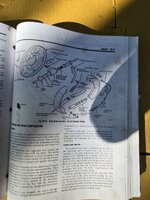
Not going to do a step by step on this, here's some finished pictures.


Nothing left to do except to adjust the pads via the self adjuster and the rear brake job is complete.
One side components.
Note to myself so I keep it straight.
The self adjusters have a stamp on them below the removable end.
The hardware kits come with two different length pins, CJ's use the shorter pins.
Handy part number from NAPA if you need spares of these clips and don't need to buy an entire hardware kit.
FSM is good reference for this work.
Not going to do a step by step on this, here's some finished pictures.
Nothing left to do except to adjust the pads via the self adjuster and the rear brake job is complete.
- City
- Biloxi
- State
- MS
So I could have just bled out the brakes and called this job finished, but nothing is ever that easy.
When I was taking the brakes apart I noticed the fluid was pretty nasty.

Partially my fault, I haven't flushed out or even messed with the brakes in quite a few years. The other issue, these are the original 43 year old OEM hard lines. So, I decided to swap out all the brake lines.
Went with stainless lines from Inline Tube.


I also purchased there flexible lines, but I didn't get on with them too well, more on this in a bit.


These lines, when assembled, are a bit longer than the OEM lines.


I replaced the original rubber brale lines a few years ago with NAPA replacement lines. Since then, I installed 2" lift springs. The stock length lines are almoat at their limit with the suspension at full droop so might as well fix this issue, too.
When I was taking the brakes apart I noticed the fluid was pretty nasty.
Partially my fault, I haven't flushed out or even messed with the brakes in quite a few years. The other issue, these are the original 43 year old OEM hard lines. So, I decided to swap out all the brake lines.
Went with stainless lines from Inline Tube.
I also purchased there flexible lines, but I didn't get on with them too well, more on this in a bit.
These lines, when assembled, are a bit longer than the OEM lines.
I replaced the original rubber brale lines a few years ago with NAPA replacement lines. Since then, I installed 2" lift springs. The stock length lines are almoat at their limit with the suspension at full droop so might as well fix this issue, too.
- City
- Biloxi
- State
- MS
Started at the rear axle and worked my way forward. Rear axle mounted lines were easy enough, and surprisingly the long line from the proportioning valve to the rear flex line was easy to change.
Pretty good match.
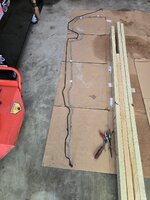
Wasn't even that bad snaking it behind my fuel injection plumbing back here.

But, this is where the new flex line kicked my butt. I could not get the line to sit right in the frame mounted bracket.

And, with the flex line in place and the clip installed, the harder line was jammed up hard into the frame.

Wasted too much time with this, but just can't get it right. Finally, compared the new line to the old line, this is the issue:

New line on left, old on right. The stick out past the clip groove on the new line is too long, so there is not enough room between the back of the frame mounted clip and the face of the frame cross member. So, I am going to get some different flex lines.
Three out of seven lines complete, the east ones.

Pretty good match.
Wasn't even that bad snaking it behind my fuel injection plumbing back here.
But, this is where the new flex line kicked my butt. I could not get the line to sit right in the frame mounted bracket.
And, with the flex line in place and the clip installed, the harder line was jammed up hard into the frame.
Wasted too much time with this, but just can't get it right. Finally, compared the new line to the old line, this is the issue:
New line on left, old on right. The stick out past the clip groove on the new line is too long, so there is not enough room between the back of the frame mounted clip and the face of the frame cross member. So, I am going to get some different flex lines.
Three out of seven lines complete, the east ones.
- City
- Biloxi
- State
- MS
Decided to swap out the two lines that run from the master cylinder down to the proportioning valve next.
Next pictures are just reference shots for me.
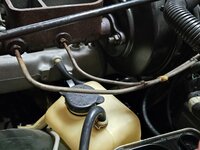


Lots of zip ties!
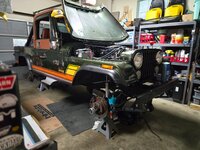
I have swapped these lines out before, on my red Scrambler, when I swapped from manual brakes to power brakes. But, those were new lines that had only been installed for maybe 10 years. These original lines are not going to come out easy.
Belly of the beast.

PIA area to work. Surprisingly, and unfortunately, the main item in the way is the bellhousing, and I'm not going to remove it to make this job easier!!
I was able to get the top, forward, line to break free with a line wrench. That fitting takes a 1/2" wrench. The other three, which take smaller wrenches, will not budge. I think the bigger fitting/more surface area allows more torque to be applied. On the other three lines, I haven't spun the line wrench yet but it is getting dangerously close to that.
One other note: with the proportioning valve bolted to the plate/frame the fittings are so close that a wrench won't clear the frame. Something to watch out for.
I am probably going to cut the three frozen lines, without getting metal inside the proportioning valve, then remove the valve from the vehicle. I will then mount the proportioning valve in a vice and use sockets to remove the frozen fittings.
I knew this would be fun......
That's it for now.
Next pictures are just reference shots for me.
Lots of zip ties!
I have swapped these lines out before, on my red Scrambler, when I swapped from manual brakes to power brakes. But, those were new lines that had only been installed for maybe 10 years. These original lines are not going to come out easy.
Belly of the beast.
PIA area to work. Surprisingly, and unfortunately, the main item in the way is the bellhousing, and I'm not going to remove it to make this job easier!!
I was able to get the top, forward, line to break free with a line wrench. That fitting takes a 1/2" wrench. The other three, which take smaller wrenches, will not budge. I think the bigger fitting/more surface area allows more torque to be applied. On the other three lines, I haven't spun the line wrench yet but it is getting dangerously close to that.
One other note: with the proportioning valve bolted to the plate/frame the fittings are so close that a wrench won't clear the frame. Something to watch out for.
I am probably going to cut the three frozen lines, without getting metal inside the proportioning valve, then remove the valve from the vehicle. I will then mount the proportioning valve in a vice and use sockets to remove the frozen fittings.
I knew this would be fun......
That's it for now.
- City
- Biloxi
- State
- MS
Pictures and narrative are going to bounce around some, got a pretty good amount of work completed and no collateral damage, so happy about that.
Thought about how to cut the old brake lines in place, without throwing sparks around. Pretty tight area to work in, quick experiment, worked perfectly.

Hammer and chisel. No sparks, and no little metal debris dropping down inside the proportioning valve.
I've been using old master cylinder plastic shipping plugs and the little rubber/plastic caps that came on the new lines to prevent brake fluid from dripping all over the place while I remove the old lines.

Previous owner damage. Brake fluid and paint do not always play nice with each other.

Took off the one proportioning valve to master cylinder line that loosened yesterday. Note the caps on the end of the line and the little clips on the line. I leave the clips in place on the old line until I am ready to install them on the new lines. This way I keep them in the correct spot and orientation.


The chisel worked great to cut the two front lines that rest against the frame rail.


Once cut, I was able to slip a wrench over the this fitting and break it loose.

On this line I used a punch and hammer to drive a new wrench over this fitting but it would not break free, wrench wanted to slip.

Thought about how to cut the old brake lines in place, without throwing sparks around. Pretty tight area to work in, quick experiment, worked perfectly.
Hammer and chisel. No sparks, and no little metal debris dropping down inside the proportioning valve.
I've been using old master cylinder plastic shipping plugs and the little rubber/plastic caps that came on the new lines to prevent brake fluid from dripping all over the place while I remove the old lines.
Previous owner damage. Brake fluid and paint do not always play nice with each other.
Took off the one proportioning valve to master cylinder line that loosened yesterday. Note the caps on the end of the line and the little clips on the line. I leave the clips in place on the old line until I am ready to install them on the new lines. This way I keep them in the correct spot and orientation.
The chisel worked great to cut the two front lines that rest against the frame rail.
Once cut, I was able to slip a wrench over the this fitting and break it loose.
On this line I used a punch and hammer to drive a new wrench over this fitting but it would not break free, wrench wanted to slip.
- City
- Biloxi
- State
- MS
Close up of the wrench around the fitting, no bueno.

Jumping to the other valve to master cylinder line, I need to remove this clip that holds it to the steel plate that the proportioning valve attaches to. Yep, that bolt head is fun to get to!!


Hammer and punch will not work here to cut this line, but found something that did!!


A new box end wrench was able to break the fitting loose.

The proportioning valve and mounting plate on the ground, one line left to remove.

No rust damage or cracks to the frame behind the plate, always good news.

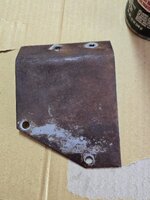
The valve/line mounting plate, really good shape for being 43 years old.

Jumping to the other valve to master cylinder line, I need to remove this clip that holds it to the steel plate that the proportioning valve attaches to. Yep, that bolt head is fun to get to!!
Hammer and punch will not work here to cut this line, but found something that did!!
A new box end wrench was able to break the fitting loose.
The proportioning valve and mounting plate on the ground, one line left to remove.
No rust damage or cracks to the frame behind the plate, always good news.
The valve/line mounting plate, really good shape for being 43 years old.