

You are using an out of date browser. It may not display this or other websites correctly.
You should upgrade or use an alternative browser.
You should upgrade or use an alternative browser.
Spankrjs' 1984 Long Term Project
- Thread starter spankrjs
- Start date

- City
- Columbia
- State
- MO
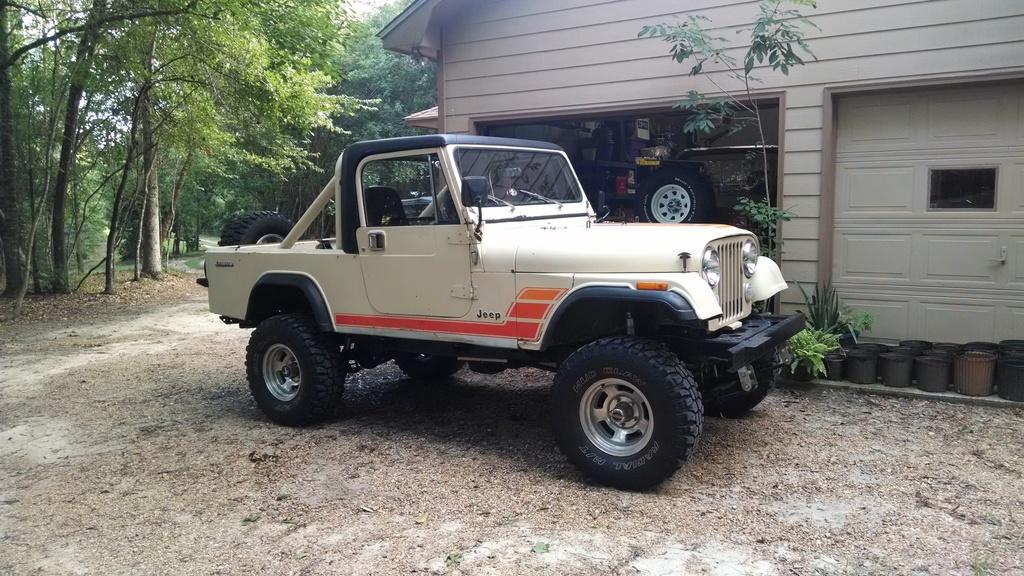
Looks like a different Jeep with the 1/2 cab. Looks great!
Sent from my SAMSUNG-SM-G850A

- City
- Biloxi
- State
- MS
Looks great.
Looks like a different Jeep with the 1/2 cab. Looks great!
Sent from my SAMSUNG-SM-G850A
Thanks guys


- City
- Biloxi
- State
- MS
What Raymond said. Nice.
Thanks
JB right? Love it.
Appreciate it
I "think" it is "Almond Beige", "Jamaican Beige" was an '83 color, this is an '84, but I think they are close to the same colors

- City
- Biloxi
- State
- MS
Figured I would do a "Post-National" update. The tan Scrambler drove to, wheeled, and made it back from the Black Hills in one piece, always a good thing. A few minor issues, but no real problems, except for the "gas vaporizing/perculating in 95+ degree heat at interstate speeds only in the south eastern US", more on that later.
I don't have any wheeling pictures, my "co-pilot" takes pictures of plants and stuff, but here are the pictures I took, kind of boring, but here we go:
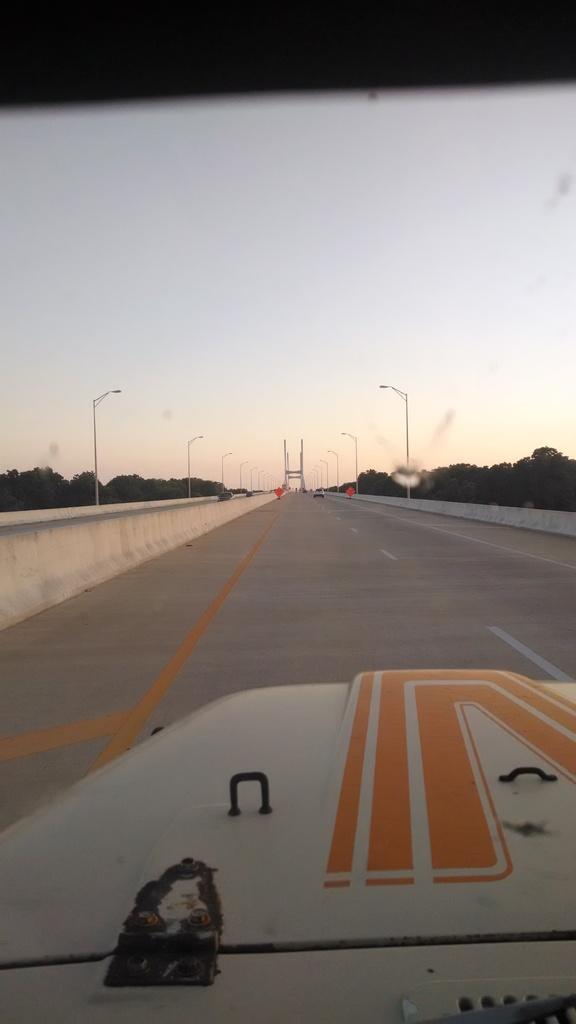
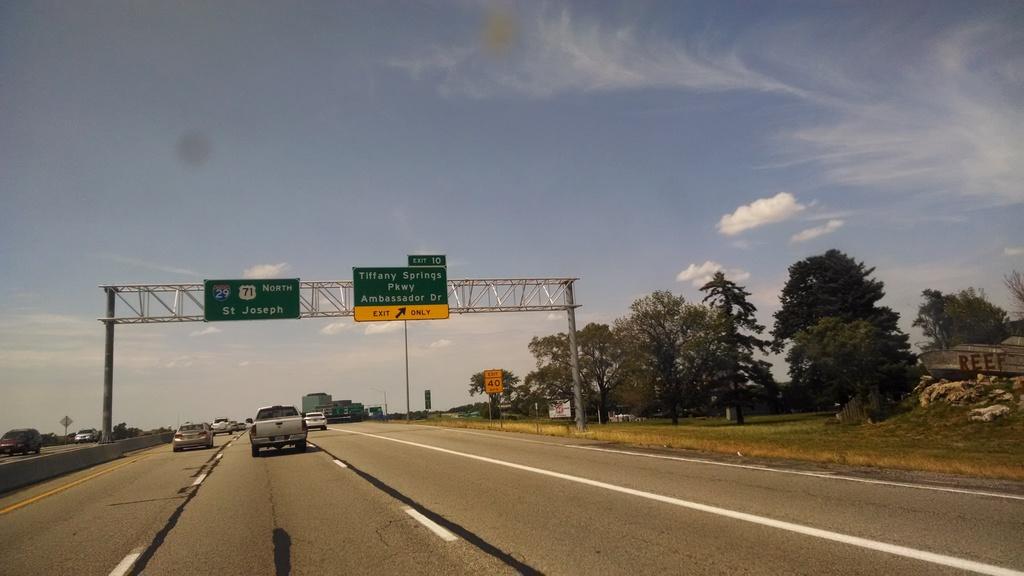
Driving through the MS delta, heading toward Arkansas, flat and boring:
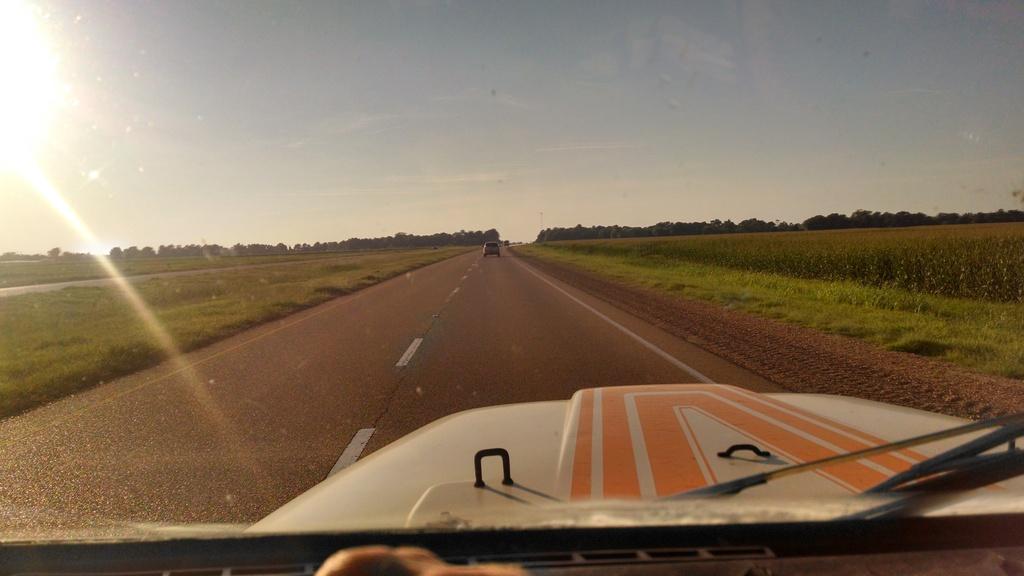
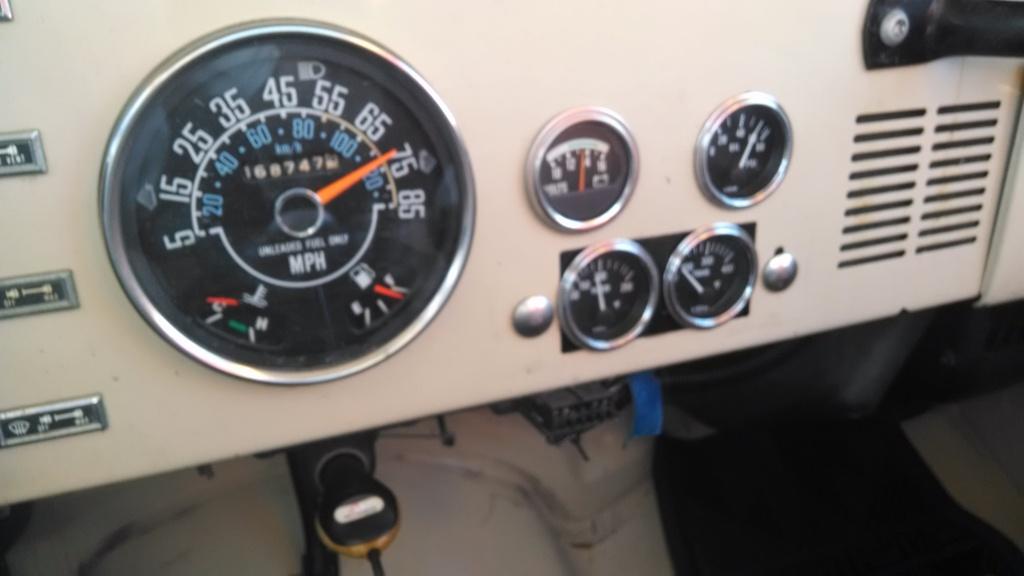
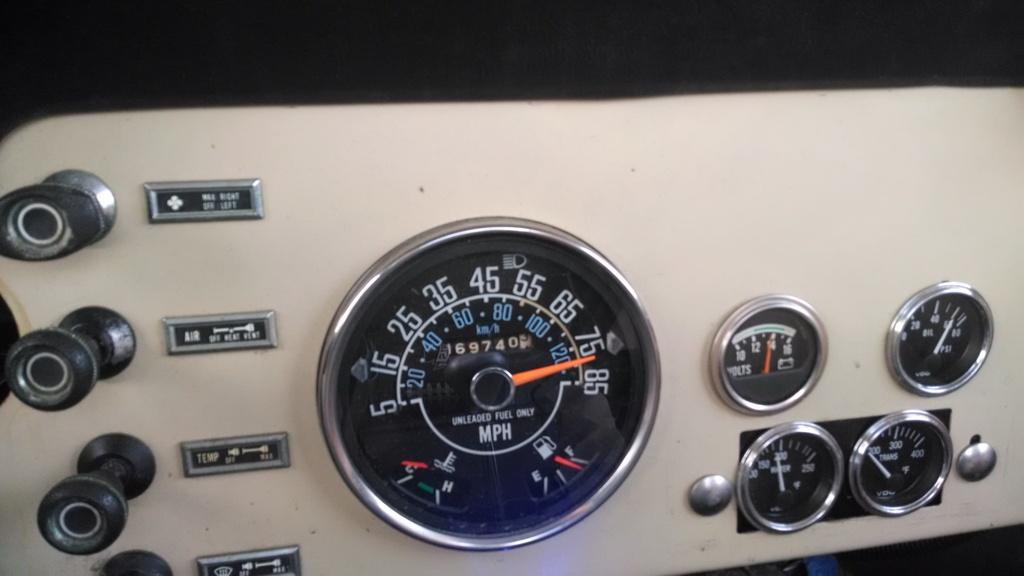
Maintained this speed for most of the trip, except for South Dakota, where the speed limit was 80 MPH. Runs great at 75, love that new engine oil pressure, runs right at 195-200 degrees with a 195 degree thermostat:
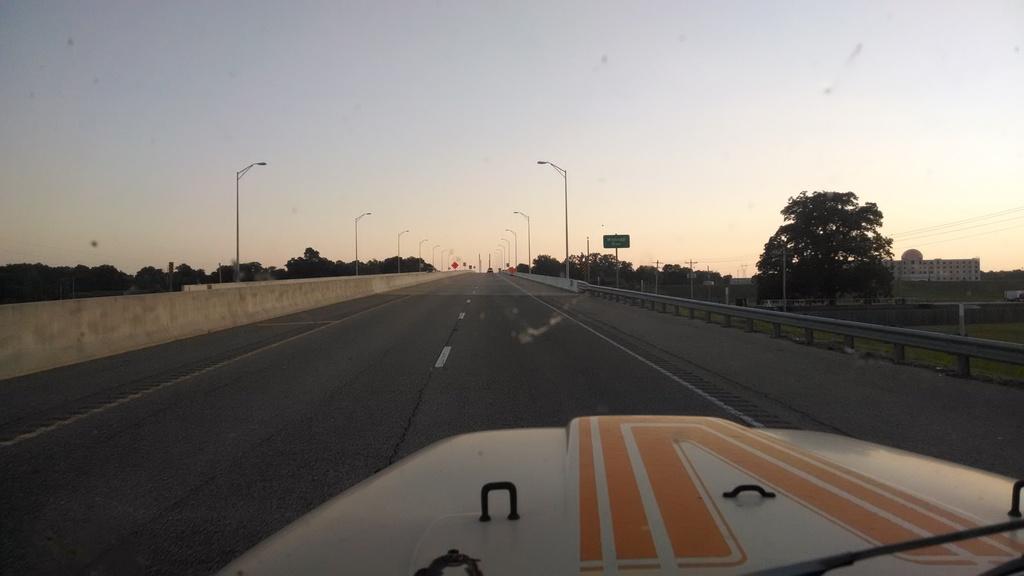
Crossing the MS River into Arkansas:
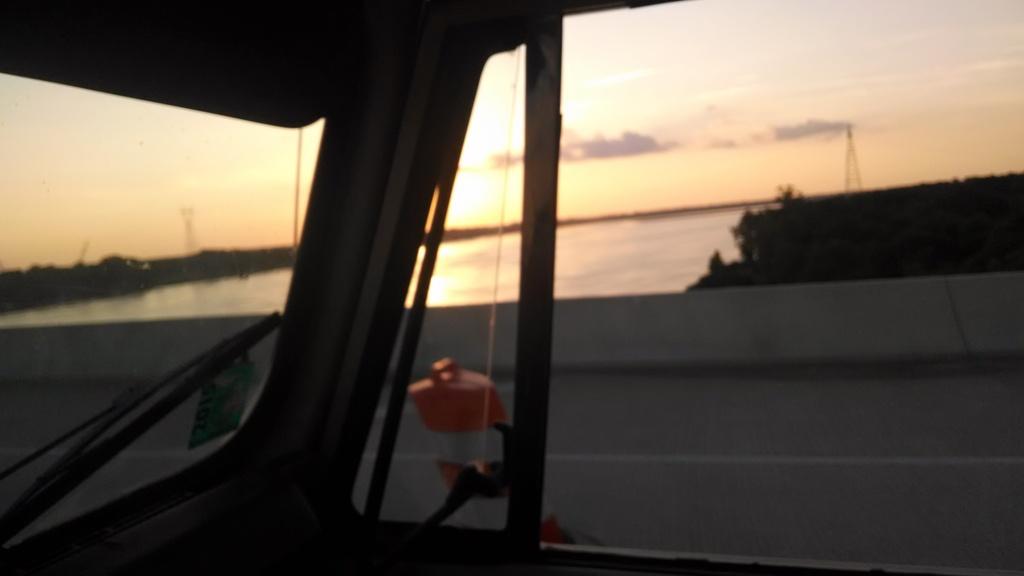
Stopped overnight in a real dump hotel north of Little Rock, picture of the non-looted bed:
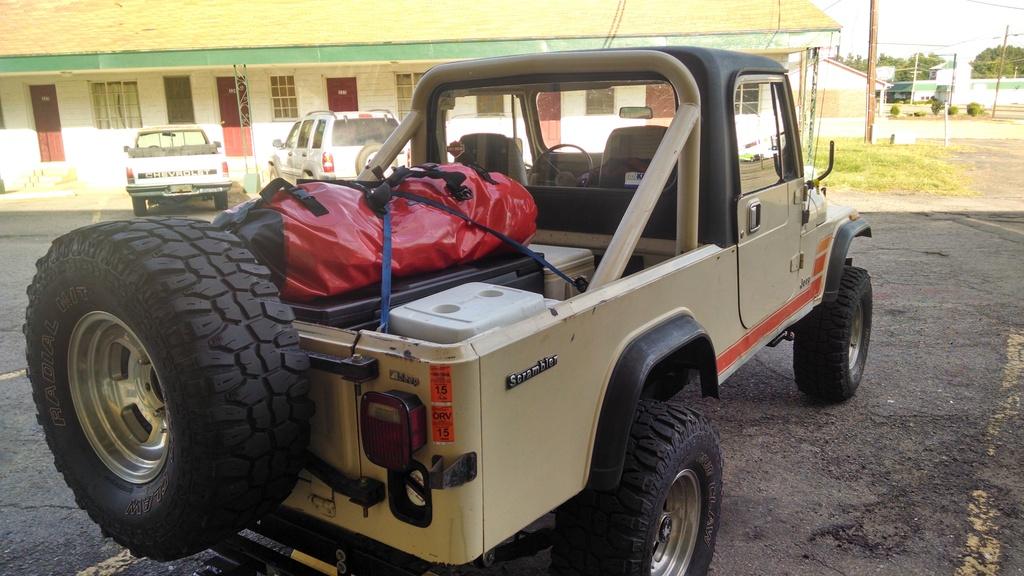
Killed a bunch of bugs in MS and Arkansas at night:
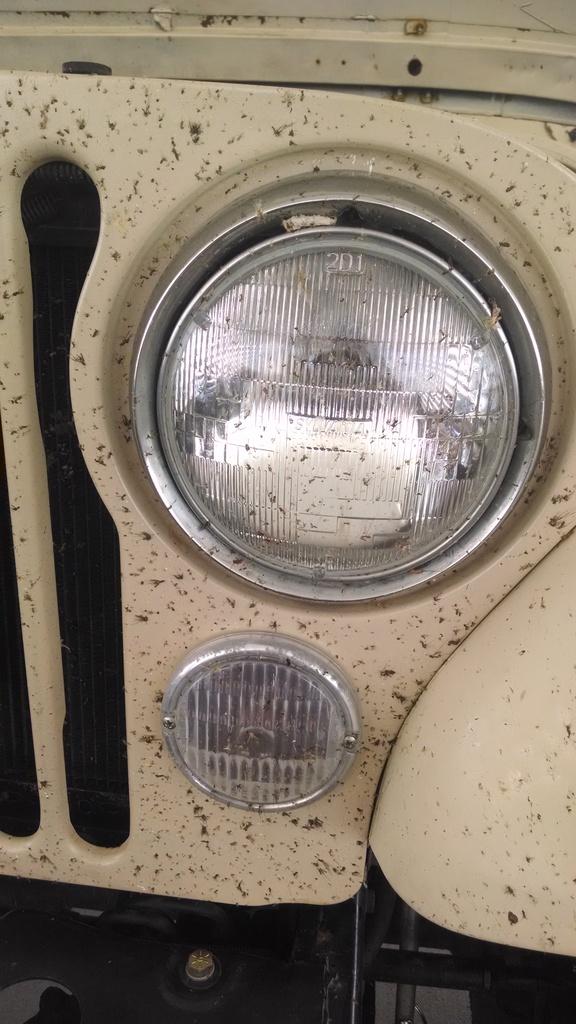
Street in Missouri named after my GF:
Easily maintaining the 80 MPH speed limit in South Dakota, great oil pressue and temperatures:
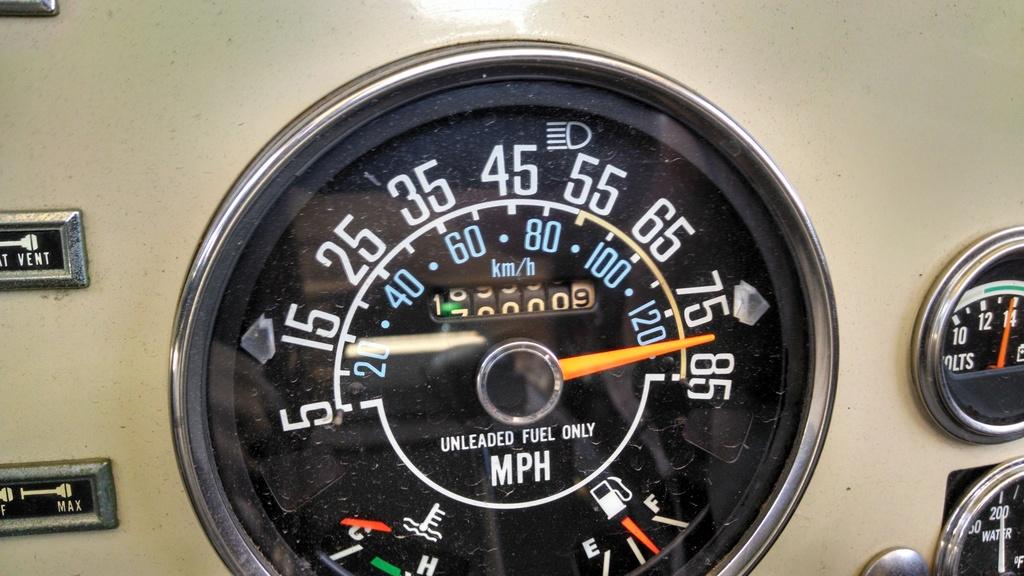
I was so happy watching the odometer hit 170,000, then it froze up, need to try to fix it:
I don't have any wheeling pictures, my "co-pilot" takes pictures of plants and stuff, but here are the pictures I took, kind of boring, but here we go:
Driving through the MS delta, heading toward Arkansas, flat and boring:
Maintained this speed for most of the trip, except for South Dakota, where the speed limit was 80 MPH. Runs great at 75, love that new engine oil pressure, runs right at 195-200 degrees with a 195 degree thermostat:
Crossing the MS River into Arkansas:
Stopped overnight in a real dump hotel north of Little Rock, picture of the non-looted bed:
Killed a bunch of bugs in MS and Arkansas at night:
Street in Missouri named after my GF:
Easily maintaining the 80 MPH speed limit in South Dakota, great oil pressue and temperatures:
I was so happy watching the odometer hit 170,000, then it froze up, need to try to fix it:
- City
- Biloxi
- State
- MS
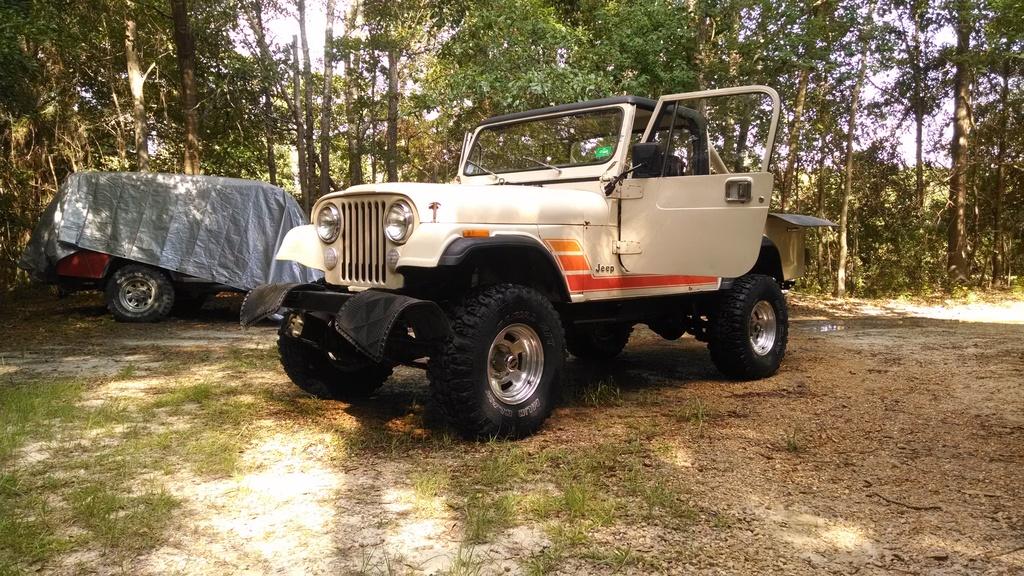
And back home, all cleaned up, waiting on another adventure:
Sorry for the lack of "action" pictures. Besides a few new small dents in places that were already dented, no "major" problems. Here is the worst trail carnage:
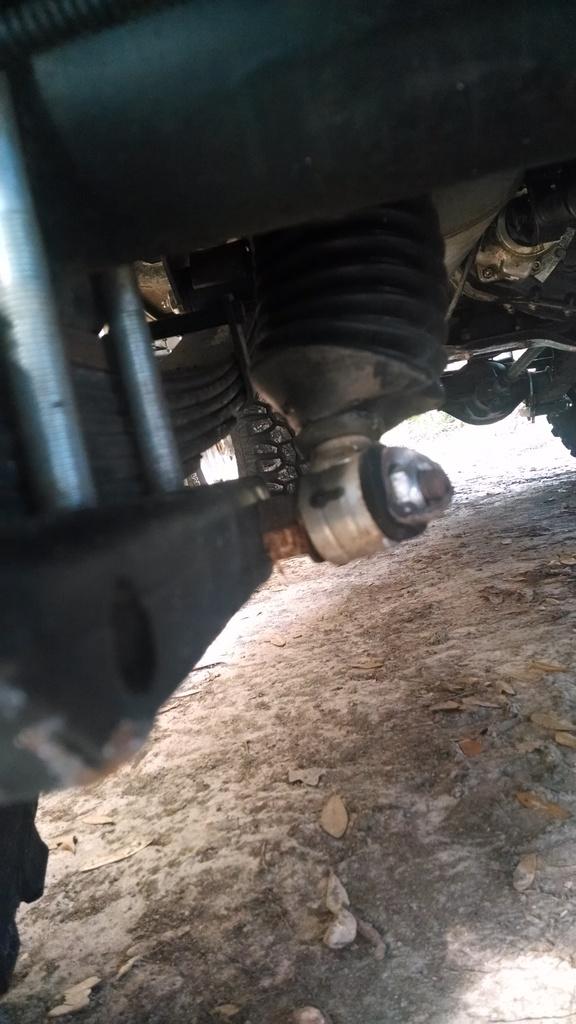
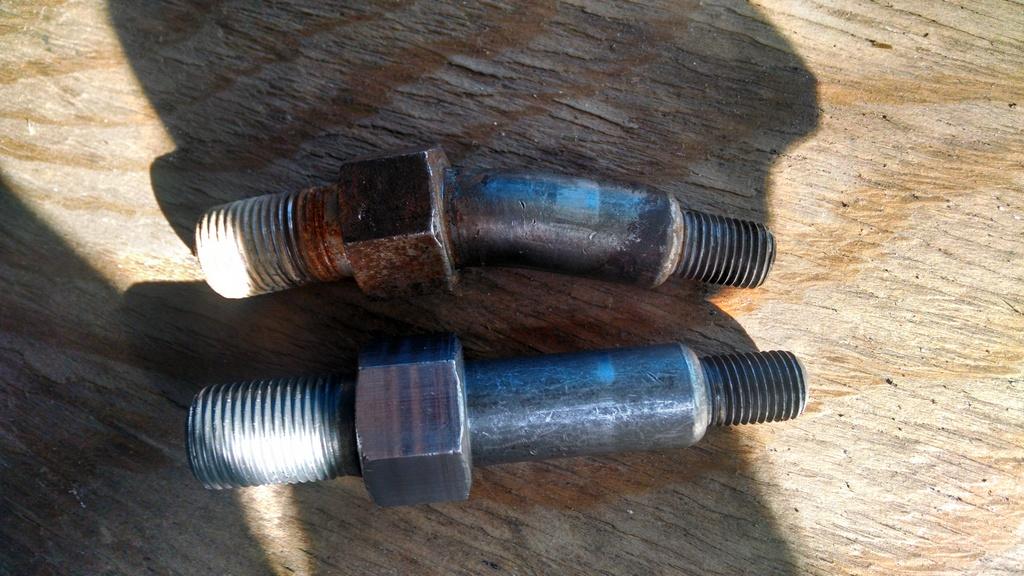
I damage these thread in RE rear lower shock studs regularly, so I keep spares. I also have a few good "love taps" on the transfer case skid plate, but that does not bug me. I got "lucky" on the "Kong" trail, where Dustin picked up the rock rash on his "rental" black Laredo. Me and him were the smallest Scramblers (33" tires) on that trail, probably a notch more then the tan Scrambler was ready for, but it made it through relatively unscathed. I would have felt better in my red Scrambler, rock rails and rear end protection. But, we made it through, so I can look back and say it was super fun!!! Dustin didn't get in trouble, so all good.
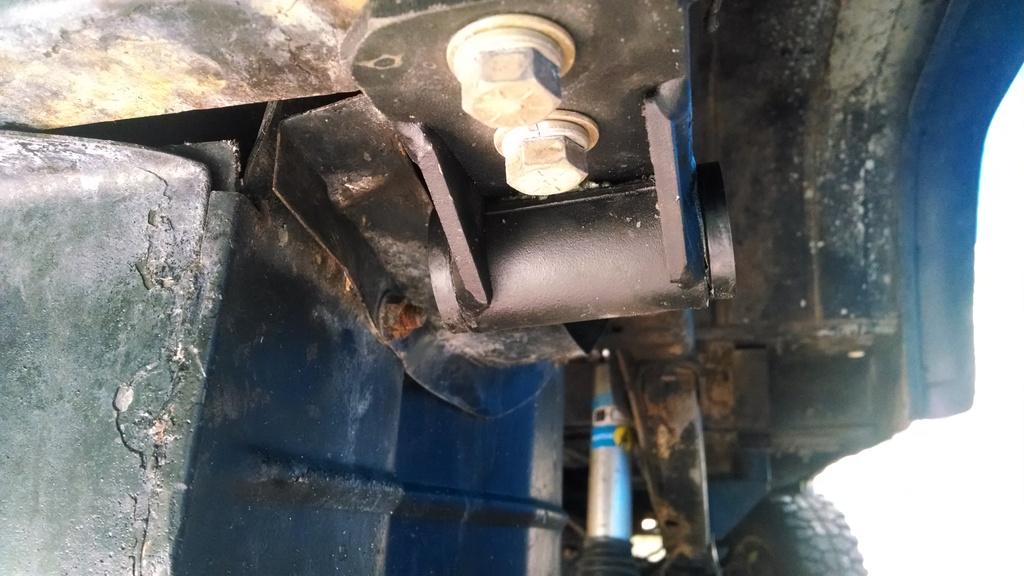
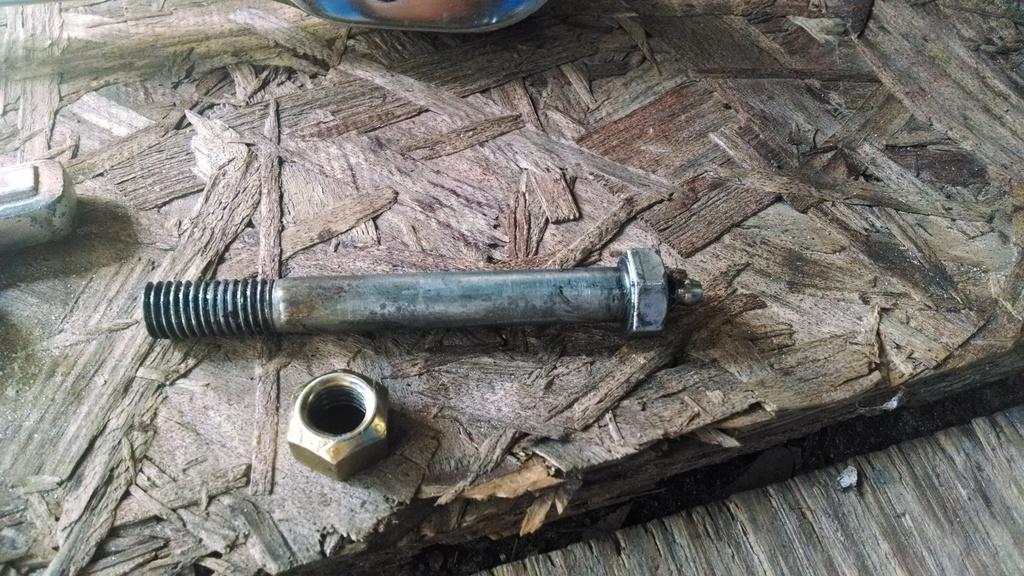
Me and Dustin though I has destroyed the rear passenger side shackle hanger bushings/bolt, shackle was kicked over pretty good, but the drive home straightened it out, no damage. The RE shackle hangers do not use sleeves, so the shackles can deflect a large amount. I have tore these bushings, and the main eye bushings before, but no problems on this trip.
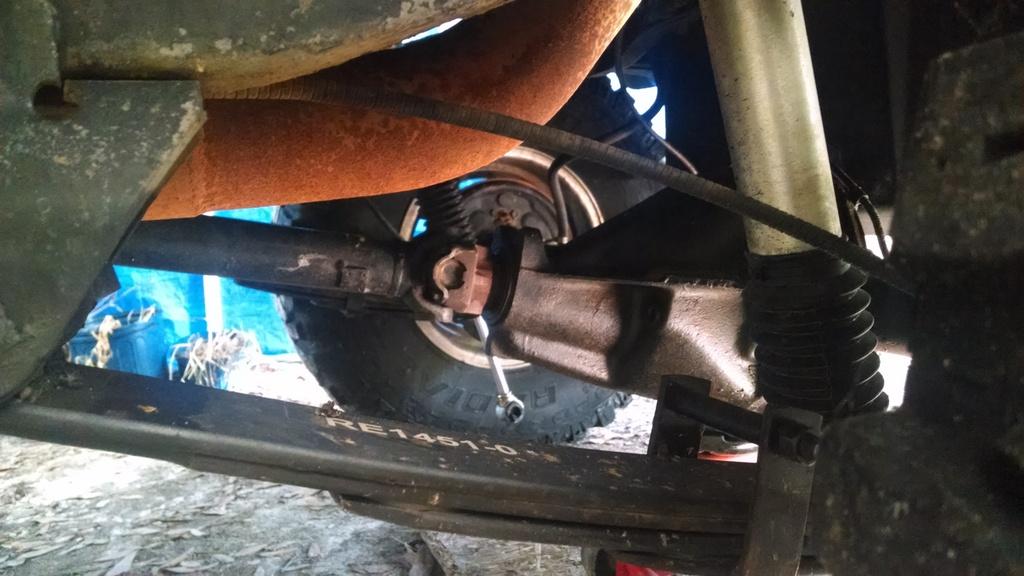
While I had the rear suspension in pieces, decided to fix a nagging rear DS vibration. I installed 4 degree wedges when I installed the lift, but I did not need them, especially with the 1" dropped transfer case skid plate. I had a slight vibration between 57-65 mph, so I pulled the steel shims out to see if the vibration would lessen/stop.
Before, note how high the pinion is pointing, not good:
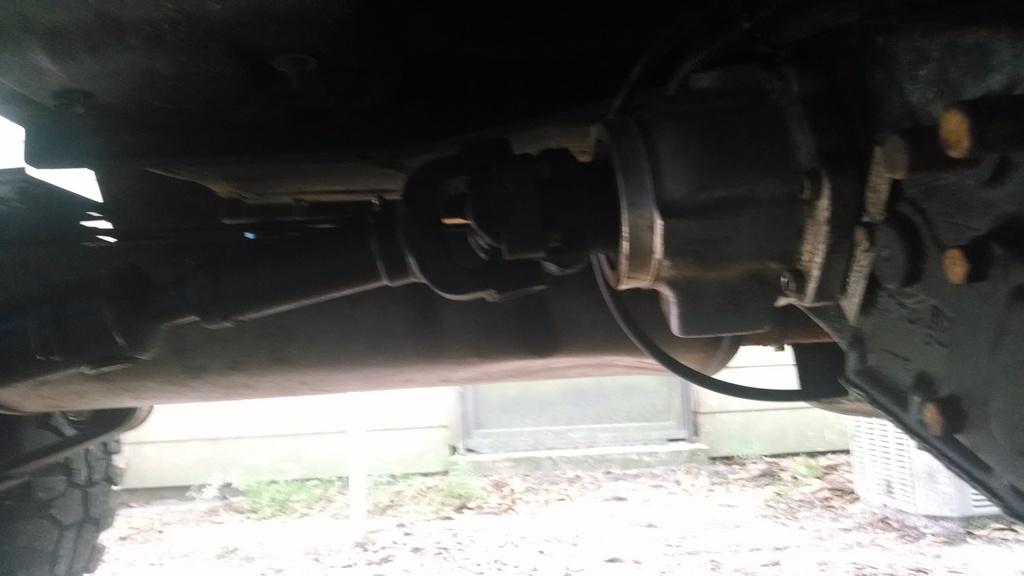
Before, Dana 300 end:
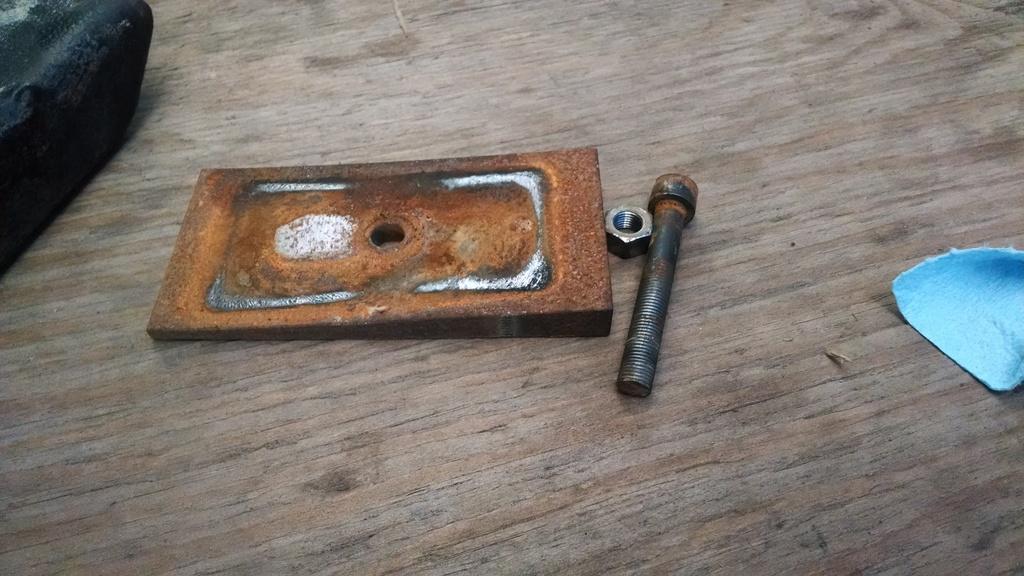
Pulled these out:
And after:
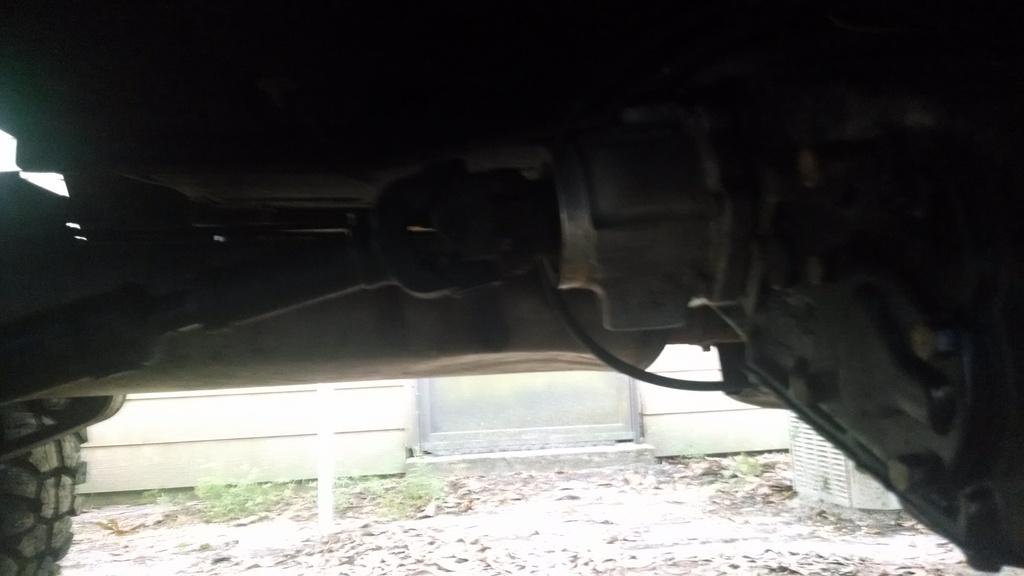
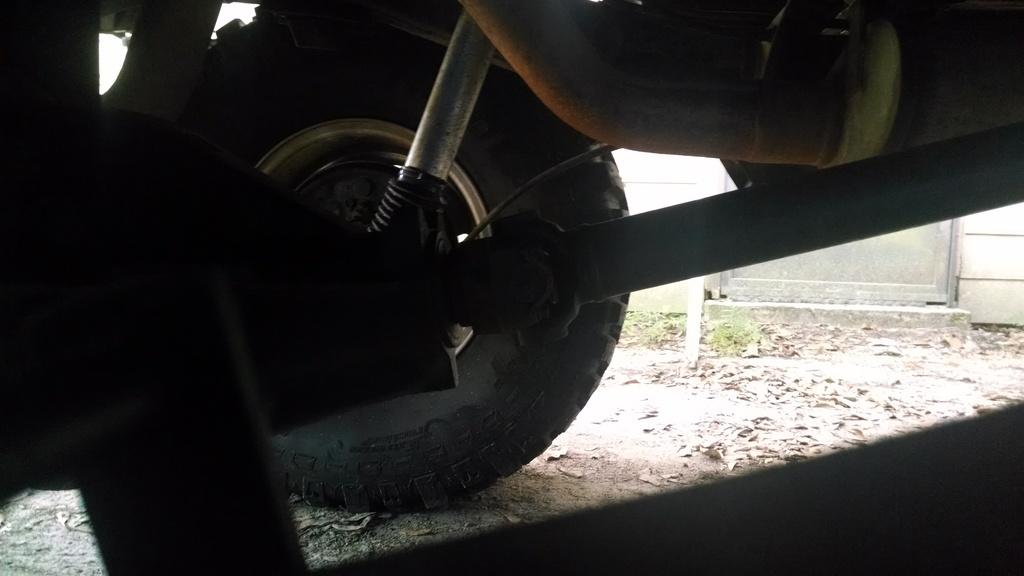
While not "perfect", the two opposite angles are much closer, and a quick test drive confirmed that 99% of the slight vibration is gone, I'm going to call it good. If I eliminate the Dana 300 drop, which would be super, I believe the rear DS angles would get even closer. For now, its good, going to leave it alone.
Sorry for the lack of "action" pictures. Besides a few new small dents in places that were already dented, no "major" problems. Here is the worst trail carnage:
I damage these thread in RE rear lower shock studs regularly, so I keep spares. I also have a few good "love taps" on the transfer case skid plate, but that does not bug me. I got "lucky" on the "Kong" trail, where Dustin picked up the rock rash on his "rental" black Laredo. Me and him were the smallest Scramblers (33" tires) on that trail, probably a notch more then the tan Scrambler was ready for, but it made it through relatively unscathed. I would have felt better in my red Scrambler, rock rails and rear end protection. But, we made it through, so I can look back and say it was super fun!!! Dustin didn't get in trouble, so all good.
Me and Dustin though I has destroyed the rear passenger side shackle hanger bushings/bolt, shackle was kicked over pretty good, but the drive home straightened it out, no damage. The RE shackle hangers do not use sleeves, so the shackles can deflect a large amount. I have tore these bushings, and the main eye bushings before, but no problems on this trip.
While I had the rear suspension in pieces, decided to fix a nagging rear DS vibration. I installed 4 degree wedges when I installed the lift, but I did not need them, especially with the 1" dropped transfer case skid plate. I had a slight vibration between 57-65 mph, so I pulled the steel shims out to see if the vibration would lessen/stop.
Before, note how high the pinion is pointing, not good:
Before, Dana 300 end:
Pulled these out:
And after:
While not "perfect", the two opposite angles are much closer, and a quick test drive confirmed that 99% of the slight vibration is gone, I'm going to call it good. If I eliminate the Dana 300 drop, which would be super, I believe the rear DS angles would get even closer. For now, its good, going to leave it alone.
- City
- Biloxi
- State
- MS
The only real "problem" I am having with this Scrambler reared its head last year, on the way to Michigan. This "problem" only occurs in the deep south when the temperature is above 95, and the humidity is pegged.
The Problem - If I am driving 75 MPH for 2.5 hours straight, the gas tank is about 1/2 full. If I go to accelerate, it acts "dead", i.e. it wont accelerate, but it wont die, nothing. If I slow down, to say 65-70, no problem. If I fill the gas tank back up, with cold fuel from the gas stations underground storage tanks, I can immediately get back on the interstate, go 75+ MPH with no problems for another 2.5 hours.
This "problem" only occurs if the following conditions are met:
1) I have been driving 75+ MPH for 2.5 hours straight
2) The outside temperature has to be over 95 degrees with 100% humidity (basically, as hot as it gets)
3) Down to 1/2 a tank of gas
I am "assuming" that the fuel in my tank is getting heated. The TBI system uses a return line, so gas is constantly flowing through the fuel lines/throttle body/gas tank at around 13-15 psi. I "think" that the metal fuel lines, which come out of the throttle body and run directly on top of the intake/ driver side valve cover, are transfering radiant engine heat to the fuel through the metal tubing. I "think" that after heating the fuel through the metal lines for 2.5 hours, enough gas has been heated to increase the fuel tanks fuel temperature, to where it starts to "boil/perculate/or vaporize". I have intentionally not used the term "vapor lock", because the engine wont die. I never have hot restart problems, never have problems on the trail. This problem only occurs at interstate speeds after 2.5 hours while driving through the hottest temperatures of the summer in the deep south.
While in South Dakota, which is no where near as hot as Mississippi/Alabama/Louisiana, I crossed the state on the interstate running 80-85 mph non stop, 4 hours straight, no problems. So, I know that are southern "excessive" temperatures play a big part. I can drive the same speeds/time down here when it is not at the peak of summer, no problem.
Before the National trip, we drove to the middle of Alabama, wheeled 8 hours straight, drove home, all in the same day, with temps over 100, never had a problem. Slower speeds/trail riding never replicate the problem.
When the "problem" first appeared, I was near Birmingham Alabama, end of July, temps well over 100, 1/2 a tank of gas. Filled the tank back up, drove another 2.5 hours till the problem reoccurred. It was right before noon the first time, and afternoon the second time. After the second fill up, I did not experience the problem again. BUT, it was getting closer to dark, so temps dropped some. The problem never showed up driving through TN, KY, IN, or Michigan. It just does not get as hot up "north".
Between last years Michigan trip, and coming home from the National ride this year, I never experienced this problem. It will not occur on shorter trips, around town, stop and go driving, trail riding. It has to meet this exact formula:
Burnt 1/2 tank of gas+75+MPH speeds+temps well past 95 degree down here in the south+hottest part of the day (near noon/afternoon)
No other variables cause the "problem", AND all variables have to be in affect for the "problem" to occur. Eliminate any one variable, no "problem".
On the way home from South Dakota, near Little Rock, around noon, temps near/over 100, just drove through south Missouri/north Arkansas non-stop at 75MPH, 1/2 tank of gas left, the "problem" showed back up. I immediately topped the tank off with 10 gallons of new fuel, I immediately got back on the interstate, cruised 75+MPH for 2.5 hours, problem showed back up. So, I filled up, kept the speed at 65-70 MPH, no problem. BUT, the temps had started to drop because it was getting later in the day.
Quick description of the Scrambler:
1) New GM 350 long block
2) GM TBI system
3) stock plastic 20 gallon tank/pick up
4) new 3/8 stainless supply line
5) new 5/16 stainless return line
6) external fuel pump, mounted on rear cross member, so pump is less then 2 feet from tank pick up
7) stock GM Caprice Classic metal fuel lines on engine
8) working EGR
Few other notes:
1) copper 3 core radiator, stock GM fan/clutch (never gets over 200 on the interstate with a 195 thermostat)
2) 700R4 auto trans (runs around 175)
3) Fuel pump works perfectly (except when I am assuming the fuel is vaporizing)
4) Fuel pump is cool to the touch, even when the "problem" occurs
5) Frame mounted metal fuel lines are cool to the touch
6) Y-pipe exhaust, single pipe runs down DS, both fuel supply/return run on the PS frame rail
7) working fuel vapor system (new charcoal can, no purge solenoid, purges once the throttle is opened, vapor lines new/clear
8) never any gas tank pressure when I remove the cap to fuel up, no strange gas smells, assume system works perfect
Like I mentioned earlier, I believe the fuel is being heated up through radiant heat through the stock GM engine mounted fuel lines. After driving long enough, enough gas has been heated to raise the fuel's temperature to where it wants to start vaporizing. New, cold fuel, lowers the temperature, eliminates the "problem" immediately.
Some people will say, well, drive slower, but then what's the point of having the V8, and its associated gas mileage penalty as opposed to my MPI 6???? I want to be able to drive 75+MPH for a full 20 gallons of gas no matter the outside temperature. No sense driving fast and having to stop more often, you don't make good time driving cross country that way.
Before this turns into a "mount an in tank fuel pump" bonanza, let me say this - I don't think that will fix my "problem". The fuel pump is never hot or noisy. Submerging a fuel pump into heated fuel will not fix this issue, it would probably make it worse. I will agree that a quality, in tank pump, mounted in a sump, like a factory style installation, will probably be better then an external fuel pump. But, I like my stock 20 gallon tank, and don't feel like buying a new tank. I could probably modify the stock 20 gallon sending unit/pick up assembly, but I don't think that would be as good as an OEM style set up. And, no real way to put a "sump/baffle in the stock 20 gallon tank. Besides, if my fuel pump bites the dust in the middle of nowhere, which I travel through quite frequently, I can swap it out with the always carried spare in 20-30 minutes. That wont happen with an in tank pump, unless I cut the bed floor, but that is kind of.......Well, for this Scrambler anyway.
Also, my stock external pump will suck the tank dry, as I found out in the middle of nowhere Missouri, at night, on the way home from the National this year. I knew it was getting close, decided to push on, it died. I had a full 5 gallon can in the bed, so no problem. Once it cut out, I did not try to restart until I put gas in the tank. Not good to run the pump dry.
So, let's assume that my external pump is working perfectly, which I am confident that it is. If my decided course of action does not fix my "problem", I will then entertain an in tank pump solution.
I "think" this is the source of my "problem":
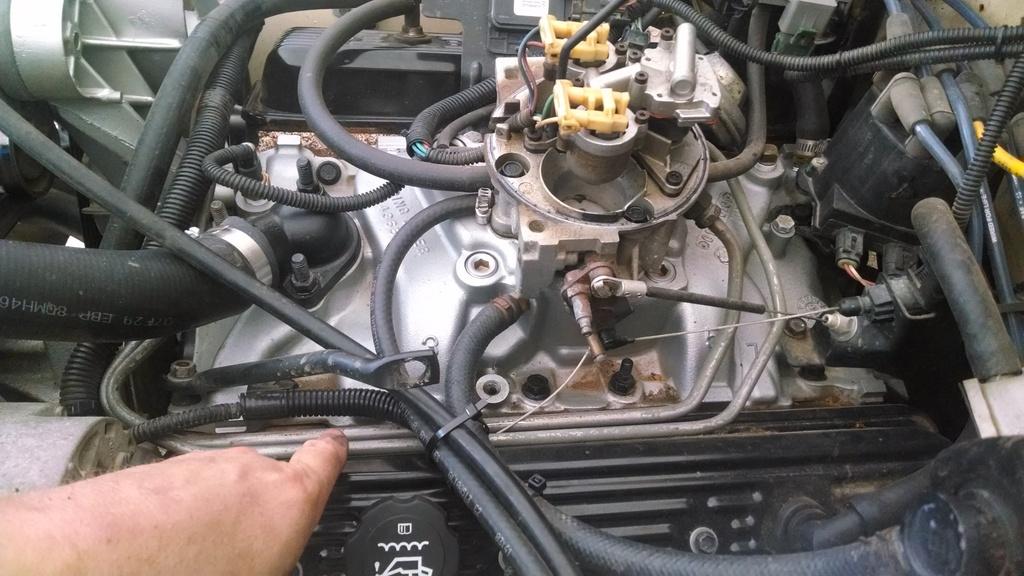
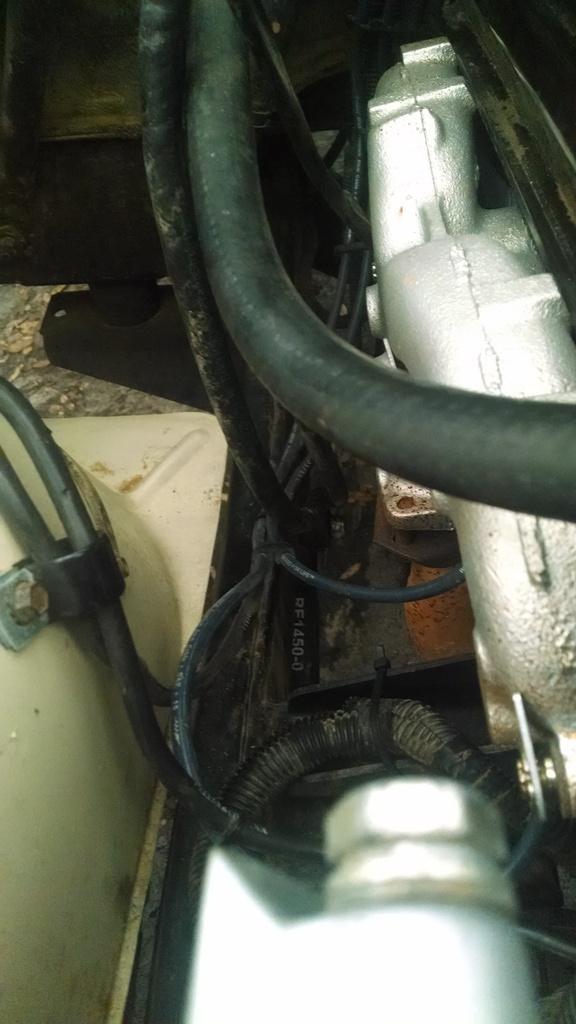
My finger is resting on the stock 1991 GM/Chevy Caprice Classic fuel supply/return lines. This is the stupidest design I have ever seen, unless you live in Antarctica, and need to pre-heat the fuel. The lines exit the TB, turn down on top of the intake, hit the DS valve cover, run down the entire length of the VC TOUCHING IT THE WHOLE DISTANCE, turn 90 degrees and run across the front of the engine, then turn down 90 degrees and run down the end of the PS cylinder head. These stock lines are either touching the engine the entire distance, or are less then a 1/4" from touching the engine. From my research, I now believe I am missing one factory clamp that goes near the alternator that is supposed to secure these lines. I have the other factory clamps. But, even if I had the missing clamp, the fuel lines would still be heat soaking on the engine/intake/valve cover. This is close to 5' of steel line, really 10' since you have 5' supply and 5' return, heat soaking on the engine!!!!!!!!!!!!!!!!!!!!!!!!!
It took a trip to the junk yard to determine what my engine originally came from. After looking at every TBI equipped (over 100) GM trucks, vans, SUV's in the junk yard, I found that they all have metal fuel lines that exit the rear of the throttle body, then run straight back, go around the distributor, down over the top of the transmission, then turn 90 degrees and tie into the frame rail mounted lines. The lone Caprice Classic I found had the fuel line like mine.
What I don't understand - How did all of these Caprice Classics, many of which were cop cars/taxi's, and not subjected to easy lives, not have problems? Was '91 the only year like this? I don't know?? I wonder why GM did not run the lines like all the trucks SUVS, maybe not enough clearance between the fire wall/engine?? I will have to examine some more junked Caprice Classics. Maybe I am missing some fundamental piece of the puzzle??
So, I am "assuming" this is causing my "heating up the fuel" issue. I know that you can not touch these lines after driving the Scrambler on the interstate at speed, they get stupid hot. I briefly though about a fuel cooler of some type, but quickly junked that idea (more complexity, no safe place to mount it away from trail/road hazards where it would function).
So, let's keep it simple and make new fuel lines that are routed differently. The GM TB uses these wierd Saginaw (I think) fuel line fittings. They use an O-ring on the end to seal up. So, I bought these lines, to make some new lines:
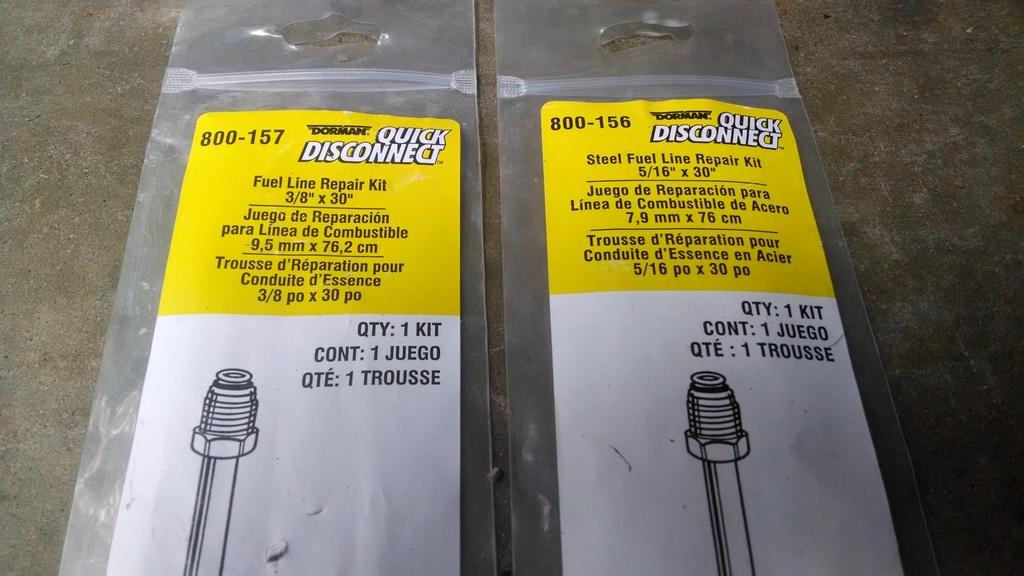
I wanted metal lines, not rubber, and not some exotic AN fitting thingy. I don't think rubber/any other soft tubing would be safe on top of the engine. It gets hot. But, I do think GM used some type of flexible lines on these from the factory on 88/89 models before switching to steel lines, so something besides steel might be OK, but I felt that metal tubing would be the safe bet.
I borrowed a "quality" tubing bender and got to work. My cheap *** flair tool would not work, and these lines are not super hard, so I had to use the "borrowed" high quality flair maker thing. Cheap on the left, good on the right.
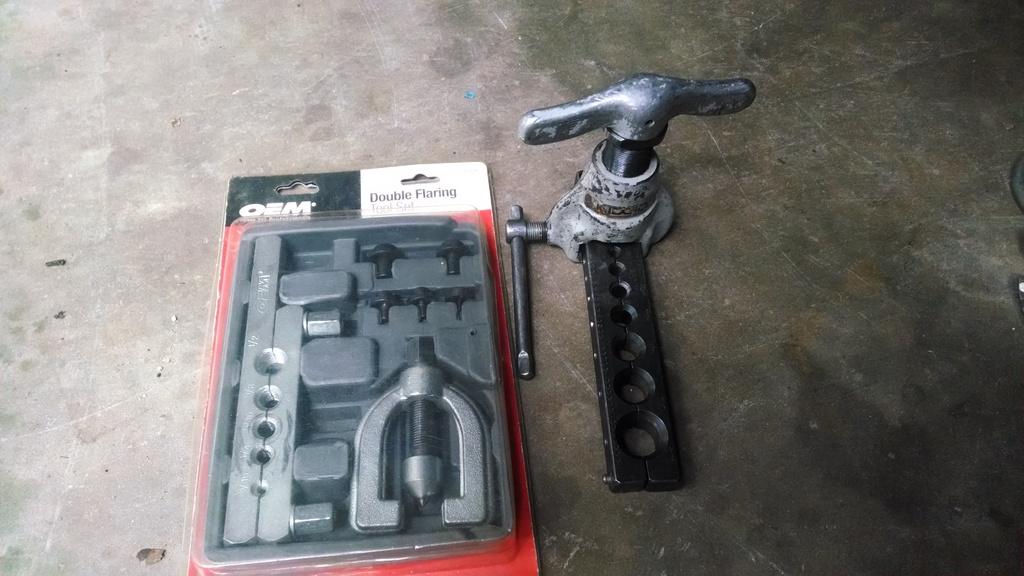
I only wanted to make a "bubble" on the end of the new metal lines to secure FI clamp restrained rubber line. The problem - the tool I borrowed makes really nice, really sharp 45 degree flared ends. This will cut the rubber line. So, after flaring the tubing, I spent 10 minutes with a file/emry cloth and turned the 45 degree sharp flare into a nice smooth ridge.
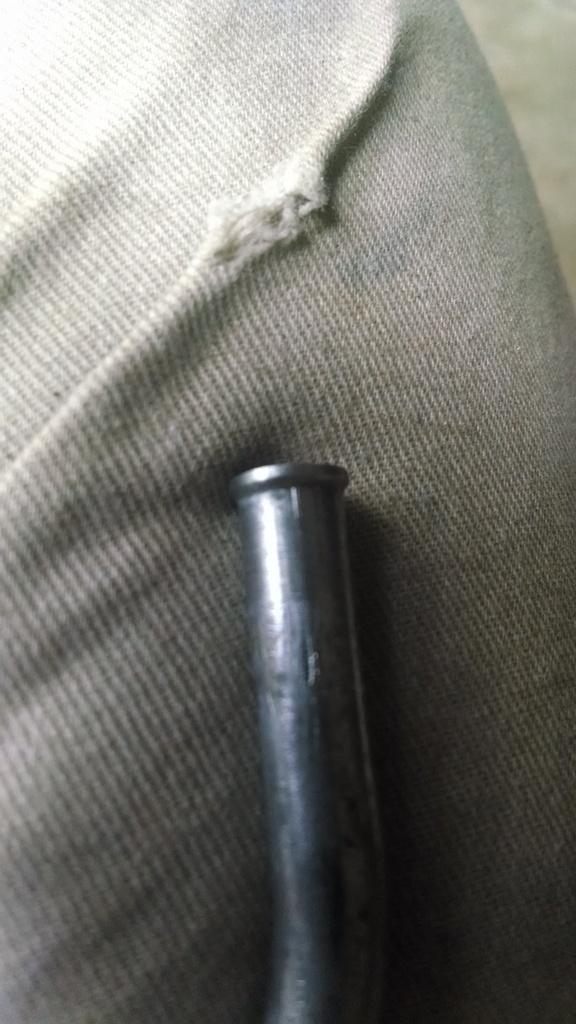
OK, so I decided to route my lines out the back of the TB, then up, then over the PS valve cover. This is the shortest route to my existing hard lines mounted on the PS frame rail. The problem - it is super busy behind the TB (distributor sits directly behind the TB), and between the PS valve cover and the TB is where the EGR valve/EGR solenoid/MAP sensor/and ICM live!!!!!!!!!!! Now I know why GM did not run them this way.
So, after about 8 hours (!!!!!!!!!!!!!!), I had my two new lines bent up. I knew exactly how I wanted them to look in my mind, but making that reality did not turn out as well. It works, but it is kind of meh.
They look worse on the hood:
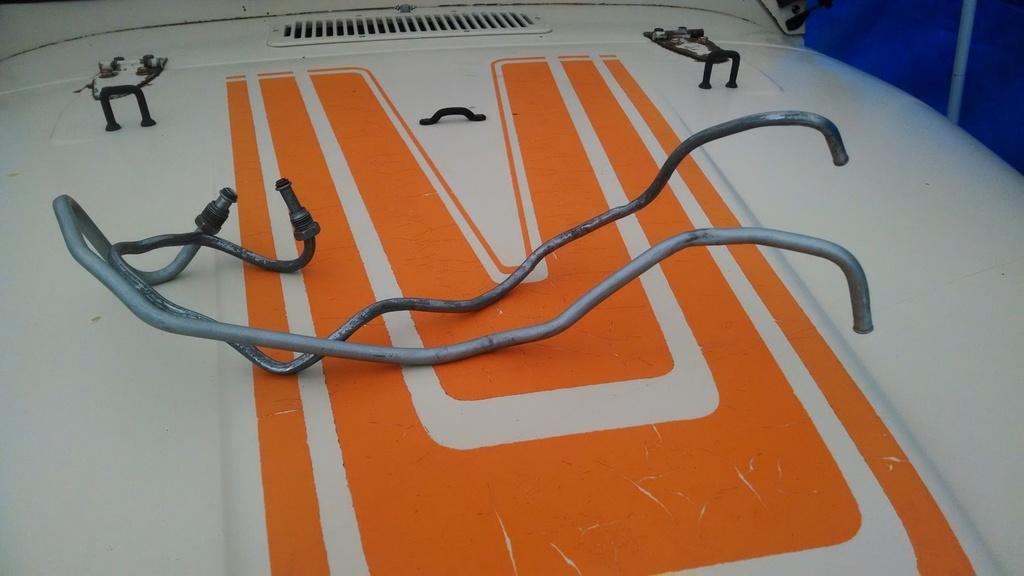
And installed. When the stock air cleaner is installed they are mostly hidden, mostly. The way the fuel fitting come out of the TB sucks, they point downward and outward. So, you have to bend up and over almost immediately after exiting the TB:
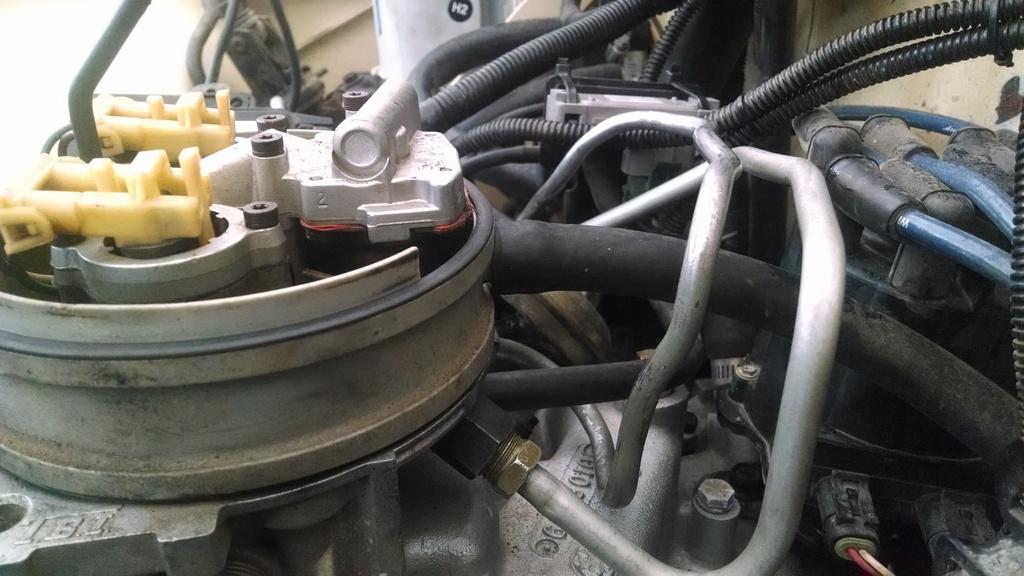
Next challenge, fitting BETWEEN the distributor/TB, and then BETWEEN and OVER the EGR stuff/MAP stuff/and ICM, all the while staying below the air cleaner, then over the valve cover:
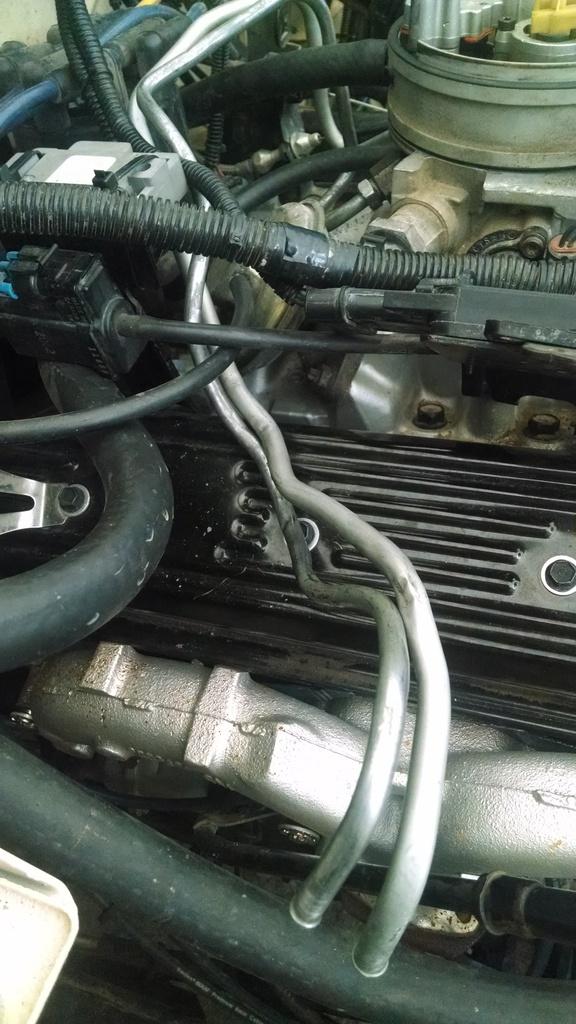
This next part is a "work in progress". I ended up well short of the frame, so for now I just slid on the rubber hose to connect the frame mounted lines to my new lines, approximately 20". Not happy with this, especially since they are 4" from the exhaust manifold. IF I keep my new, custom lines, I am going to run some new metal connector lines to tie them to the frame lines, and secure them to the PS inner fender, to get far away from the exhaust manifold.
And one overall shot, the air cleaner hides most of my "craftsmanship", thank God!!!!!!!!!!
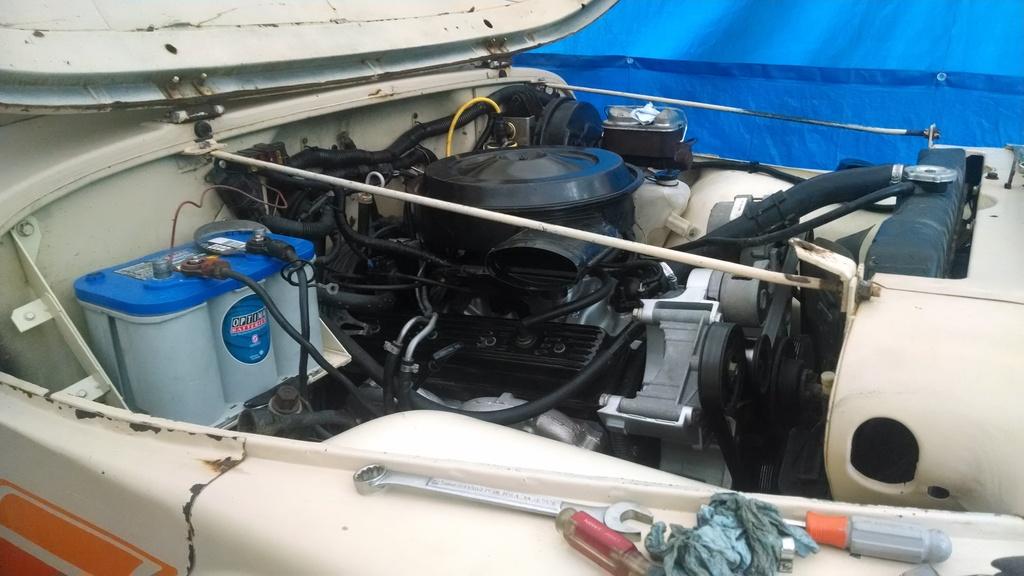
My new set up "works", but I am not 100% happy with it. I wish I would have had 60" lines, that would have gave me enough length to tie them straight into the existing frame mounted hard lines with just a short piece of flexible hose. But, it was hard enough for me to bend/get the 30" long lines to work. If I could find somebody local, with more skills, to fabricate two new lines based roughly on my lines, I would pay them. The rubber lines close to the exhaust are a big no-no. IF I keep my new lines, I will get some more metal tube to build new lines to drop down to the frame lines, and mount them to the PS inner fender, as far from the exhaust as possible. Then tie them in with two short rubber hose sections. That would "improve" my work greatly.
I drove the Scrambler a short distance yesterday, maybe 10 miles, stop and go traffic. When I got back home, I noticed something interesting:
1) My new metal lines were warm, but no where near as hot as the original lines.
2) My existing stainless lines on the PS frame rail were cool.
3) My rubber drop lines were warm.
I am going to the junk yard this weekend to get some ideas. I think I will probably scrap my system, find some lines on a junked vehicle that run out the back of the TB and down the transmission, and see if I can get that to work on my Scrambler. That would leave only about 8-10" of line under the hood to get hot. The transmission gets hot, but not as hot as the engine. I figure if the lines are spaced off the transmission they should stay cool. If I can find some junked lines that could work with minimal effort, I will use them as a mock up. If they work, I will buy and install new lines for/from the donor vehicle.
I need to get this done quick, Michigan trip is coming up fast. Worst case, I will bend some new metal lines, mount them on the PS fender, and temporarily use my new "custom" set up. Whatever I do will be better then my current system.
Thoughts, comments, ideas, criticism welcome :-)
The Problem - If I am driving 75 MPH for 2.5 hours straight, the gas tank is about 1/2 full. If I go to accelerate, it acts "dead", i.e. it wont accelerate, but it wont die, nothing. If I slow down, to say 65-70, no problem. If I fill the gas tank back up, with cold fuel from the gas stations underground storage tanks, I can immediately get back on the interstate, go 75+ MPH with no problems for another 2.5 hours.
This "problem" only occurs if the following conditions are met:
1) I have been driving 75+ MPH for 2.5 hours straight
2) The outside temperature has to be over 95 degrees with 100% humidity (basically, as hot as it gets)
3) Down to 1/2 a tank of gas
I am "assuming" that the fuel in my tank is getting heated. The TBI system uses a return line, so gas is constantly flowing through the fuel lines/throttle body/gas tank at around 13-15 psi. I "think" that the metal fuel lines, which come out of the throttle body and run directly on top of the intake/ driver side valve cover, are transfering radiant engine heat to the fuel through the metal tubing. I "think" that after heating the fuel through the metal lines for 2.5 hours, enough gas has been heated to increase the fuel tanks fuel temperature, to where it starts to "boil/perculate/or vaporize". I have intentionally not used the term "vapor lock", because the engine wont die. I never have hot restart problems, never have problems on the trail. This problem only occurs at interstate speeds after 2.5 hours while driving through the hottest temperatures of the summer in the deep south.
While in South Dakota, which is no where near as hot as Mississippi/Alabama/Louisiana, I crossed the state on the interstate running 80-85 mph non stop, 4 hours straight, no problems. So, I know that are southern "excessive" temperatures play a big part. I can drive the same speeds/time down here when it is not at the peak of summer, no problem.
Before the National trip, we drove to the middle of Alabama, wheeled 8 hours straight, drove home, all in the same day, with temps over 100, never had a problem. Slower speeds/trail riding never replicate the problem.
When the "problem" first appeared, I was near Birmingham Alabama, end of July, temps well over 100, 1/2 a tank of gas. Filled the tank back up, drove another 2.5 hours till the problem reoccurred. It was right before noon the first time, and afternoon the second time. After the second fill up, I did not experience the problem again. BUT, it was getting closer to dark, so temps dropped some. The problem never showed up driving through TN, KY, IN, or Michigan. It just does not get as hot up "north".
Between last years Michigan trip, and coming home from the National ride this year, I never experienced this problem. It will not occur on shorter trips, around town, stop and go driving, trail riding. It has to meet this exact formula:
Burnt 1/2 tank of gas+75+MPH speeds+temps well past 95 degree down here in the south+hottest part of the day (near noon/afternoon)
No other variables cause the "problem", AND all variables have to be in affect for the "problem" to occur. Eliminate any one variable, no "problem".
On the way home from South Dakota, near Little Rock, around noon, temps near/over 100, just drove through south Missouri/north Arkansas non-stop at 75MPH, 1/2 tank of gas left, the "problem" showed back up. I immediately topped the tank off with 10 gallons of new fuel, I immediately got back on the interstate, cruised 75+MPH for 2.5 hours, problem showed back up. So, I filled up, kept the speed at 65-70 MPH, no problem. BUT, the temps had started to drop because it was getting later in the day.
Quick description of the Scrambler:
1) New GM 350 long block
2) GM TBI system
3) stock plastic 20 gallon tank/pick up
4) new 3/8 stainless supply line
5) new 5/16 stainless return line
6) external fuel pump, mounted on rear cross member, so pump is less then 2 feet from tank pick up
7) stock GM Caprice Classic metal fuel lines on engine
8) working EGR
Few other notes:
1) copper 3 core radiator, stock GM fan/clutch (never gets over 200 on the interstate with a 195 thermostat)
2) 700R4 auto trans (runs around 175)
3) Fuel pump works perfectly (except when I am assuming the fuel is vaporizing)
4) Fuel pump is cool to the touch, even when the "problem" occurs
5) Frame mounted metal fuel lines are cool to the touch
6) Y-pipe exhaust, single pipe runs down DS, both fuel supply/return run on the PS frame rail
7) working fuel vapor system (new charcoal can, no purge solenoid, purges once the throttle is opened, vapor lines new/clear
8) never any gas tank pressure when I remove the cap to fuel up, no strange gas smells, assume system works perfect
Like I mentioned earlier, I believe the fuel is being heated up through radiant heat through the stock GM engine mounted fuel lines. After driving long enough, enough gas has been heated to raise the fuel's temperature to where it wants to start vaporizing. New, cold fuel, lowers the temperature, eliminates the "problem" immediately.
Some people will say, well, drive slower, but then what's the point of having the V8, and its associated gas mileage penalty as opposed to my MPI 6???? I want to be able to drive 75+MPH for a full 20 gallons of gas no matter the outside temperature. No sense driving fast and having to stop more often, you don't make good time driving cross country that way.
Before this turns into a "mount an in tank fuel pump" bonanza, let me say this - I don't think that will fix my "problem". The fuel pump is never hot or noisy. Submerging a fuel pump into heated fuel will not fix this issue, it would probably make it worse. I will agree that a quality, in tank pump, mounted in a sump, like a factory style installation, will probably be better then an external fuel pump. But, I like my stock 20 gallon tank, and don't feel like buying a new tank. I could probably modify the stock 20 gallon sending unit/pick up assembly, but I don't think that would be as good as an OEM style set up. And, no real way to put a "sump/baffle in the stock 20 gallon tank. Besides, if my fuel pump bites the dust in the middle of nowhere, which I travel through quite frequently, I can swap it out with the always carried spare in 20-30 minutes. That wont happen with an in tank pump, unless I cut the bed floor, but that is kind of.......Well, for this Scrambler anyway.
Also, my stock external pump will suck the tank dry, as I found out in the middle of nowhere Missouri, at night, on the way home from the National this year. I knew it was getting close, decided to push on, it died. I had a full 5 gallon can in the bed, so no problem. Once it cut out, I did not try to restart until I put gas in the tank. Not good to run the pump dry.
So, let's assume that my external pump is working perfectly, which I am confident that it is. If my decided course of action does not fix my "problem", I will then entertain an in tank pump solution.
I "think" this is the source of my "problem":
My finger is resting on the stock 1991 GM/Chevy Caprice Classic fuel supply/return lines. This is the stupidest design I have ever seen, unless you live in Antarctica, and need to pre-heat the fuel. The lines exit the TB, turn down on top of the intake, hit the DS valve cover, run down the entire length of the VC TOUCHING IT THE WHOLE DISTANCE, turn 90 degrees and run across the front of the engine, then turn down 90 degrees and run down the end of the PS cylinder head. These stock lines are either touching the engine the entire distance, or are less then a 1/4" from touching the engine. From my research, I now believe I am missing one factory clamp that goes near the alternator that is supposed to secure these lines. I have the other factory clamps. But, even if I had the missing clamp, the fuel lines would still be heat soaking on the engine/intake/valve cover. This is close to 5' of steel line, really 10' since you have 5' supply and 5' return, heat soaking on the engine!!!!!!!!!!!!!!!!!!!!!!!!!
It took a trip to the junk yard to determine what my engine originally came from. After looking at every TBI equipped (over 100) GM trucks, vans, SUV's in the junk yard, I found that they all have metal fuel lines that exit the rear of the throttle body, then run straight back, go around the distributor, down over the top of the transmission, then turn 90 degrees and tie into the frame rail mounted lines. The lone Caprice Classic I found had the fuel line like mine.
What I don't understand - How did all of these Caprice Classics, many of which were cop cars/taxi's, and not subjected to easy lives, not have problems? Was '91 the only year like this? I don't know?? I wonder why GM did not run the lines like all the trucks SUVS, maybe not enough clearance between the fire wall/engine?? I will have to examine some more junked Caprice Classics. Maybe I am missing some fundamental piece of the puzzle??
So, I am "assuming" this is causing my "heating up the fuel" issue. I know that you can not touch these lines after driving the Scrambler on the interstate at speed, they get stupid hot. I briefly though about a fuel cooler of some type, but quickly junked that idea (more complexity, no safe place to mount it away from trail/road hazards where it would function).
So, let's keep it simple and make new fuel lines that are routed differently. The GM TB uses these wierd Saginaw (I think) fuel line fittings. They use an O-ring on the end to seal up. So, I bought these lines, to make some new lines:
I wanted metal lines, not rubber, and not some exotic AN fitting thingy. I don't think rubber/any other soft tubing would be safe on top of the engine. It gets hot. But, I do think GM used some type of flexible lines on these from the factory on 88/89 models before switching to steel lines, so something besides steel might be OK, but I felt that metal tubing would be the safe bet.
I borrowed a "quality" tubing bender and got to work. My cheap *** flair tool would not work, and these lines are not super hard, so I had to use the "borrowed" high quality flair maker thing. Cheap on the left, good on the right.
I only wanted to make a "bubble" on the end of the new metal lines to secure FI clamp restrained rubber line. The problem - the tool I borrowed makes really nice, really sharp 45 degree flared ends. This will cut the rubber line. So, after flaring the tubing, I spent 10 minutes with a file/emry cloth and turned the 45 degree sharp flare into a nice smooth ridge.
OK, so I decided to route my lines out the back of the TB, then up, then over the PS valve cover. This is the shortest route to my existing hard lines mounted on the PS frame rail. The problem - it is super busy behind the TB (distributor sits directly behind the TB), and between the PS valve cover and the TB is where the EGR valve/EGR solenoid/MAP sensor/and ICM live!!!!!!!!!!! Now I know why GM did not run them this way.
So, after about 8 hours (!!!!!!!!!!!!!!), I had my two new lines bent up. I knew exactly how I wanted them to look in my mind, but making that reality did not turn out as well. It works, but it is kind of meh.
They look worse on the hood:
And installed. When the stock air cleaner is installed they are mostly hidden, mostly. The way the fuel fitting come out of the TB sucks, they point downward and outward. So, you have to bend up and over almost immediately after exiting the TB:
Next challenge, fitting BETWEEN the distributor/TB, and then BETWEEN and OVER the EGR stuff/MAP stuff/and ICM, all the while staying below the air cleaner, then over the valve cover:
This next part is a "work in progress". I ended up well short of the frame, so for now I just slid on the rubber hose to connect the frame mounted lines to my new lines, approximately 20". Not happy with this, especially since they are 4" from the exhaust manifold. IF I keep my new, custom lines, I am going to run some new metal connector lines to tie them to the frame lines, and secure them to the PS inner fender, to get far away from the exhaust manifold.
And one overall shot, the air cleaner hides most of my "craftsmanship", thank God!!!!!!!!!!
My new set up "works", but I am not 100% happy with it. I wish I would have had 60" lines, that would have gave me enough length to tie them straight into the existing frame mounted hard lines with just a short piece of flexible hose. But, it was hard enough for me to bend/get the 30" long lines to work. If I could find somebody local, with more skills, to fabricate two new lines based roughly on my lines, I would pay them. The rubber lines close to the exhaust are a big no-no. IF I keep my new lines, I will get some more metal tube to build new lines to drop down to the frame lines, and mount them to the PS inner fender, as far from the exhaust as possible. Then tie them in with two short rubber hose sections. That would "improve" my work greatly.
I drove the Scrambler a short distance yesterday, maybe 10 miles, stop and go traffic. When I got back home, I noticed something interesting:
1) My new metal lines were warm, but no where near as hot as the original lines.
2) My existing stainless lines on the PS frame rail were cool.
3) My rubber drop lines were warm.
I am going to the junk yard this weekend to get some ideas. I think I will probably scrap my system, find some lines on a junked vehicle that run out the back of the TB and down the transmission, and see if I can get that to work on my Scrambler. That would leave only about 8-10" of line under the hood to get hot. The transmission gets hot, but not as hot as the engine. I figure if the lines are spaced off the transmission they should stay cool. If I can find some junked lines that could work with minimal effort, I will use them as a mock up. If they work, I will buy and install new lines for/from the donor vehicle.
I need to get this done quick, Michigan trip is coming up fast. Worst case, I will bend some new metal lines, mount them on the PS fender, and temporarily use my new "custom" set up. Whatever I do will be better then my current system.
Thoughts, comments, ideas, criticism welcome :-)

- City
- Ashburn
- State
- VA
You now have the award for worlds longest post, previously held by, well, you! Great write up and an enjoyable read.
Is there such things as a fuel cooler? Like a trans oil cooler?
I was thinking the same. I did not know it allowed a post that long. Good read! And sorry. No help.

FLCJ8
Legacy Registered User
- City
- Palm Bay
- State
- FL
Yeah, it would definitely be easiest if you can find a OEM set that will fit.
If not, how about using copper/nickel tubing? It is much easier to bend, so you could possibly run it in a more effective route than would be possible with the steel lines.
If not, how about using copper/nickel tubing? It is much easier to bend, so you could possibly run it in a more effective route than would be possible with the steel lines.

- City
- Dillsboro
- State
- IN
Just a thought, but we use insulation to keep heat of fuel lines on our race cars. Even to the extent of running fuel line through "KoolCans" ( fuel line runs inside as insulated container filled with ice) to obtain a colder, denser fuel mixture. I realize ice is not an option, but you will be amazed at the diferance the insulated lines in the engine compartment and anywhere near exhaust will make. 

- City
- God's Country
- State
- AR
Crossing the MS River into Arkansas:
Stopped overnight in a real dump hotel north of Little Rock, picture of the non-looted bed:
That Lake Village/ Greenville?
I'm up close to Helena. Should have stopped in for a visit!
- City
- Biloxi
- State
- MS
You now have the award for worlds longest post, previously held by, well, you! Great write up and an enjoyable read.
Is there such things as a fuel cooler? Like a trans oil cooler?
LOL
I imagine you could use a transmission cooler for fuel, but mounting location and protection would be critical. Also, it would have to have a stand alone fan of some sorts, wouldn't want it mounted out front, probably wouldn't do any good next to the hot radiator/transmission cooler?? I think the fuel line re-routing would be easier, and it would keep the fuel from getting too hot in the first place ??
I was thinking the same. I did not know it allowed a post that long. Good read! And sorry. No help.
Yep, pretty long post, glad it was interesting
Yeah, it would definitely be easiest if you can find a OEM set that will fit.
If not, how about using copper/nickel tubing? It is much easier to bend, so you could possibly run it in a more effective route than would be possible with the steel lines.
Yep, I think slightly modified OEM GM lines will be my best bet, that is the way I am leaning
If I go straight out the back like GM trucks/vans/SUV's, I will ony have maybe 8-10" of fuel line under the hood, which should help greatly.Copper would be easier to work with, but I wonder if it would be worse at conducting heat? Also, even though this is only 15psi fuel pressure, would it be safe??
Just a thought, but we use insulation to keep heat of fuel lines on our race cars. Even to the extent of running fuel line through "KoolCans" ( fuel line runs inside as insulated container filled with ice) to obtain a colder, denser fuel mixture. I realize ice is not an option, but you will be amazed at the diferance the insulated lines in the engine compartment and anywhere near exhaust will make.
I looked at insulating the lines, but it is so tight back there the insulation would be close to the engine/other components, might not work that well?? I think if I can get the lines out from under the hood, I can eliminte most of the heat transfer. But, I might still insulate the short section of line under the hood, couldn't hurt??
I knew you would bring up the racing cars/Jeeps
It would take a bunch of ice to get to Michigan LOL. I looked at some drag racing stuff, and interesting ideas. But, my problem happens over long distance/time at sustained speeds, not short bursts of high speed
I agree, I need to get the lines far from the exhaust, that is probably my biggest heat source. But, that intake gets pretty dang hot, too. When I pulled the original metal lines off, about an hour after I drove the Scrambler, I spilled a bit of fuel directly on the intake. It boiled off completely in about 5-10 seconds

That Lake Village/ Greenville?
I'm up close to Helena. Should have stopped in for a visit!
Yep, that's where I crossed
I had to Google where you are at, about 2.5 hours north of Lake Village. We cross the river at Lake Village almost every time we are heading to Hot Springs. I'll PM you the next time we are up that way, need to stop in and say hello
- City
- God's Country
- State
- AR
LOL
I imagine you could use a transmission cooler for fuel, but mounting location and protection would be critical. Also, it would have to have a stand alone fan of some sorts, wouldn't want it mounted out front, probably wouldn't do any good next to the hot radiator/transmission cooler?? I think the fuel line re-routing would be easier, and it would keep the fuel from getting too hot in the first place ??
Yep, pretty long post, glad it was interesting
Yep, I think slightly modified OEM GM lines will be my best bet, that is the way I am leaning
Copper would be easier to work with, but I wonder if it would be worse at conducting heat? Also, even though this is only 15psi fuel pressure, would it be safe??
I looked at insulating the lines, but it is so tight back there the insulation would be close to the engine/other components, might not work that well?? I think if I can get the lines out from under the hood, I can eliminte most of the heat transfer. But, I might still insulate the short section of line under the hood, couldn't hurt??
I knew you would bring up the racing cars/Jeeps
I agree, I need to get the lines far from the exhaust, that is probably my biggest heat source. But, that intake gets pretty dang hot, too. When I pulled the original metal lines off, about an hour after I drove the Scrambler, I spilled a bit of fuel directly on the intake. It boiled off completely in about 5-10 seconds
Yep, that's where I crossed
I had to Google where you are at, about 2.5 hours north of Lake Village. We cross the river at Lake Village almost every time we are heading to Hot Springs. I'll PM you the next time we are up that way, need to stop in and say hello
We have a bridge up at Helena too, and then a pretty easy shot to I40. Just ease up 61 on the MS side.

The 350 that was in my Scram was out of a truck and it did have braided flex line down along the trans. The feed line threaded into a filter with a short rubber line connecting to the hard line. The return threaded into a barb with short hose to the return. Not sure what year the 350 was out of but I think it was the first year with serpentine belt.

mysunnshine
Legacy Registered User
- City
- Phoenix
- State
- AZ
The Problem - If I am driving 75 MPH for 2.5 hours straight, the gas tank is about 1/2 full. If I go to accelerate, it acts "dead", i.e. it wont accelerate, but it wont die, nothing. If I slow down, to say 65-70, no problem. If I fill the gas tank back up, with cold fuel from the gas stations underground storage tanks, I can immediately get back on the interstate, go 75+ MPH with no problems for another 2.5 hours.
So when you have this issue, do you think that the pump mounted in front and above the tank can not "suck" fuel up from the sender? You know where I'm going with this......LOL

- City
- Gonzales
- State
- La
And a light bulb goes on.So when you have this issue, do you think that the pump mounted in front and above the tank can not "suck" fuel up from the sender? You know where I'm going with this......LOL
I just couldn't help myself.