• Notice for iPhone users: DO NOT use the image size reduction option when uploading photos to the forum. This causes portrait images to post as landscape. We have added a warning to the image insert pop-up as well.

Spankrjs' 1984 Long Term Project

The vapor rises in the tank, my fuel pick up is submerged in fuel at the bottom of the tank, just like an in tank pump. So, I would assume I am sucking up bubbles in the liquid?

No, you would not be sucking up bubbles. When your pump has to suck up the pick-up tube while it's trying to boil is when you have your vapor lock issue.


As for the venting, I am running the stock CJ 20 gallon tank. IIRC, it has two 1/4" vents at the top, tied together, then run into a steel 1/4" return line that runs to under the hood. My vents/rubber line are new, OEM steel line is clean/clear. I am running a GM Vapor charcoal canister under the hood. A very simple one. Vent line from tank to can. Purge line runs directly below throttle blades. Air In fitting on top. No electric/thermal/vacuum controls/ Once the throttle is cracked, manifold vacuum pulls through the canister. My system is based off an '89 GM Suburban. I never have an excess pressure issue. No fuel smells, no "woosh" when pulling fuel filler cap, nothing. Seems to work fine :shrug: This last trip, after having the "hot fuel issue", I loosened the cap, problem still present.{/quote]

Yea, out here we have much worse conditions than you. Temperature being the big difference. Remember that moisture(humidity) pulls heat also along with airflow. When you have 115 degrees with 8% humidity, it's much harder to cool out here.


I am going to try the thermal gasket thing from Holley, worth a shot, easy to install, can't hurt :twocents: But, I will be amazed if it 100% fixes my hot fuel problem. I assume beside engine heat, just the fuel constantly circulating through the lines heats it up, too. The 90+ degree temps are just the final nail in the coffin. I guess I could move up north, might be easier than convincing me to get an in tank pump :rotfl:

The last vehicle I checked this summer, the fuel tank was showing 138 degrees so it was boiling in the tank. With the in-tank pump, it had no issues however- ;)


Another question - why does this only happen at high speeds on the interstate? I never have had a problem crawling through the woods in August down here in 100+ heat? Pump output is consistent across the RPM range, so I would assume I have just as much fuel (or more) flowing back to the tank at low speeds, less at higher speeds? Never a problem in stop and go city hell hole gridlock traffic? Besides heats, high speeds seem to be the other necessary factor ??

It becomes an issue because the engine is requiring more horsepower at speed for a longer duration of time. Jeeps probably require 24hp stock to go down the road at 50mph. Now add some weight, heavier tires, lack of gearing, accessories blocking the airflow, etc, that number will increase especially with wind resistance. With the increase in horsepower required, it will increase the heat produced. The last time I drove mine up in the mountains, the downhill section that I typically downshift to 3rd gear in my truck I just let off of the throttle instead in the Jeep. It's definitely a brick.......
 
No, you would not be sucking up bubbles. When your pump has to suck up the pick-up tube while it's trying to boil is when you have your vapor lock issue.


As for the venting, I am running the stock CJ 20 gallon tank. IIRC, it has two 1/4" vents at the top, tied together, then run into a steel 1/4" return line that runs to under the hood. My vents/rubber line are new, OEM steel line is clean/clear. I am running a GM Vapor charcoal canister under the hood. A very simple one. Vent line from tank to can. Purge line runs directly below throttle blades. Air In fitting on top. No electric/thermal/vacuum controls/ Once the throttle is cracked, manifold vacuum pulls through the canister. My system is based off an '89 GM Suburban. I never have an excess pressure issue. No fuel smells, no "woosh" when pulling fuel filler cap, nothing. Seems to work fine :shrug: This last trip, after having the "hot fuel issue", I loosened the cap, problem still present.{/quote]

Yea, out here we have much worse conditions than you. Temperature being the big difference. Remember that moisture(humidity) pulls heat also along with airflow. When you have 115 degrees with 8% humidity, it's much harder to cool out here.


The last vehicle I checked this summer, the fuel tank was showing 138 degrees so it was boiling in the tank. With the in-tank pump, it had no issues however- ;)


It becomes an issue because the engine is requiring more horsepower at speed for a longer duration of time. Jeeps probably require 24hp stock to go down the road at 50mph. Now add some weight, heavier tires, lack of gearing, accessories blocking the airflow, etc, that number will increase especially with wind resistance. With the increase in horsepower required, it will increase the heat produced. The last time I drove mine up in the mountains, the downhill section that I typically downshift to 3rd gear in my truck I just let off of the throttle instead in the Jeep. It's definitely a brick.......

Interesting about the in tank pump sucking up the boiling fuel with no issues, that might have to be the way I end up having to go on this one, unless a few more easy/inexpensive changes don't cure the issue :thumbsup:

I need to hurry up and get some base line readings, do some mods, test them out, we are almost out of the "super hot" season, maybe three-four weeks tops.

Yes, they are definitely bricks :thumbsup: This one runs 4.10, 33's, 700R4. No winch, stock front bumper, no rear bumper, no rails or roll cage, relatively "light" for a "dual purpose" CJ. Slower speeds (65-70) tended to not bring about the "hot fuel" issue, I would assume that bit "extra" needed to maintain the higher 75-80mph speeds is pushing it past the boiling point.
 
A secondary reservoir works and is a popular DIY solution for older cars with newer fuel injection systems. Here is an off the shelf version of what you describe:
http://www.jegs.com/i/Edelbrock/350...207802612391&gclid=CNuUjumMs88CFQoGaQodQBwK8A

From what I have read, the OEMs use higher fuel pressures in new cars so that smaller injectors can deliver higher amounts of fuel at higher atomization rates.
For example, an injector rated at 17lbs per hour at 40psi can deliver 26lbs per hour at 65psi and does so with smaller droplet sizes introduced to system flow.
But as you rightly point out, the higher pressure injectors are built differently with heavier springs, different seats, etc..

In simplest terms, vapor lock in your fuel line comes from a pressure change in the line that occurs between the pick up point and the delivery point.
So an in tank pump system can deliver fuel that is above vapor pressure temp because it sees the same x-pressure (15, 40, 65, whatever psi) from the moment it enters the delivery line until it is delivered out of the injector.

I pointed out a few pages back I had the same problem as you until I went in tank. That solved it all for me. I'll go make a thread to share how I did it with OEM parts in our OEM tank.


Yes, a thread of how you modified the stock 20 gallon sending unit/20 gallon tank to work with an "in tank" pump would be very helpful :thumbsup::thumbsup::cheers:


As for the pressure issue, from my pump to the TB/injectors is seeing the same pressure, so I have about a 30" section of line before the pump, including the stock sending unit, so a potential "problem" area. So, mounting the pump in the tank would eliminate this pressure differential, and cure the problem.

But, and hear me out, what if I am right on the "thresh hold" of vapor locking. It only occurs at the "extremes" of my operating range. If that is the case, I am going to try a few thing first, see if I can get a little further below the "thresh hold".

So, heat and pressure differential, contribute to the cavitating/vapor locking. Now, if I keep the pump external, I am not changing the pressure differential. But, if I try a few more "thermal" fixes, I might prevent the problem.

My plan:

Get a temperature gun, take some base line readings at the pump, TB, fuel supply/return lines.

1) Install thermal spacer gasket under TB
2) Lower external pump, place it below the frame cross member (more of a "pressure" fix??)
3) Remove/block off EGR (mechanic at work suggested this) (EGR is directly below TB)

Those are all relatively easy/inexpensive fixes. If that doesn't work, then maybe "in tank" pump :thumbsup:
 
Pretty sure the Adams boys did this recently too. ChiefWahoo, you have pix?


A secondary reservoir works and is a popular DIY solution for older cars with newer fuel injection systems. Here is an off the shelf version of what you describe:
http://www.jegs.com/i/Edelbrock/350...207802612391&gclid=CNuUjumMs88CFQoGaQodQBwK8A

From what I have read, the OEMs use higher fuel pressures in new cars so that smaller injectors can deliver higher amounts of fuel at higher atomization rates.
For example, an injector rated at 17lbs per hour at 40psi can deliver 26lbs per hour at 65psi and does so with smaller droplet sizes introduced to system flow.
But as you rightly point out, the higher pressure injectors are built differently with heavier springs, different seats, etc..

In simplest terms, vapor lock in your fuel line comes from a pressure change in the line that occurs between the pick up point and the delivery point.
So an in tank pump system can deliver fuel that is above vapor pressure temp because it sees the same x-pressure (15, 40, 65, whatever psi) from the moment it enters the delivery line until it is delivered out of the injector.

I pointed out a few pages back I had the same problem as you until I went in tank. That solved it all for me. I'll go make a thread to share how I did it with OEM parts in our OEM tank.

If you can do a nice write-up with pictures I'd be more then happy to add it to our Tech Library!
 
Spankr's - All those things will help.
And I know some Bronco guys that have been running port EFI for a long time using those low pressure into reservoir- high pressure to rail set ups. They work fine, you just have 2 pumps instead of one. In most stock tank set ups they offer some good alternatives to adding baffles and sumps for an in tank pump as well.

For what you are talking about:
Spacers will reduce the amount of heat picked up by the fuel on each pass through system and buy you time like you are thinking.

Dropping the pump will only help if the feed line to the pump is not higher than the pump location at any point. Otherwise, the pump is still "lifting" the fuel which causes the pressure drop that eventually makes your problem when the fuel gets to a hotter vapor temp.

EGR may help as well in terms of buying you some time just like the spacer will.

You could direct some air to the fuel lines and/or tank which may help too. That rubber liner and full skid basket the tank sits in does us no favors either in temp terms.

I just put up a brief in tank option thread in the engine section. Didn't want to highjack your deal and wasn't sure where it should go...

No worries, not a highjack, thanks for the information :thumbsup::wave:
 
I have some thoughts on this. you said the tbi is getting really hot and is heating up the fuel. I could be wrong, but I really don't see how going to an in tank pump is going to help anything when the gas is still sitting in a hot tbi unit. I would look a little closer as to why the tbi is getting so hot.
You basically just have a stock truck engine in a jeep.The first thought would be that nothing should have changed, but it has a lot. Just the size of the engine bay Is a lot bigger in a truck. There is a lot more airflow there. Maybe the small engine bay in a cj traps a lot more underhood heat from the radiator and exhaust. I never saw a hose on your air cleaner sucking outside air. So right now it's sucking hot underhood air, the unit itself is sitting in hot underhood air, and it's sitting on a hit iron manifold.
I would try that riser you bought, plus come up with some kind of cold air intake. The outside air is obviously hot down by you, but its a lot cooler than your underhood temps that your currently sucking in. Also, put some header wrap on the exhaust. That should help a lot and it's cheap.
 
I've been reading about some of the guys here having this problem with the fuel. Hopefully some of you can answer this. Is this a strictly with TBI or also MPI ? Is this also only a V8 problem or is this also the I6 258 also? I'm rebuilding a 258 and want to leave behind the carburetor and go with MPI and wondering what I'm going to encounter. Thanks for any feedback


Sent from my iPad
 
I have some thoughts on this. you said the tbi is getting really hot and is heating up the fuel. I could be wrong, but I really don't see how going to an in tank pump is going to help anything when the gas is still sitting in a hot tbi unit. I would look a little closer as to why the tbi is getting so hot.
You basically just have a stock truck engine in a jeep.The first thought would be that nothing should have changed, but it has a lot. Just the size of the engine bay Is a lot bigger in a truck. There is a lot more airflow there. Maybe the small engine bay in a cj traps a lot more underhood heat from the radiator and exhaust. I never saw a hose on your air cleaner sucking outside air. So right now it's sucking hot underhood air, the unit itself is sitting in hot underhood air, and it's sitting on a hit iron manifold.
I would try that riser you bought, plus come up with some kind of cold air intake. The outside air is obviously hot down by you, but its a lot cooler than your underhood temps that your currently sucking in. Also, put some header wrap on the exhaust. That should help a lot and it's cheap.

Some good points :thumbsup:

Yes, some type of fresh air intake system might help some, would not be too hard to adapt the stock GM snorkle piece to the CJ grill with a custom sheet metal plenum/adapter.

No headers on this engine, stock GM "Ram Horn" style manifolds, center dumps. Wrapping them might help, would be a PIA.

Louvers in the hood and/or fenders would help, too, but I am not going to cut up the sheet metal on this one. I don't like the hood louvers, I drive/wheel in the rain/wet too much.

Thanks for the suggestions :thumbsup::cheers:
 
I've been reading about some of the guys here having this problem with the fuel. Hopefully some of you can answer this. Is this a strictly with TBI or also MPI ? Is this also only a V8 problem or is this also the I6 258 also? I'm rebuilding a 258 and want to leave behind the carburetor and go with MPI and wondering what I'm going to encounter. Thanks for any feedback


Sent from my iPad

You can have this problem with TBI or MPI, inline 6 or V8.

I have the Mopar MPI on my red Scramblers 258, I have never had this problem:thumbsup:

It might be more common on the V8's, more power, larger engine, more heat :shrug:
 
I have a 5.3L in my Scrambler and it's almost running too cool. In 95 ambient temp with the AC running and 65 MPH I'm only running 178 at coolant temp. Normal operating temperature for this engine was 210. The electric fan(no shroud) doesn't even run at this temperature. Sitting at a light it rises to 195 but then the electric fan kicks on and brings it right down to 182 where the fan kicks off again. I don't have a mechanical fan either. My fuel pressure runs at 45 to 50lbs pressure and has no heat transfer. Spankrjs I wish I was more help but I think my choice of the Aluminum radiator made the biggest difference.
 
Last edited:
I have a 5.3L in my Scrambler and it's almost running too cool. In 95 ambient temp with the AC running and 65 MPH I'm only running 178 at coolant temp. Normal operating temperature for this engine was 210. The electric fan doesn't even run at this temperature. Sitting at a light it rises to 195 but then the electric fan kicks on and brings it right down to 182 where the fan kicks off again. I don't have a mechanical fan either. My fuel pressure runs at 45 to 50lbs pressure and has no heat transfer. Spankrjs I wish I was more help but I think my choice of the Aluminum radiator made the biggest difference.

No such thing. You either have a thermostat stuck open or too low temp stat.
 
I thought it would take someone longer to catch that, I am running a 160 degree stat at the moment. With the 187 stat it runs between 204 and 212. I would like to try a 175 or 180 thermostat.
 
Well, with cooler weather, no more hot fuel issues.

I did install the thermal gasket thing the other day, will have to report back once it warms up again. I also swapped out my noisy spare fuel pump for a new one, running fine.

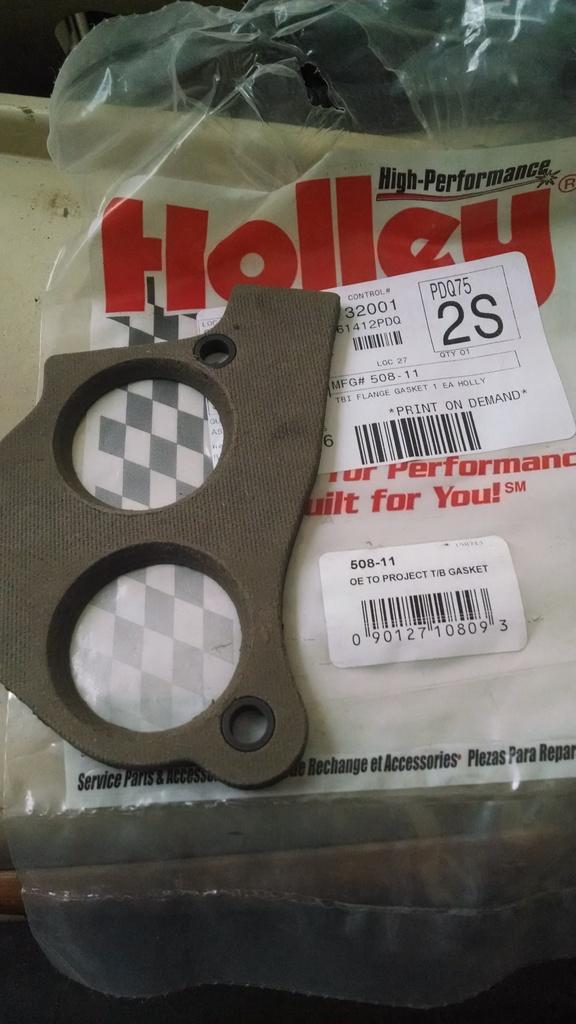
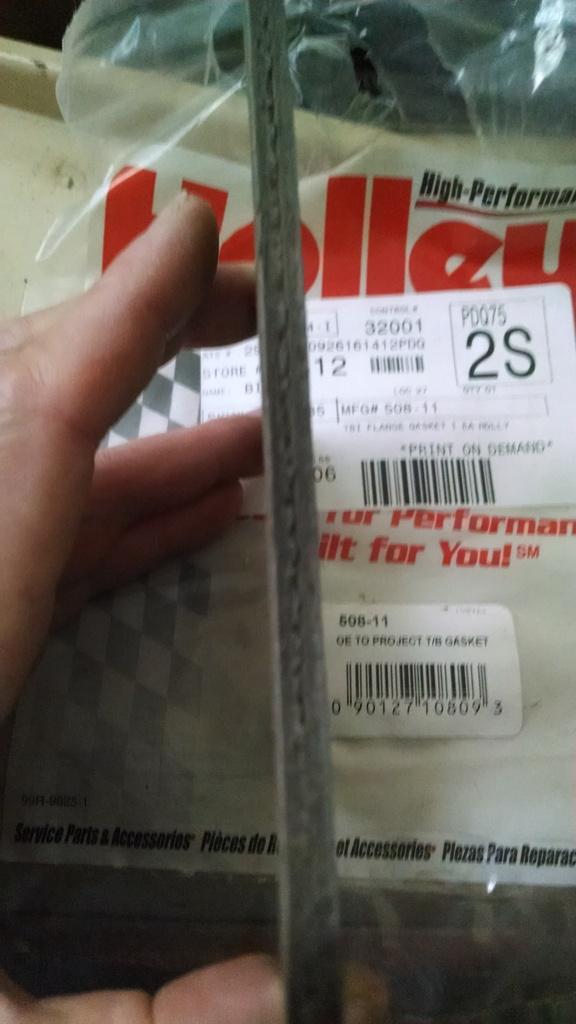
Pictures of the gasket, maybe 1/4" thick:

IMG_20161203_161140361_zpskw673aib-1.jpg


IMG_20161203_161147283_zpskmgkboaz-1.jpg


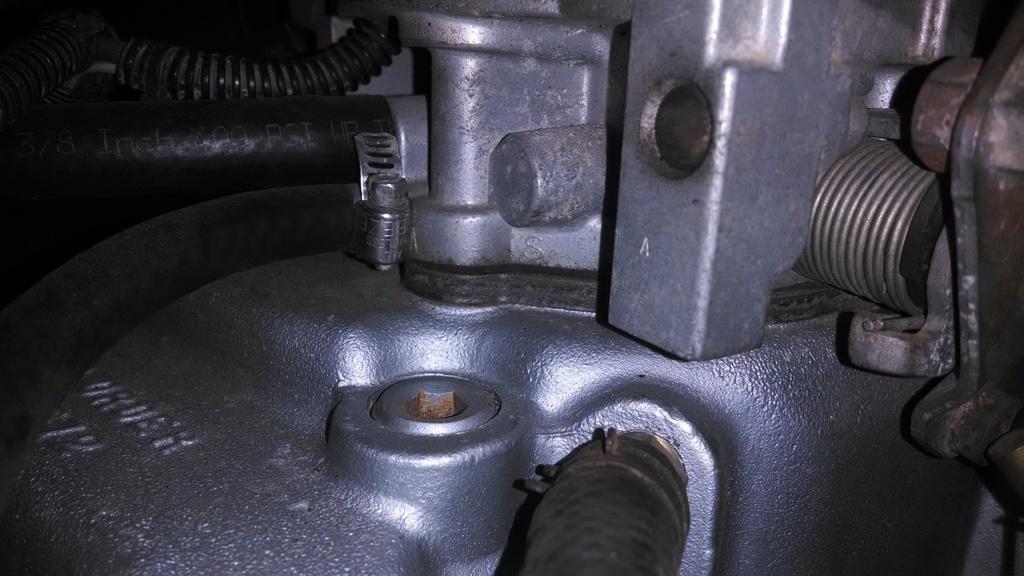
And installed:

IMG_20161203_162248920_zps5dyu5nz8-1.jpg


Since I have the "flexible" fuel lines on the rear of the throttle body, installation was simple. I removed the three TB mounting bolts, picked it up, slid in the thermal spacer, bolted the TB back down. I do not think the 1/4" raised TB should mess up the TV cable, hope not. Scrambler drives/shifts the same, so hopefully fine.


My next "issue", and I think I know the solution, but bare with me. This was someone else's project Jeep, so I went with the flow with the parts I had. The engine mounts were welded to the frame, and I think they are in a good spot. The transmission cross member is spaced down 1" for transmission to body clearance. And, I did install a HD Dana 300 output shaft, which also cost an inch of rear DS length.

I first ran this Scrambler with the super stiff Superlift 4" spring pack, minor rear drive line vibration. I believe these packs have built in 6 degree steel shims, pushing pinion to 16 degrees.

I then swapped in the RE 4.5" springs with 4 degree steel shims pushing the pinion up, minor rear drive line vibration.

I next added an extra main leaf to each rear pack to stiffen up the rear, it was too soft at high speeds. I pulled out the steel shims and ran it, a bit more then minor rear drive line vibration, but would go away at high speeds.


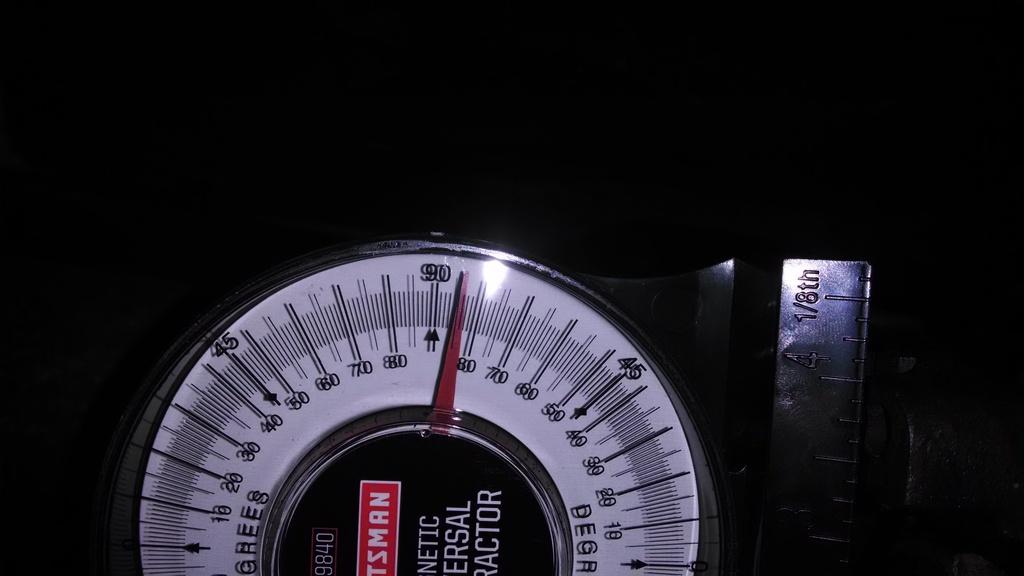
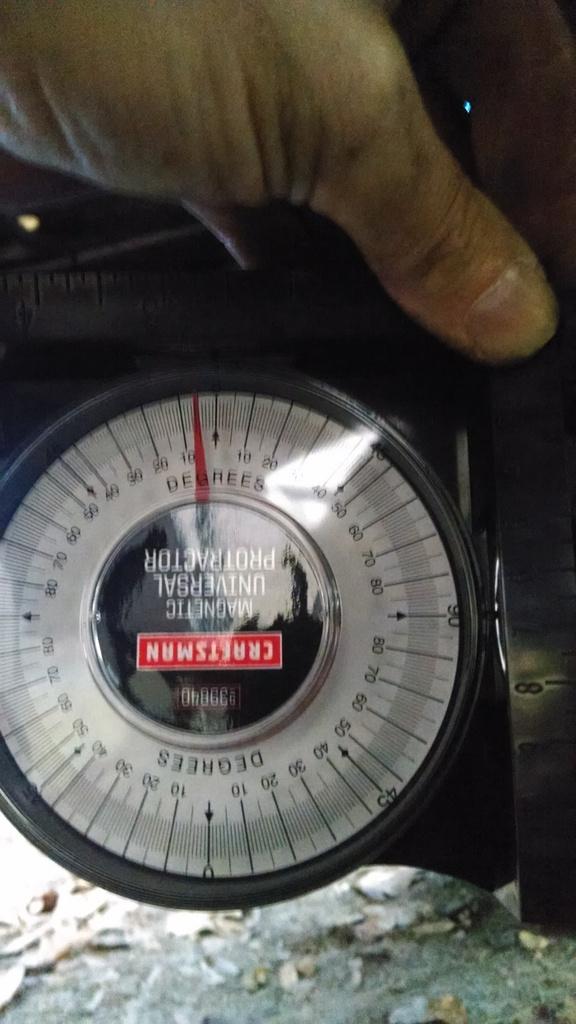
So, I finally measured my rear driveshaft angles, this is what I have:

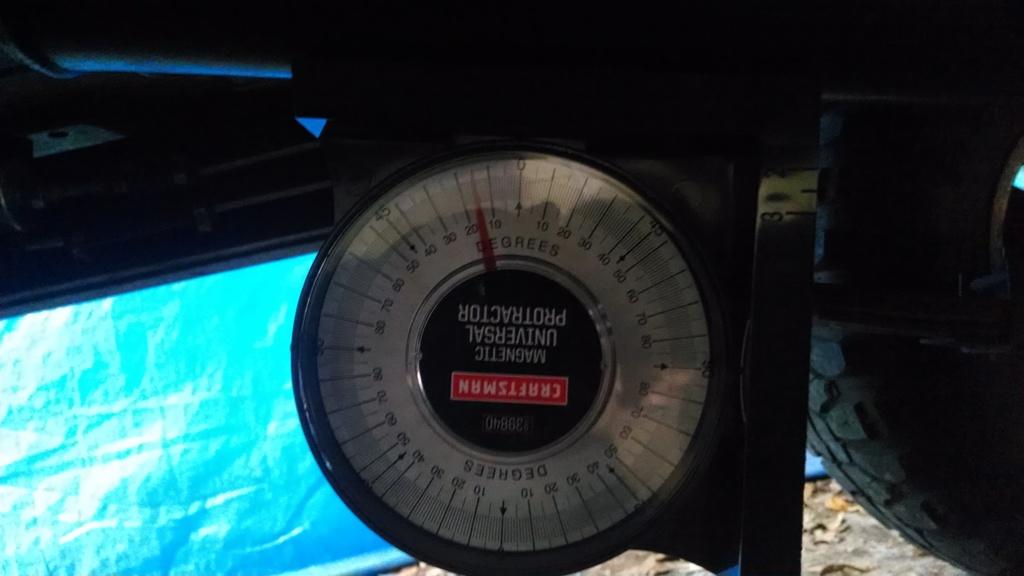
1) Rear output shaft - down 5 degrees

IMG_20161203_101217811_zpsjutthk24-1.jpg


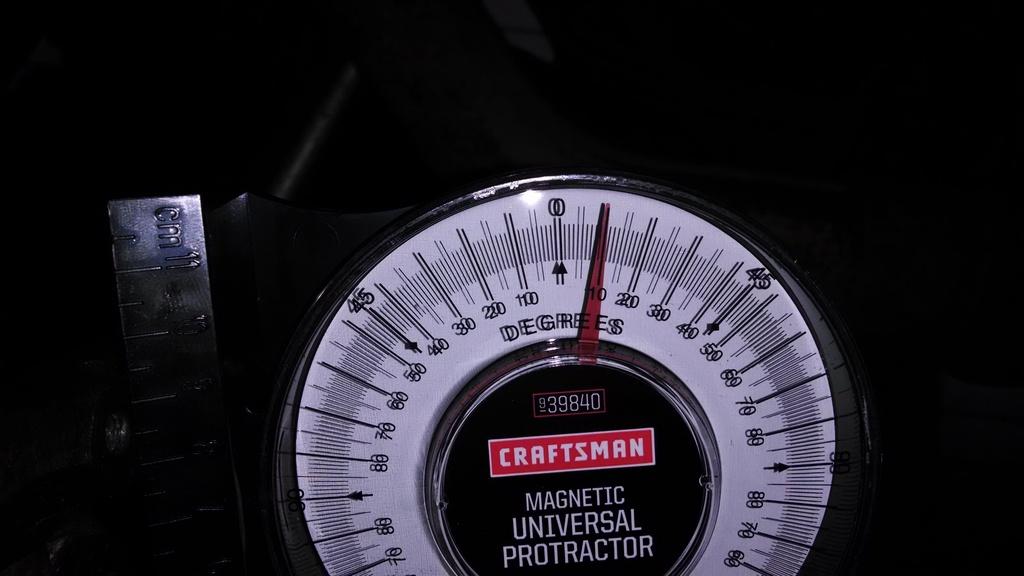
2) Rear driveshaft - 15 degrees

IMG_20161203_094903294_zpsxmy9okiz-1.jpg


3) Pinion Yoke - up 10 degrees (stock spring perches)

IMG_20161203_101241765_zpsv1fe8lnj-1.jpg


4) Rear driveshaft is only 28-1/4" long, single u-joint on each end

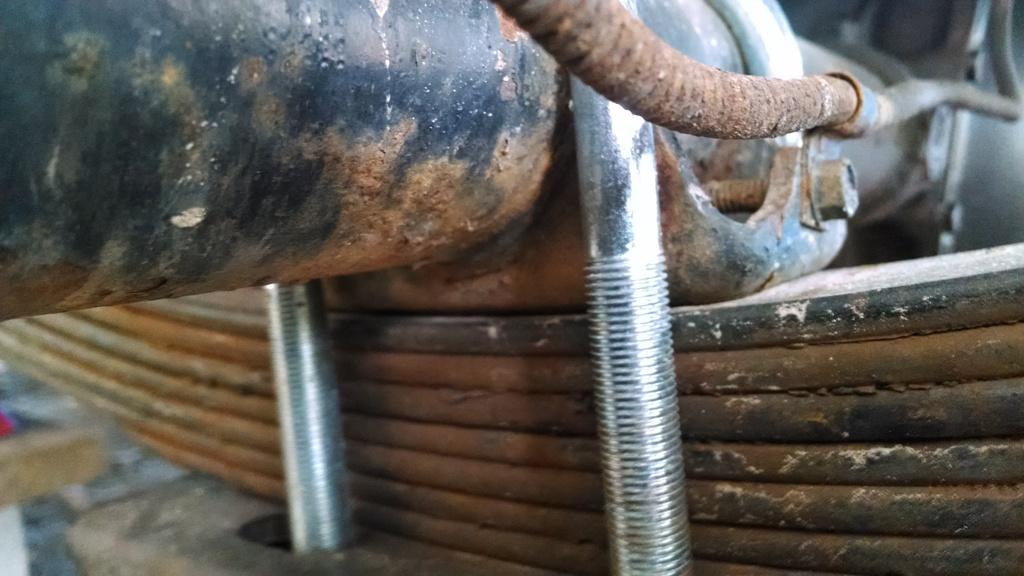
So, with this info, I placed some 4 degree steel shims, fat end facing the back of the Scrambler, to lesson the pinion angle. I now had exact but opposite angles, should be good, right?

Stock perches:

IMG_20161203_115458589_zpsbkd8lng8-1.jpg


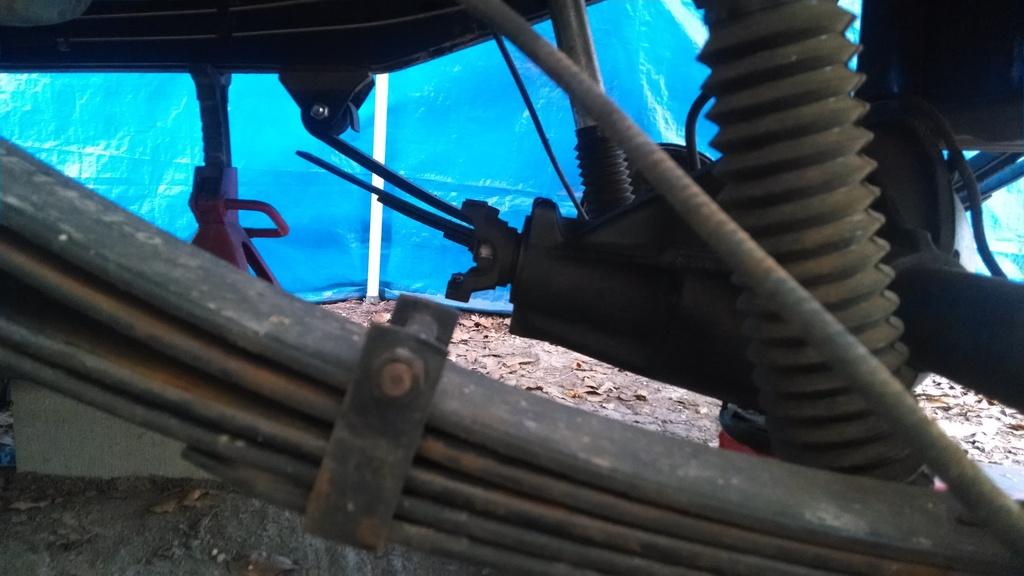
Stock rear pinion angle:

IMG_20161203_115508212_zpsqid3tgcb-1.jpg


New rear pinion angle, 5 degrees, equal/opposite of the output shaft:

IMG_20161203_132632573_zpsznsu6woe-1.jpg


Well, below 50mph, no vibration. But, once i got up to 60-70mph, vibrated terrible. At 75mph, felt like normal rear drive line vibration.

Now, I am going to put some steel 6 degree shims in, to push the pinion down 2 degrees lower, to hopefully compensate for the pinion climb I am experiencing at interstate speeds?????

Even if this works, each rear u-joint is still operating at 10 degrees, Spicer recommends 3 degrees maximum. Can I expect to get a vibration free ride this way, or do I need to go ahead and put in a double cardin shaft?

The FSM does not really adress this issue, well for CJ's anyway. The driveline chapter has some vibration diagnosis stuff, and one of the pictures shows what looks like a FSJ with a 5 degree output shaft angle, 4 degree pinion angle. That probably works on a FSJ, much longer rear DS, so the DS angle is not no where near as steep as mine, so the u-joint angles are within spec.

On my red Scrambler, same lift, no real vibration when I had either the T176/T5's. When I swapped in the Ax15, which was a bit longer, picked up a hair more vibration, but not bad. I will have to cheeck it's angles to compare.

I am wondering if that 10 degree up angle on the pinion is correct? Will have to see what my stock green Scrambler has. IF the factory was going by Spicer spec's, and had a 10 degree up angle on the pinion, then the rear output shaft angle should be around 11 degrees. That would be a fairly steep engine/transmission slope, but maybe that's how they are, I have never measured??

Comments/questions/concerns/criticisms/suggestions welcome :-)

I am going to do some more road testing tonight, write down all my "vibration" findings. Hopefully, just adding 2 degrees of downward slope to the pinion will cure this issue, but I have my doubts.

Once I install the new shims, I will road test and report back. If the new pinion angle doesn't cure the vibration, then I will go with the double carden rear drive shaft.

I need to get this Scrambler ready for some interstate driving, have to use it to bring old engine/pick up new engine for my red Scrambler, soon!!!!!!!

But, I want to get this last annoying issue resolved, before I tear the red one down, then the green one, then Tommy's junk!!!!!!!!!!!!!!!!!!!!!!!!!!!!!
 
Tagging for results.

I removed a shackle lift from my tan '7 and put in some locked 3.31 axles with 2.5" Rancho springs. Have a pretty good vibe under gas at about 40-55. Where exactly did you put the protractor on the ears of the yokes or ?

I've seen a lot of explantions on what to do, but have never been sure I was doing proper measurements in the proper places.
 
I installed double cardin(CV joint) then adjusted my rear differential so that the drive shaft runs perfectly straight with the diff. I've driven mine over 100 mph and there is no vibration at any speed. It's not rocket science. I also tried shims first. 2,4,6 and 8 degree. Once I decided to go with the CV joint and 6 degrees on the differential everything was perfect.
It's even more crucial on the front Differential because you are changing caster too, which is a whole new topic.
P.S. If you are going to use shims don't use the aluminum ones. They are soft and will wear out.
I was taught that u joints are good for up too 3 degrees and I've heard others say 5 degrees. At 10 degees that should feel like they are coming apart, and they will sooner or later.
 
Last edited:
Tagging for results.

I removed a shackle lift from my tan '7 and put in some locked 3.31 axles with 2.5" Rancho springs. Have a pretty good vibe under gas at about 40-55. Where exactly did you put the protractor on the ears of the yokes or ?

I've seen a lot of explantions on what to do, but have never been sure I was doing proper measurements in the proper places.

Yes, I removed the drive shaft and took the measurements right off the ears of the yokes :thumbsup:

I "think" even if I get the pinion 2 degrees less then the transfer case yoke angle, it might be "better", but still not be "acceptable" :twocents:

The 15 degree shaft angle, minus the 5 degree yoke angles, means the u-joints will be operating at 10 degrees each. They will be "opposite and equal", but I think 10 degrees is just way too much past the 3 degree recommendation. It might be fine at slower speeds, but once that shaft starts really spinning at highway speeds, just too much :shrug:
 
Back
Top