• Notice for iPhone users: DO NOT use the image size reduction option when uploading photos to the forum. This causes portrait images to post as landscape. We have added a warning to the image insert pop-up as well.

spankrjs's Biloxi, MS '83 Scrambler

Can you feel a "seat of the pants" power difference from the new engine?

Yes, huge difference :thumbsup:

1) - completely overhauled engine, .40 over bore
2) - NEW Hesco MPI kit installed to replace the OEM computer controlled carb

Much more powerful, holds speed with less gas pedal, much much more responsive, very happy with it :thumbsup::wave:
 
I am going to rebuild this build thread, bare with me, might take awhile, lots of pictures/information to re-enter.

OK, where the pictures left off. Reinstalling the washer/coolant bottles, everything fits in stock location, even with the addition of the MPI computer/later style vapor canister:

attachment.php

A1.jpg

Bolting the grill back on:

attachment.php

A2.jpg

Starting to loosely install the wiring harnesses:

attachment.php

A3.jpg

I removed the OEM return line, this MPI set up is "return less", and IIRC, I think I replaced the OEM vapor line,but I might have just cleaned and re-used it, can't remember:

attachment.php

A4.jpg

The replacement clutch fork boot is a POS, had to cut it up to make it work:

attachment.php

A5.jpg

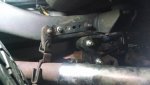
While I was working under the Scrambler, I re-worked this rear exhaust hanger to function better:

attachment.php

A6.jpg

The muffler that was on here was very heavy, had broken baffles. I found a bolt in replacement at Advance Auto, some type of Turbo Thrush muffler. I actually like it, it is fairly quiet. The silver stuff is anti-seize, I applied it to the pipes/muffler to make assembly easier.

attachment.php

A7.jpg

My Hesco MPI kit did not come with a new vapor cansiter. They are no longer made. I bought a used canister off eBay for a 1994 Wrangler, same canister that the MPI kit would have come with. It bolts in place like a stock canister, no clearance issues:

attachment.php

A8.jpg

Close up of a "bubble flare" I made on the replacement fuel supply line. This flare came out OK, but I really need to buy a quality flare set up, the auto store ones piss me off:

attachment.php

A9.jpg

Installing the new fuel supply line with the OEM clips. I had to open up the OEM clips a hair to fit around the slightly larger OD of the replacement line:

A10.jpg
attachment.php
 
Last edited:
I bought a Dana 300 shifter bushing kit off eBay and installed it before I put the skid plate back on. The shifter bushing really eliminates play in the shifter:

attachment.php

A11.jpg

I cleaned/repainted the OEM drive shafts, installed new Spicer U-joints:

attachment.php

A12.jpg

One of the skid plates "welded inside the frame rail nuts" broke free. So, I glued some washers to a bolt:

attachment.php

A13.jpg

And fished it down the frame rail, dropped it down out of the hole:

attachment.php

A14.jpg

And of course, the skid plate would not just bolt right up, it expanded, frame rails shrunk, what ever. I found that by prying like so, skid plate installation is a bit easier. Of course, make sure your body mount bolts are good!!!

attachment.php

A15.jpg

That pretty much finished up the under the Scrambler work, except for the fuel lines/pump installation, which will be detailed later. IIRC, I left the drive shafts off until last, easier to work under the Scrambler with them not installed.
 
Last edited:
I started working on all of the under hood/MPI wiring next.

I mounted the MPI MAP sensor to the OEM computer controlled carb MAP sensor bracket, bolted it to the original holes in the fire wall:

attachment.php

1.jpg

I had to switch around some of the intake manifold vacuum ports to clear the OEM brake booster, no big deal:

attachment.php

2.jpg

IIRC, the wire thingy would not clear the brake booster, so I moved it to the front intake manifold port:

attachment.php

3.jpg

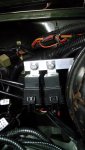
I made a relay holding bracket out of a piece of aluminum angle, bolted the angle to one of the master cylinder to brake booster bolts. This holds the relays in the correct position so that water won't get into them, I speak from experience LOL:

attachment.php

4.jpg

Another view of the relay bracket, and the routing of the MPI harness to the MPI computer:

attachment.php

5.jpg

I installed the brake booster line to this port in the intake manifold:

attachment.php

6.jpg

Mounting the 02 sensor wiring harness connector to the driver side fender:

attachment.php

7.jpg

Loosely installing the passenger side engine harness, including mounting the new coil/distributor:

attachment.php

8.jpg

The passenger side harness running to the rear of the engine, before it goes below the body:

attachment.php

9.jpg

This picture shows the two wires out of the MPI harness that tie into the original vehicle harness: The red wire goes to a constant 12 volt source, the yellow wire goes to a hot on run/start. The red wires in the white plug went to the old oil pressure switch, no longer used.

10.jpg
attachment.php
 
Last edited:
Close up of the alternator wiring, you have to install a diode on the excitor wire.

attachment.php

11.jpg

Loosely running the under body wiring harnesses. One harness is the OEM reverse light/4WD light harness. The other harness contains the MPI speed sensor wiring. Also visible is the Dana 300 vent line. The T5 vents out of the shifter boot.

attachment.php

12.jpg

Cleaned up/strapped up, the fuel pump wiring harness is also run with these harnesses:

attachment.php

13.jpg

View of the same stuff, from the rear. I ran the fuel pump harness through the body channel to the rear:

attachment.php

14.jpg

The three MPI wiring harness connections: (1) Red to battery, (2) Yellow to hot on START AND RUN (IIRC I used the OEM coil wire for this purpose), (3) the black ground strap to the engine block.

attachment.php

15.jpg

Diode installed on the excitor wire:

attachment.php

16.jpg

Cleaning up the passenger side of engine wiring:

attachment.php

17.jpg

Close up of the OEM Alternator/Solenoid wiring. It still functions, but it is kind of blah, might redo this in the future:

attachment.php

18.jpg

Moving on to the gas tank. I dropped the OEM tank out:

attachment.php

19.jpg

The sending unit still works perfectly, but I changed out the plastic float I installed a few years ago with a new brass float:

20.jpg
attachment.php
 
Last edited:
One problem I did have with the sending unit: I would run out of gas with 5 gallons left in a 15 gallon tank?? Mystery solved, the sock filter fell off the sender:

attachment.php

21.jpg

Jumping around a bit, I used an extra oil pan gasket to make a transmission tunnel cover gasket, works great:

attachment.php

22.jpg

The Made in China "replacement part suck. On the right, this was a replacement T5 shifter boot, only two years old, fell apart. On the left, I bought a used, OEM Ford Mustang boot off of eBay, works great, good quality:

attachment.php

23.jpg

I am using a B&M T5 shifter, clearance for this boot is tight, with regards to the OEM transmission tunnel cover opening:

attachment.php

24.jpg

Another issue: This is how Hesco would have you run the air cleaner, which is fine:

attachment.php

25.jpg

My "problem" - this Scramber's original 1983 grill was damaged, and a 1976 grill used in its place. The problem here, no air opening:

attachment.php

26.jpg

My red Scrambler's 1983 grill, which has the air opening:

attachment.php

27.jpg

This grill issue will cause me big time issues with radiator to fan clutch clearance here shortly.


On the air intake, I decided to extend the air filter over to the passenger side near the battery. This would keep the engine from sucking the hotter air from the driver side, which has the exhaust. To do this, I replaced the Hesco supplied air hose (bottom) with a piece of large rubber hose (top), sourced from NAPA:

attachment.php

28.jpg

Mocking up the air intake hose routing:

attachment.php

29.jpg

Back to 1976 grill vs. 1983 grill differences.

1976, 2.5" deep:

30.jpg
attachment.php
 
Last edited:
1983, 3" deep:

attachment.php

31.jpg

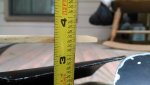
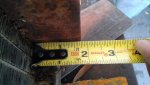
1/2" does not sound like a lot, but using the 1976 grill with a 1983 fan clutch, I only have like 1/2" clearance between the face of the aftermarket radiator (which is also built wrong) and the aftermarket fan clutch (which is also a hair taller then an OEM fan clutch):

attachment.php

32.jpg

This set up worked, but I did not like it, way too close for comfort. So, I address this issue during this overhaul.

I kind of start jumping around between fuel stuff and radiator stuff from here on out. I was waiting for parts, so I kind of had to jump around to keep forward progress.

I decided to run an in tank fuel pump on this Scrambler. I bought a set up from TanksInc, works perfectly:

attachment.php


attachment.php

33.jpg

34.jpg

I also bought their vent valve, I installed it in the TankInc pump assembly. I also am using the stock vent stuff, too. You could probably just use this doo-hickey to vent the tank, but since all my stock OEM vent stuff is working, I decided to use both vent systems.

attachment.php

35.jpg

Close up of the top plate of the TanksInc assembly, fairly straight forward what all the stuff goes to:

attachment.php

36.jpg

I am keeping the OEM sending unit to serve two purposes:

1) run the OEM gas gauge, which works perfectly
2) supply a secondary external fuel pump

So, I had to find a place to mount the new in tank pump system, this looked like a good spot:

attachment.php

37.jpg

The tank is not exactly flat here, but I was able to straighten out this area after i cut the hole:

attachment.php

38.jpg

Making sure the OEM sender will clear the new set up:

attachment.php

39.jpg

40.jpg
attachment.php
 
Last edited:
Checking vertical clearance for anything sticking out of the top of the tank, making sure it would clear the body:

attachment.php

41.jpg
attachment.php


42.jpg

I actually reinstalled the tank to check for clearance, good to go:

attachment.php

43.jpg

Sketching out the TanksInc assembly on top of the gas tank, checking for any issues:

attachment.php

44.jpg

Checking for clearance inside the tank, between the OEM sender arm and the TankInc baffle tray:

attachment.php


attachment.php

45.jpg

46.jpg

I ended up sliding the whole assembly a bit forward. Measure twice, cut once.............

attachment.php

47.jpg

And I cut out the hole. Shouldn't have to tell you, be careful!!!

And of course, I cut the hole right above a raised dimple in the bottom of the tank, which prevents the baffle tray from sitting on the very bottom of the tank:

attachment.php

48.jpg
attachment.php


49.jpg

Using water, I think I figured that with the baffle tray sitting slightly off the bottom of the tank, I would not be able to suck the last gallon of gas out the tank. Not the end of the world:

50.jpg
attachment.php
 
Last edited:
Straightening the lip on the top of the tank:

attachment.php

51.jpg

Those two simple tools worked really well:

attachment.php

52.jpg

Measuring/marking how much to chop off:

attachment.php

53.jpg

Test fit, works great:

attachment.php

54.jpg

I bought several new sock filter to try on the OEM sender:

attachment.php

55.jpg

I ended up using the one pictured, secured with a hose clamp. I also installed a brass float on the OEM sending unit arm:

attachment.php

56.jpg

Drilled all of the mounting holes in the top of the tank:

attachment.php

57.jpg

I used this sealant on the cork gasket and all of the screws, it is supposedly fuel proof:

attachment.php

58.jpg
attachment.php


59.jpg

And assembled the TankInc internal fuel pump assembly according to the instructions:

60.jpg
attachment.php
 
Last edited:
Close up of the strap that secures the fuel pump to the backing plate:

attachment.php

61.jpg

I used a few small pieces of masking tape to hold the inner lock ring in place:

attachment.php

62.jpg

One last picture before dropping it in, note the gasket, screws, sealant:

attachment.php

63.jpg

And assembled:

attachment.php

64.jpg

It is kind of tricky getting the first two screw started, but after that, piece of cake.

I have drove the Scrambler a few months now with this in tank pump set up. So far, so good.


I jump back into radiator/fan clutch clearance issues next, I will post up some more later :wave:
 
Last edited:
Some more fan clutch/radiator clearance issue pictures.

I have a 1976 grill (radiator inset not as deep as a later CJ grill), replacement radiator (not made the same as OEM), and a repalcement fan clutch (a bit taller then OEM). All this leaves me with 1/2" clearance between the face of fan clutch and the face of radiator:

attachment.php

65.jpg

While this works, on the street, just too close for comfort. So, I tried a Jaguar fan clutch, which is shorter then a CJ fan clutch. IT WILL NOT WORK.

attachment.php

66.jpg

I read about this fan clutch working on other vehicles, it will not work on a Jeep AMC 258. It puts the fan too far back, the fan blades will hit the PS and alternator pulleys.

Comparison, left to right: used OEM (sourced from Ron), NAPA replacement for a 1983 Scrambler, NAPA Jaguar fan.

attachment.php

67.jpg

NAPA '83 Scrambler vs. Jaguar, big difference:

attachment.php

68.jpg

The hole in the back of the Jaguar clutch is too big for the CJ water pump snout, BUT it comes with this adapter so it will fit:

attachment.php

69.jpg

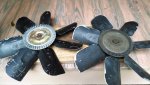
OEM fan and clutch vs. OEM fan and Jaguar clutch:

attachment.php

70.jpg

Overall height of the OEM fan/OEM clutch:

attachment.php

71.jpg

Overall height of the OEM fan/Jaguar clutch:

attachment.php

72.jpg

You could gain a 1/2" additional clearance between the face of the radiator/face of the fan clutch, BUT it will not work, fan blades will hit the accessory pulleys.


I swapped on the OEM fan/OEM clutch combo, about 1/4" more clearance then the NAPA replacement 1983 Scrambler fan clutch, but still too close for comfort:

73.jpg
attachment.php
 
Last edited:
Just yank that clutch and fan assembly out and install a electric fan.
 
I found "Yard Scrambler's" original 1983 radiator, compared it to my replacement radiator:

attachment.php

74.jpg
attachment.php


attachment.php

75.jpg
attachment.php


attachment.php

76.jpg

77.jpg

78.jpg

The mounting brackets between the two radiators are similar. BUT, there is a difference between how the radiators are made.

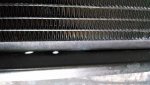
Both of these pictures are of the front of the radiators. Notice how on the old radiator, the cores are flush with the front. On the replacement radiator the cores are not flush:

attachment.php

79.jpg
attachment.php


80.jpg

I temporarily installed the old radiator:

attachment.php

81.jpg

I gained a bit more clearance.

Some grill difference pictures. The red grill is an '83, green grill is a '76. Not a huge difference, but there is a difference:

82.jpg
attachment.php


83.jpg
attachment.php
 
Last edited:
I did not feel like finding another grill and repainting it. The grill swap might get me another 3/16" clearance. What I decided to do, get the original radiator repaired, and find a slightly shorter fan clutch.

This picture clearly shows the major difference between an OEM radiator and a "replacement" radiator:

attachment.php

84.jpg

With the core pushed all the way to the front of the tanks on the OEM radiator, you gain more fan clutch clearance on the back side. So, I had the OEM radiator re-cored/repaired. This was not cheap or fast. Cost me a little less then $500, and it took awhile to find the correct core. The radiator repair took around 6 weeks, so i was not able to drive this Scrambler to Michigan this year.

So, stalled out on the radiator, I jumped back to the fuel system.
 
Last edited:
I don't mean to sound ugly but both of those radiators look like old ones to me. I see and admire all your hard work on the cooling system and it seems you are almost there as far as selecting which components you are going to use but the next step is going to be just as time consuming, the fan shroud. Just another reason to rethink the electric fan.
Just looking at your last picture of the two radiators if you look at the better one you can see where the return connection is installed in a way that it appears to choke off 1/2 the water flow. Just saying that sometimes we get so consumed in our projects that we overlook the obvious. When you finish this project I'm going to need a two week vacation just to recuperate from following it. LOL
 
Last edited:
Just yank that clutch and fan assembly out and install a electric fan.

I don't mean to sound ugly but both of those radiators look like old ones to me. I see and admire all your hard work on the cooling system and it seems you are almost there as far as selecting which components you are going to use but the next step is going to be just as time consuming, the fan shroud. Just another reason to rethink the electric fan.
Just looking at your last picture of the two radiators if you look at the better one you can see where the return connection is installed in a way that it appears to choke off 1/2 the water flow. Just saying that sometimes we get so consumed in our projects that we overlook the obvious. When you finish this project I'm going to need a two week vacation just to recuperate from following it. LOL

Thanks for the kind words :cheers:

I actually already finished this project, back in September IIRC. When the site crashed, it lost all of my posts from March till completion :eek:

So, I am just reloading all the work I already completed:popcorn:


I was able to get the old radiator repaired, found a slightly shorter fan clutch, and was able to use the stock fan shroud. So, it all worked out in the end, just took a long while to get there :thumbsup:

I had to hurry up and finish this one so I could work on one of your "neighbors" Jeeps LOL :cheers:
 
Back to the fuel system:thumbsup:

I am using an "in tank" fuel pump on this Scrambler. But, I also wanted to mount and plumb an external fuel pump, in case the in tank pump died in the middle of nowhere. So, my fuel system is kind of complicated.

Picture of the primary components, besides the previously installed in tank pump:

attachment.php

85.jpg

My "map":

attachment.php

86.jpg

This MPI fuel rail only has the supply line, what is commonly referred to as a "return less system". But, there has to be a return line for the excess fuel/pressure to go back to the tank through. In this system, I am using a late model Grand Cherokee fuel filter,which has a fuel pressure regulator inside. This filter mounts back near the tank, with a short return line.

I am using the original fuel sending unit supply line to feed the external fuel pump. I am not using the original fuel return port on the OEM sending unit. I am using the OEM fuel gauge sending unit to work the OEM fuel gauge.

I am using the TanksInc in tank pump fuel supply, fuel return, and "t'eed" this extra fuel vent line to the OEM vent line.


Picture of the Grand Cherokee fuel filter/pressure regulator:

attachment.php

87.jpg

The Grand Cherokee filter comes with fittings that are made to work with the OEM nylon fuel line stuff. I wanted to use high pressure rubber fuel line, so I placed these fittings on the filter in place of the OEM fittings, worked perfect:

attachment.php

88.jpg

Fittings installed on the fuel filter, used conduit clamps as mounting brackets for the external fuel pump and the fuel filter:

attachment.php

89.jpg

Fuel lines installed and roughly routed:

attachment.php

90.jpg
attachment.php


91.jpg

I used GM style electrical connectors on the chassis fuel pump harness, and both fuel pumps. So, I can easily unplug one fuel pump, plug in the other. I also mad a "dummy plug" out of a connector to keep the unused fuel pumps plug clean:

attachment.php

92.jpg

I installed a replacement fuel supply line, the long metal line that runs down the passenger side frame rail from the tank to the engine bay. It's OD was a hair bigger then the OEM line, so I used a socket and hammer to slightly open up the OEM retaining clips, worked perfect:


93.jpg
attachment.php
 
Last edited:
I originally wanted to run all of the fuel lines from the tank on the driver side, in the factory "frame nook", where the lines originally ran. This is the "nook", looking forward from the rear:

94.jpg
attachment.php


I later found out that not everything would fit.


Picture of the secondary/auxilary external fuel pump, and fuel filter/regulator resting on the cross member, trying to figure out how to mount them/make everything fit:

attachment.php

95.jpg

I ran the OEM fuel supply line just like they did from the factory EXCEPT I cut it off short. So, this line starts on the passenger side of the rear cross member. I put a nice bubble flare on the end, temporarily capped it off:

attachment.php

96.jpg

During all of this mock up, I realized I could not get both external fuel pump and filter mounted on the cross member, AND have enough room to run the lines with nice sweeping bends. So, I decided to make a mounting bracket, and attach it to the body. I used the stock welded nut things that are located on the bottom of the bed floor. A previous owner must have stripped out the threads, but they welded some nuts to the bottom of them, so this is what I used to attach my mounting bracket:

attachment.php

97.jpg

I fabricated a mounting bracket out of a piece of 3/16" plate and my drill:

attachment.php

98.jpg

Another shot of the gas tank line routing:

attachment.php

99.jpg

I ran the fuel lines through pieces of rubber heater hose to protect them from rubbing on the body/frame:

attachment.php

100.jpg

I cut off this little bracket from the top of the gas tank so that the lines would lay flat on top of the tank:

attachment.php

101.jpg

Added some more protective sleeves:

attachment.php

102.jpg

Initial line routing, through the driver side "nook":

attachment.php

103.jpg

The brass "T" that is visible is where I spliced in the additional TanksInc vent line into the OEM vent line.
 
Last edited:
Another view of the "nook" on the driver side, too many lines, not too good, not happy:

attachment.php

104.jpg

So, I decided to run the internal fuel pump supply line and the fuel filter/pressure regulator return line through the driver side "nook". I decided to run the external fuel pump supply line on the passenger side. Also visible is the TankInc internal fuel pump wire connector that I made. Initial thoughts with the line routing, not too happy:

attachment.php

105.jpg

Back to my auxiliary mounting bracket. Since the top of the plate would be very close to the bottom of the bed floor, I threaded down some Allen headed cap screws from the top to act as mounting lugs:

attachment.php

106.jpg

Mounting plate installed using existing threaded things on the bottom of the bed floor:

attachment.php

107.jpg

The "best" way I could find to route all of this stuff: I mounted the fuel filter to the mounting plate first:

attachment.php

108.jpg

I also mounted the secondary external fuel pump to the mounting plate:

attachment.php

109.jpg

I was not happy with the external fuel pump supply line hanging down, so I relocated it through the passenger side "nook":

attachment.php

110.jpg

In progress shot, lots of tools and junk to make all this work:

attachment.php

111.jpg

Getting closer:

attachment.php

112.jpg

The above picture is kind of blurry, but you can see how both fuel pump electrical connectors can reach the chassis mounted fuel pump electrical connector, and the nice sweeping bend in the external fuel pump's supply line.
 
Last edited:
In order to get the external fuel pump's supply line to reach the fuel filter, without kinking, I installed a brass 90 degree fitting, worked out well:

attachment.php

113.jpg

You can also see how I capped off the back up fuel pump's supply line with a stainless bolt. So, if the in tank fuel pump dies, I can simply switch the fuel supply lines (right at the filter), and simply unplug the internal tank pump and plug in the external pumps wiring. Pretty nifty if I do say so myself LOL.


External fuel pump supply line secured until when (if) it is ever needed:

attachment.php

114.jpg

One last picture of the fuel pump/filter/fuel line stuff, came out pretty good, doesn't look too junky:

attachment.php

115.jpg

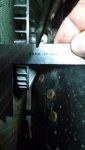
Back to radiator/fan clutch stuff. Clearance between the fan blade/pulley with the stock clutch:

attachment.php

116.jpg

So, there is some room for a shorter clutch.

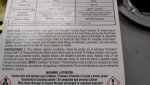
I did some fan clutch research, came up with this little chart:

attachment.php

117.jpg

Basically, I found out that I could use a 1976 - 1981 Jeep CJ-7 fan clutch and I could gain some clearance.

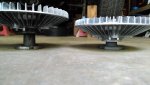
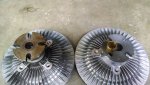
1983 clutch on the left, 1981 clutch on the right:

attachment.php

118.jpg

And installed, lost a bit of clearance between the fan blades and the pulley's, but still plenty enough room:

attachment.php

119.jpg
attachment.php


120.jpg

IIRC, I now have close to 1"-1.25" clearance between the face of the fan clutch and the radiator core. IF I ever paint/install the correct model year grill, I can probably gain another .25". All in all, I am happy now, and the cooling system is working properly. Also, not worried anymore about hitting a bump and the fan clutch going through the radiator:cool:
 
Last edited:
Back
Top