

You are using an out of date browser. It may not display this or other websites correctly.
You should upgrade or use an alternative browser.
You should upgrade or use an alternative browser.
Switching from CB to GMRS radios
- Thread starter IAFFCJ
- Start date


- City
- Richmond
- State
- TX
As much as I hate it, $3.50/year is not the end of the world. I’m good till 2027 though. Who know what the fee will be then.Yea they dropped the GMRS Fees and started a $35.00 fee for Amatuer Radio (HAM) Licenses that were free.

- City
- Aurora
- State
- CO
Some HAM Clubs offer on-line testing.I've been studying for my ham, but with the lock downs, they cut down on testing. But I'm ready for it.
https://hamradioprep.com/ham-radio-license-test-online/

- City
- Farmington
- State
- NM
Yes, some do. Our group has not gone that way yet. I am our local Testing Coordinator. We are have a Test Session April 30, 2002.
I am not really complaining about the fee just stating a fact. It is still cheap by about any standard. Both mine are good to 2029
I am not really complaining about the fee just stating a fact. It is still cheap by about any standard. Both mine are good to 2029

- City
- Dexter
- State
- MI
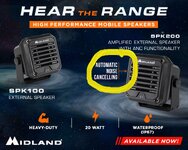
Bump for a good thread because I just saw these come in on email... I LOVE my external speaker and I wouldn't be without one again in any wheeling rig that runs without doors/windows/top. These look much cooler than mine!


- City
- Dexter
- State
- MI
Yeah, I'm not entirely sure how that works on the speaker side.
I would definitely get it on the microphone side, I have been wanting to get a foam cover for my mic because I think the wind noise driving on our dunes trips makes it hard for people to hear me.
I would definitely get it on the microphone side, I have been wanting to get a foam cover for my mic because I think the wind noise driving on our dunes trips makes it hard for people to hear me.

- City
- Ashburn
- State
- VA
Bump for a good thread because I just saw these come in on email... I LOVE my external speaker and I wouldn't be without one again in any wheeling rig that runs without doors/windows/top. These look much cooler than mine!
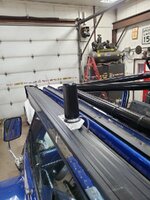
View attachment 110606
I have an external speaker from my CB that I tried plugging into my GMRS but the sound never came out of the speaker and continued to come out of the GMRS handlheld

- City
- Manassas
- State
- VA
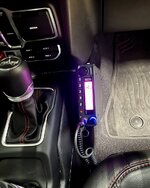
Probably going to need a mobile for the external to work. Inexpensive programmable mobiles are awesome. I’ve put them in all my trucks now and with the repeater on the mountain here in Winchester I can talk close to 40 miles to the next mountain range.I have an external speaker from my CB that I tried plugging into my GMRS but the sound never came out of the speaker and continued to come out of the GMRS handlheld
Wish the travel channels were used more it is so much better than a CB.
- City
- Dexter
- State
- MI
I don’t know anything about that. I have a mounted unit with an external speaker and it’s awesome.Probably going to need a mobile for the external to work. Inexpensive programmable mobiles are awesome. I’ve put them in all my trucks now and with the repeater on the mountain here in Winchester I can talk close to 40 miles to the next mountain range.
Wish the travel channels were used more it is so much better than a CB.

- City
- Galivants Ferry
- State
- SC
Trying to understand something about the antenna. GMRS is line of sight. Why is the antenna height not a big deal, as in CBs?
- City
- Richmond
- State
- TX
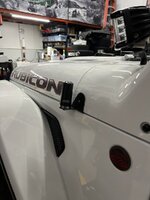
Antenna length is a function of wave length of the frequency. The frequency used by CB is lower, therefore a longer wave length and a longer antenna needed. GMRS is a higher frequency, therefore a shorter antenna needed.
27 mhz +/- for CB (11 meter wavelength +/-)
463 mhz +/- for GMRS (0.65 meter wavelength +/-)
Proper antenna design is based on a factor of wavelength (1/4; 1/2; full; etc…)
Base loading the antenna can also reduce the physical length while still maintaining the perceived electrical length.
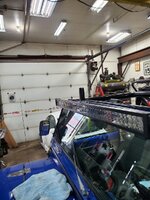
Hence the reason GMRS antenna are so much shorter. Having a higher elevation will still help with transmission range.


- City
- Galivants Ferry
- State
- SC
So I'm curious, for every 12" of height, you increase in antenna. How much line of sight in a perfect world do you gain?Antenna length is a function of wave length of the frequency. The frequency used by CB is lower, therefore a longer wave length and a longer antenna needed. GMRS is a higher frequency, therefore a shorter antenna needed.
27 mhz +/- for CB (11 meter wavelength +/-)
463 mhz +/- for GMRS (0.65 meter wavelength +/-)
Proper antenna design is based on a factor of wavelength (1/4; 1/2; full; etc…)
Base loading the antenna can also reduce the physical length while still maintaining the perceived electrical length.
Hence the reason GMRS antenna are so much shorter. Having a higher elevation will still help with transmission range.
- City
- Richmond
- State
- TX
Since the earth is roughly 8,000 miles in diameter, that makes the circumference about 25,000 miles.
To find the horizon distance you draw a line that is tangent to the earth (or a circle) and intersects the “tower” you are using. At 0” from the earth’s surface, your horizon is 0”. At 1 mile elevation, your horizon distance is about 90 miles. At 2 miles elevation, your horizon is about 125 miles. At 4 miles your horizon is about 175 miles.
All of this is academic as we live in an imperfect world with a lot of peaks, valleys, and “stuff” on the surface. Plus the polarization of the antenna will affect the radiation pattern, waves don’t propagate in a linear fashion due to all the stuff on earth, earth’s natural magnetism affects it. Lots of things affect the ‘line of sight’ for radio waves making it less than line of sight and more than line of sight at different times. Even the earth’s atmosphere composition affects the reflected waves of the radio signal. And the atmosphere is different during the day than at night.
If you are really interested in learning more, I suggest looking into becoming licensed for the amateur radio waves. Look up ARRL.
I am KE5NVE. I hold the lowest level license, I have thought about taking a higher exam but don’t think any higher privileges are really necessary for me.
- City
- Galivants Ferry
- State
- SC
My mind can't take it all in,and understand enough to jump in yet.
Kinda of sticking my toes in to see if I understand enough to be able to use a mounted GMRS in my Jeep, or just stick with some nice handheld units.
I learn by doing, then reading and understand what I was doing. If that makes sense.
Kinda of sticking my toes in to see if I understand enough to be able to use a mounted GMRS in my Jeep, or just stick with some nice handheld units.
I learn by doing, then reading and understand what I was doing. If that makes sense.