• Notice for iPhone users: DO NOT use the image size reduction option when uploading photos to the forum. This causes portrait images to post as landscape. We have added a warning to the image insert pop-up as well.

Pouring oil into my frame to preserve it longer!

MomoJeep

Basic User
City
Seattle
State
WA
I got this idea. Frames can rust from the inside out. There are holes in the side of the frame. I launch a boat in salt water occasionally, and in the process the rear tires get a little salt on them. I live in Seattle so the roads are wet a lot from rain, and the roads are not salted, I think this rinses/preserves the jeep fairly well. The inside of my rear fender wells are well-protected with undercoating on top of paint. But those "access holes" cut into the side of the frame could allow some spray/salt from the tires to go into the frame channel.

I got to thinking, what if I poured some oil into the frame holes!?

PRO - the oil would sit on the lowest parts of the bottom of the inside of the frame. This is where water (or salt) would also accumulate. A coating of oil could prevent rust!
CON - The oil will attract dirt, and over time, turn into a sludge. Oils seems to very slowly evaporate over time (?). Years later (I plan to keep my Scrambler forever), this could mean just dirt in the frame, which could absorb and hold even more water/moisture not allowing it to evaporate easily..? Does this seem true? It would also be hard to ever clean it out.

Oil type - If I was to do this,, used motor oil? new oil? Thick gear oil?

Has anyone else done this or heard of this idea?
 
I would use a cavity wax or treatment designed to coat the inside of the frame. I think Eastwood sells a kit with a wand and product. oil will likely sink to the lowest point, whereas salt will stick to all levels of the frame- meaning where the oil sits will be okay, but above that line may not be. You also have the concern that you may end up with leaking oil- which can create a mess.
1st gen Toyota Tacoma's had major issues with frame rot from the inside out, so much so that Toyota has products it recommends specifically for this task.
Best of luck.
Kyle
 
Oil would leave rainbows all over when wet. Not good.
 
I used the Eastwood inner frame coating. Hope to never replace the frame again. We will see.
 
Last edited:
x2 Fluid Film. I have been using it for years on my plow trucks. It works well on oil pans of 7.3 PSD too. We have a 1997 and a 2000 that has seen each winter plowing commercially since new and still running the original oil pans.
 
I got this idea. Frames can rust from the inside out. There are holes in the side of the frame. I launch a boat in salt water occasionally, and in the process the rear tires get a little salt on them. I live in Seattle so the roads are wet a lot from rain, and the roads are not salted, I think this rinses/preserves the jeep fairly well. The inside of my rear fender wells are well-protected with undercoating on top of paint. But those "access holes" cut into the side of the frame could allow some spray/salt from the tires to go into the frame channel.

I got to thinking, what if I poured some oil into the frame holes!?

PRO - the oil would sit on the lowest parts of the bottom of the inside of the frame. This is where water (or salt) would also accumulate. A coating of oil could prevent rust!
CON - The oil will attract dirt, and over time, turn into a sludge. Oils seems to very slowly evaporate over time (?). Years later (I plan to keep my Scrambler forever), this could mean just dirt in the frame, which could absorb and hold even more water/moisture not allowing it to evaporate easily..? Does this seem true? It would also be hard to ever clean it out.

Oil type - If I was to do this,, used motor oil? new oil? Thick gear oil?

Has anyone else done this or heard of this idea?
there are products designed specificly for this application for not much money. make sure you clean out the frame so the product doesn't just get sucked in the dirt.
 
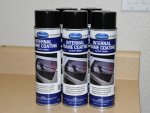
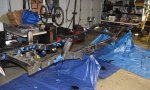
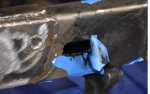
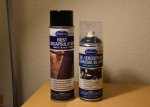
I used the Eastwood products and hope they work. Lots of prep time cleaning out the inside of the frame several times. Then sprayed four cans of their Internal Frame Coating. Taped up EVERY frame hole and then pulled one piece of tape and sprayed that section. Did that along both rails. It comes with a 3 foot spray nozzle. I taped it to a coat hanger to get better control of it. It will leak out as you go so protect the floor.

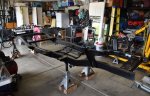
Then used two coats of their Rust Encapsulator followed by two coats of their 2K Chassis Black Aerospray. I tested about 5 rattle can black paints and that one was the only one that didn't bubble up and peel off after putting brake fluid on it.
IFC Cans.JPGIFC 2.JPGIFC Spray tube.JPGIFC Tape.JPGFrame paint.JPGFrame painted.JPG
 
Does anyone think there is a significant difference between Fluid Film mentioned about, and the Eastwood process gpassida just posted above? Are they roughly equivalent?
 
I believe they have different application the Eastwood product is perminate application and the fluidfilm requires regular recoating.

Eastwood markets there products. To hobby restorers. There may be better products that market
 
Maybe those guys that spray foam in walls could fill the frame with foam and there wouldn't be any room for water to get in.
 
Maybe those guys that spray foam in walls could fill the frame with foam and there wouldn't be any room for water to get in.
As an insulation contractor, I would advise against it. The foam will absorb water… That would be a train wreck. :ROFLMAO:
 
That what Ford did with the trucks cab corners and rockers. Lived through the nightmare of getting it out.
 
I wouldn't, water will get trapped between the foam and metal. Internet been down last 2 days, there here fixing now. I'll post pics later tonight.
 
The spray foam that I use is not closed cell. In fact I haven’t seen close cell spray foam, which doesn’t mean that it does not exist. The closed cell refrigeration insulation that I have used is, Extruded polystyrene. Never seen it in spray form though, again that doesn’t mean that it doesn’t exist.
 
The spray foam that I use is not closed cell. In fact I haven’t seen close cell spray foam, which doesn’t mean that it does not exist. The closed cell refrigeration insulation that I have used is, Extruded polystyrene. Never seen it in spray form though, again that doesn’t mean that it doesn’t exist.

I had a job I did back in 2013 where the architect spec'd closed cell spray foam. They make it, it was way more expensive than the typical open cell stuff. He also wanted it sprayed the full thickness of the exterior studs, so we had to have it "over sprayed", then shave it back off the studs. Huge PIA.

BASF "Spraytite 178" was the product that we used.

Regardless, I would not fill a Jeep frame with any of it :twocents:
 
I do a lot of refrigeration insulation work. 99.9% of the time we use Urethane insulation (Trimer/Dyplast). The insulation properties are better, and as you noted, it’s about half the price as the extruded polystyrene.

I completely agree. No insulation in the jeep frames
 
Back
Top