

You are using an out of date browser. It may not display this or other websites correctly.
You should upgrade or use an alternative browser.
You should upgrade or use an alternative browser.
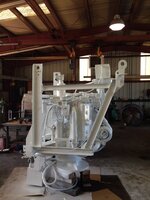
On the bench-sort of
- Thread starter scramcraz
- Start date

- City
- Richmond
- State
- TX
Very interesting, does mounting the engine vertical impact the oiling and overall engine Longevity? Other than needing a remote oil reservoir and pump system?
I can’t say I’ve ever seen a vertical mounted engine before. Other than air cooled single cylinder ones.
I can’t say I’ve ever seen a vertical mounted engine before. Other than air cooled single cylinder ones.
93_Fummins
CJ-8 Member
- City
- Edmond
- State
- OK
You've probably seen more than you realize. Big outboard boat motors are vertically mounted like that.Very interesting, does mounting the engine vertical impact the oiling and overall engine Longevity? Other than needing a remote oil reservoir and pump system?
I can’t say I’ve ever seen a vertical mounted engine before. Other than air cooled single cylinder ones.
Most everything is pressure lubricated in an engine, so orientation shouldn't matter. Only thing that may not be pressure lubricated is the cam geartrain, but that's on the bell side of the Detroit anyway, so it should be happily swimming in oil in that orientation. The only thing orientation generally changes is windage and pooling. As long as the block has adequate pathways to prevent oil pooling anywhere, orientation shouldn't affect much. I'd imagine there are probably some unique wear patterns, but really no different than in the "normal" position; just in a different plane.
All of these engines use the same factory oil pump(and all other components) as a horizontally configured engine, with a few exceptions. The oil pan becomes a cover, the oil pickup tube becomes a suction hose which goes to a oil tank with a foot valve in it. Various drainback tubes on various areas of the engine facilitate oil return to the tank. The governor is fed a small oil supply to lubricate the bearings. Oil passages in the heads are plugged to flood the cam followers and camshafts. There are also several airbleed lines in the cooling system so air doesn't become trapped at the thermostats, water pump, or oil cooler. The engine is mounted on top of a reduction gear with the whole unit sitting atop the pump. These engines have the same life expectancy and performance as their horizontal counterparts.
Here is another. 12V71 series Detroit Diesel, twin superchargers no turbos. Around 400HP @ 2100. There are also versions of this same engine with larger injectors and twin turbos developing 740 HP @ 2300 RPM. These vertical configurations were designed, engineered, and produced by Stewart and Stevenson Services in Houston, Texas using Detroit Diesel engines and Cotta gearboxes in the 60's. The vertical application was originally designed for generator sets on offshore oil rigs. My company has been servicing them ever since.
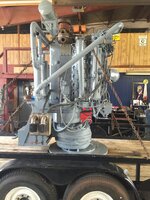
Here is another. 12V71 series Detroit Diesel, twin superchargers no turbos. Around 400HP @ 2100. There are also versions of this same engine with larger injectors and twin turbos developing 740 HP @ 2300 RPM. These vertical configurations were designed, engineered, and produced by Stewart and Stevenson Services in Houston, Texas using Detroit Diesel engines and Cotta gearboxes in the 60's. The vertical application was originally designed for generator sets on offshore oil rigs. My company has been servicing them ever since.

- City
- W-S
- State
- NC

- City
- Redmond
- State
- OR
Who, me?Please don’t give @Randyzzz any ideas!
Cool as heck too
