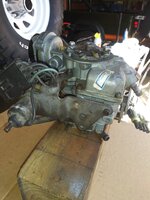
Even though I am going to get a replacement carburetor from
@Belizeit, I am going to push on and try to rebuild this one, too.
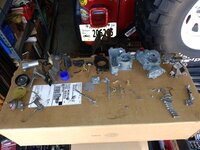
My throttle shaft bushings did not show up yesterday, so still waiting on parts.
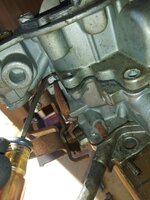
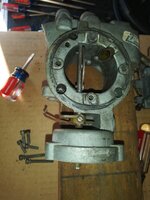
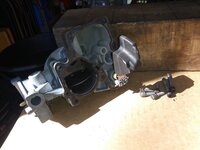
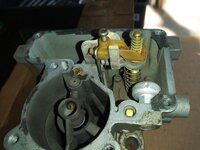
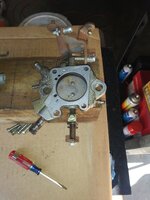
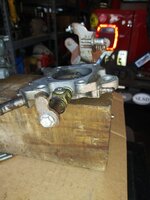
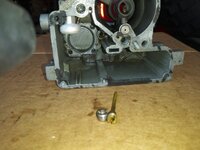
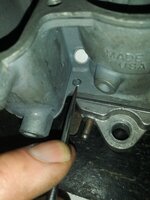
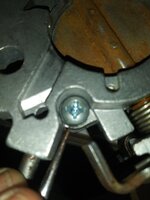
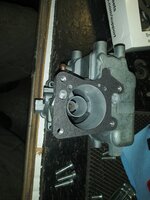
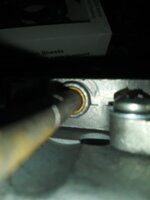
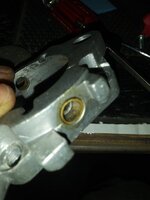
I did remove the old bushings, which I was concerned about. You can't really knock them out from the back side, and you have to be careful.
What I did to remove them:
1) Jammed a 3/8-16 tap into the bushing, tapped a few threads in the bushing (bushing ID is 5/16", but it is soft, so this works)
2) Threaded a 3/8-16 bolt into the bushing
3) Used a punch, placed through the opposite throttle body hole, lined punch up on center of bolt shaft
4) A few light whacks with a hammer, bushing out, no damage, repeat on the other side
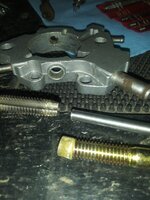
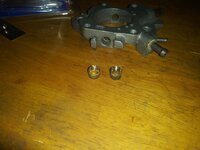
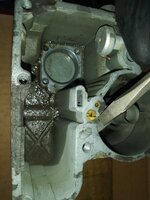
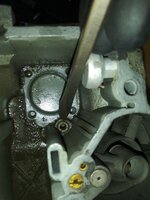
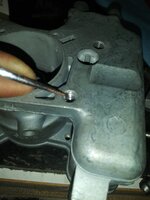
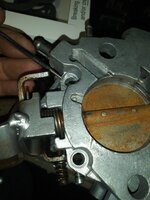
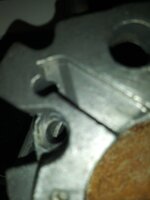
The bushings that were installed have very light "flutes". These left marks in the throttle body, but not really indentations. Running the sharp edge of a screwdriver around the throttle body bores, I could not "feel" the ridges.
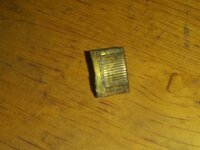
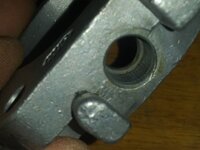
The bushings I ordered are "smooth". I am not too worried, I plan on using "sleeve/bearing retainer" compound to hold them in place. They can not "walk" inwards due to the way the housing is not drilled all the way through, it has a built in "stop" on the inside. IIRC, the way the shaft goes through the throttle body, the bushing on the throttle spring side can not fall "out". Will have to look at the other side. All that being said, the retainer compound will for sure hold them tight.
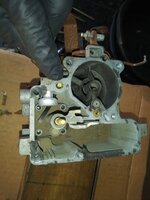
The bores in this throttle body, where the bushings go, was a TIGHT 3/8". I could hand turn a new 3/8" bit in the bore, but it was rubbing all the way around.
So, bore =equals a TIGHT .375". The new bushings have an OD of .376", should have a nice, not too tight, press fit.
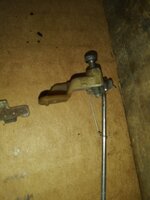
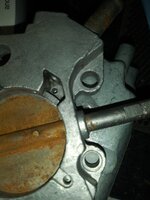
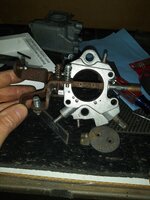
That takes care of that. Another area to look at is the throttle shaft itself. It can wear/corrode. This shaft has some light pitting, not terrible.
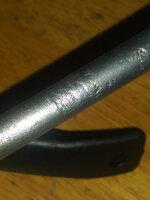
Realistically, I think you will always have a very slight vacuum leak here. We are talking about a steel shaft that originally just slip fit through a die cast housing. Now, it will slip fit through a bronze bushing. Overt time, it will wear some. I guess the trick is to minimize any leakage here as much as possible. Minor leakage will be dialed out via the idle mixture adjustment, and once off idle, I would presume a very slight leak here would be miniscule compared to how much air is being pulled down the carburetor by the engine? I guess the trick is just to minimize this as much as possible. Once it leaks bad enough to affect the idle quality, then time to act.
Fuel leaking out the around the throttle shaft is a problem, obviously, BUT you should never have raw fuel getting on the throttle shaft in the first place. Well, at least enough to be coming out in liquid form!!!!!!! The air/fuel mixture should be atomized by the time it passes over the throttle blade/shaft, NOT raw liquid fuel.
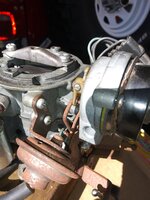
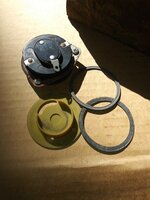
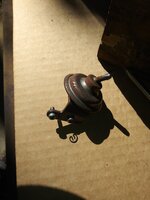
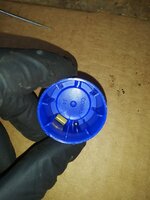
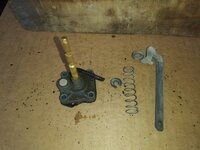
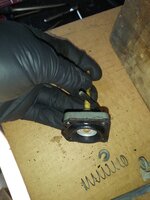
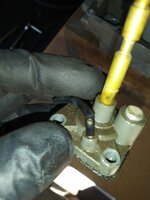
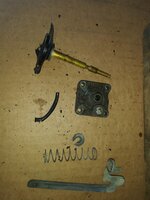
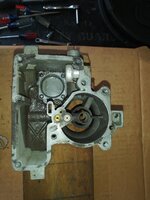
This carburetor had a blown accelerator pump diaphragm. Since this sits in the bottom of the float bowl, pretty sure this was the cause of the Jeep running super excessively rich. Raw fuel was leaking past the diaphragm, running down a vacuum passage, draining out directly into the throttle body.
A stuck needle/seat would be another cause, they looked OK, but will be replaced. This Jeep had the correct fuel filter, with the return port, but I still need to blow out the frame mounted return line to check for blockages. This could cause excessive fuel pressure to build up and push open the needle/seat assembly.
Another potential problem - the float.
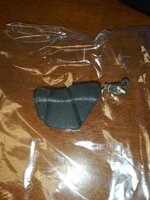
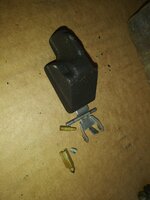
This carburetor used a "nytrophyl" float. It is some sort of foam based material. I think you can also use a brass float in these carburetors. Note the old scum line on the float from the fuel level. Also note it is in a Ziploc bag because it stinks like stale fuel!!!
Anyway, the best I could "internet research", this float should weigh either:
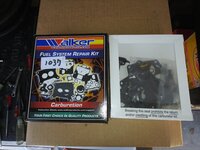
From Walker: 6.3 grams (.222226 ounces)
From "CarburetorParts.com" - 7.1 grams, +/- 1 gram (.215171 - .285719 ounces)
I will have to look in the FSM to see if they list a weight.
I took this float to work, weighed it on a postal scale:
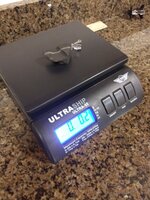
I am at .2 ounces, so should be good to go. I ordered another float, just to be safe. The current float could be acting like a "sponge" when surrounded by fuel, soaking it up, making it sink, causing the float bowl to overfill/spill down into the intake. I will place the current float in a glass full of gasoline and see what it does.
For now, waiting on parts, so that's it




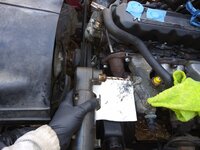


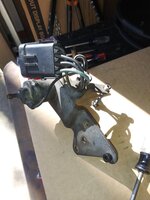
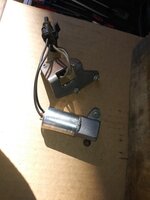
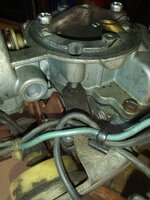
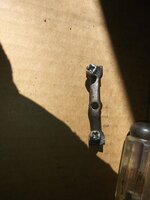


 This is not my Jeep, I did not buy it, still pisses me off!!!!!