• Notice for iPhone users: DO NOT use the image size reduction option when uploading photos to the forum. This causes portrait images to post as landscape. We have added a warning to the image insert pop-up as well.

Another Scrambler Purchase/Road Trip - UPDATE- BODY ON FRAME AGAIN

With the amount of (outstanding) work that you do, maybe you should consider it.:D
 
:twocents:
I didn't notice the rock rail pics. Where will the rear mount fall relative to the rear spring hanger?

Not to be dramatic, but the thing I've seen first hand with this style is a crack propagating between the edge of the rear spring hanger and the holes that were drilled to mount the rail, and the spring hanger punched it's way right up inside the frame. The setup on that Scrambler basically perforated the frame rail on both sides in two nice vertical lines that allowed it to happen. It looks like yours don't have the mounting holes above one another, but if I were you, I'd seriously consider fishplating the sides of the frame before you drill holes for these.

Maybe if they mount a long way from the spring hangers I wouldn't worry, but after seeing it live in person, I'm way leery of ever drilling on my frame now without doing reinforcement first.

Like I said, not to be dramatic and I'm sure most people would use them and never have an issue, but it was a pretty clean Scrambler that this happened on, not some rusty mess. I may have posted pics on here somewhere, it was a number of years back in NC. The guy was an occasional poster on here, this incident had him debating about selling, not sure what he ended up doing.

Bingo:shrug: I have thought of this "issue" too.

I will have to mock one up to see how close it mounts to the rear spring hanger.

The one "good' thing, these only mount to the outer side of the frame, the holes will not go through the front and back plates of the frame. So, if it did "crack" or play "connect the dots" between the holes/bolts, it would only be on the outer frame plate, not the outer and inner simultaneously.

I mounted some nerf bars to my first CJ7 this way, 4 holes at the end of each leg, mounted through the face of the frame only. I never had any issues, and that frame was kind of "iffy" at best. On a side not, the inner face of the frame was cracked almost in half, directly behind the driver side front springer hanger, where the proportioning valve mounts. It was cracked like this when I bought the Jeep, and amazingly, after 10+ years off DD and trail riding abuse, it never got worse. Not the best thing in the world, but it worked:huh:

It is a valid point you bring up, and one I have thought about. I thought about "through bolting" them on, and sleeving the inside of the frame with tube where the bolts pass through, but I figured this would weaken the frame worse, i.e. drilling through both sides of the frame. I even thought about welding the feet of the sliders to the frame, instead of bolting them, but then the weld joint could be stronger then the surrounding steel, and cause the frame to crack just past the weld bead:(

I started to worry about this frame mounting option, but then I thought about how the engine mount frame horns bolt to the frame. In that area, there are a bunch of holes, in very close proximity, drilled through both sides of the frame. Now granted, the bolts are sleeved inside the frame, but this area of the frame receives all the stress that the engine passes through the motor mounts to the frame. I have yet to see a frame cracked here, with a close to stock engine installed. The same/similar thing with the shackle hangers, sway bar frame mounts, and steering box brackets: holes through one side of the frame, components bolted on. As long as the bolts are tight, and not super abusive driving, no issues. And these areas have the force of the suspension and steering hammering against them. If the bolts are tight, and no kamikaze style driving, these connections and the frame surrounding them tends to stay intact:twocents:

On another point, my CJ-7 that had the Sun Performance "bolt on the body tub angle steel" rocker guards, the sheet metal started cracking out from the holes that I drilled into the floor and rocker panel to mount the guards:eek: I guess from the flex of the body tub, the sheet metal surrounding the bolts started to fatigue and stress cracks started radiating out from the bolt holes. We actually had to weld the sheet metal back together, and put plate steel reinforcement on the inside of the rocker panels, to prevent the cracks from spreading/starting again:(

In the end, its "6 one way, 1/2 dozen the other":thumbsup::twocents:
 
How do they mount without through bolts? You drill/tap the one side of the frame rail?

And in no way am I saying body mount versions are perfect, they definitely have their own issues as you point out.

I disagree with the analogy to engine mounts for a number of reasons, mainly the frequency and magnitude of impact/fatigue the engine mounts see (through bolted with sleeves on both framerails with a brace underneath and the support of the tranny crossmember) is no comparison in my mind to what a spring mount can see under the dynamic weight of the entire Jeep while wheeling or the rocker would see when impacting an obstacle and taking the weight of that side of the Jeep. I think you're on the right track with the idea of drilling through and sleeving the holes.

I gave my :twocents: though, didn't mean to start a protracted discussion, you're obviously thinking about it already :thumbsup: that's all I wanted to point out.
 
I agree with the drilling/sleeving concept. You have the skill set to figure that out. I wouldn't.
That's a really nice looking set of rails.

I have a set of AJs rock rails on my XJ. They do not have through bolts. Since the XJ is a unibody design, they use big fat self threading bolts into the "frame" rails and small bolts through the pinch seam below the doors. I don't know the size of the bolts, but IIRC the drill bit was 21/64", so they are fairly beefy. There are 3 or 4 at each of 2 connection brackets.

http://www.ajsoffroadarmor.com/home.php
 
How do they mount without through bolts? You drill/tap the one side of the frame rail?

And in no way am I saying body mount versions are perfect, they definitely have their own issues as you point out.

I disagree with the analogy to engine mounts for a number of reasons, mainly the frequency and magnitude of impact/fatigue the engine mounts see (through bolted with sleeves on both framerails with a brace underneath and the support of the tranny crossmember) is no comparison in my mind to what a spring mount can see under the dynamic weight of the entire Jeep while wheeling or the rocker would see when impacting an obstacle and taking the weight of that side of the Jeep. I think you're on the right track with the idea of drilling through and sleeving the holes.

I gave my :twocents: though, didn't mean to start a protracted discussion, you're obviously thinking about it already :thumbsup: that's all I wanted to point out.

No problem on the protracted discussion, I am glad people are reading this stuff and have additional ideas and information:cheers:

These rails came with a "self tapping" bolt. The first 1/4" or so of the bolt has "thread cutting" ridges on them, the remainder of the bolt has fine threads. The first part of the bolt "taps" the hole, the second part of the bolt threads into the tapped hole. You have to drill a pilot hole first, I forget the size of the pilot hole and the size of the bolt, but I will post up the info:thumbsup:

As for the fixed spring hangers taking a beating, which they do, think about the shackle end for a second. At the fixed end, there is no movement. At the shackle end, the shackle pivots/twist/and pulls against the bolted on shackle hanger. The only thing keeping the shackle hanger attached to the frame is two 3/8" bolts, which are threaded into the bottom of the frame rail. I guess my point is that certain components of our vehicles, which see a bunch of high stress regularly, are literally hanging on by only a few threads:crazy:

I do agree that the rock rails connecting points will be experiencing some massive loads/forces, like you mentioned, the entire weight of the vehicle slamming down against roughly 12 bolts per side:eek:

Keep the ideas and opinions coming:thumbsup:

I will, most probably, try to improve upon the recommended mounting instructions. I think a few through bolts, with crush sleeves through the frame, will give me a bit more confidence:cheers:
 
Ah, ok, that's a good example to talk through.

On the shackle hangers, there's inserts (basically full on nuts) on the inside of the frame rails for those bolts to thread into. Very far cry from just the thickness of the steel in the frame, probably at least 5-8 times the thickness of the frame plate. IIRC, it's a through hole through the frame plate, the bolt never touches it, all the force is taken by the clamping force on a decent size area around the hole and weld on the beefy inserts. I had one of these inserts break loose and spin on me when I went to do the rear HD hangers, so I had to fish it out and weld up a replacement.

I like your crush sleeve/through bolt idea. Would you weld the sleeves in? That would be the ultimate IMO.

I do like the sound of their warranty and they do look good mounted. Very XJ-like.
 
Have you thought of adding slightly larger plates to the mounting ends of the rocker guards to butt up against the frame rail on the outside, then use another thick plate on the inside of the frame rail to bolt and "sandwich" the frame rail? You wouldn't have to do any drilling into your frame this way! Having to drill twelve holes per side sounds like a PITA! I know there are several rocker guards on the market which mount like this for other Jeep models. I have no personal experience with any rocker guards that mount this way so I can't say how well it would hold up but it is another option that may work for you with little fabricating. On my '85 CJ8 "Spring Special" w/ postal-world cab top I am currently building I am considering rocker guards with side steps that mount this way; that is if I don't use the original style steps.
 
Last edited:
Ah, ok, that's a good example to talk through.

On the shackle hangers, there's inserts (basically full on nuts) on the inside of the frame rails for those bolts to thread into. Very far cry from just the thickness of the steel in the frame, probably at least 5-8 times the thickness of the frame plate. IIRC, it's a through hole through the frame plate, the bolt never touches it, all the force is taken by the clamping force on a decent size area around the hole and weld on the beefy inserts. I had one of these inserts break loose and spin on me when I went to do the rear HD hangers, so I had to fish it out and weld up a replacement.

I like your crush sleeve/through bolt idea. Would you weld the sleeves in? That would be the ultimate IMO.

I do like the sound of their warranty and they do look good mounted. Very XJ-like.


That is true on the inside the frame nut insert things, too. These would just thread into the thickness of the side of the frame.

The bolts the rails came with are 3/8" diameter.

If I use sleeves, I'm not sure if I would weld them in or not. I might have to make them a floating sleeve, like how the factory rear bumper brackets attach to the frame:shrug:

I also might be able to use some of the bolts that came with the kit, and fish in some large plate washers and nuts inside the frame, to help beef up the recommended attaching method:shrug:

I still have a few weeks to think about how I want to mount them:thumbsup:
 
Have you thought of adding slightly larger plates to the mounting ends of the rocker guards to butt up against the frame rail on the outside, then use another thick plate on the inside of the frame rail to bolt and "sandwich" the frame rail? You wouldn't have to do any drilling into your frame this way! Having to drill twelve holes per side sounds like a PITA! I know there are several rocker guards on the market which mount like this for other Jeep models. I have no personal experience with any rocker guards that mount this way so I can't say how well it would hold up but it is another option that may work for you with little fabricating. On my '85 CJ8 "Spring Special" w/ postal-world cab top I am currently building I am considering rocker guards with side steps that mount this way; that is if I don't use the original style steps.

Yes, I thought about welding on some plates to the back of the rail "feet", making matching plates to place behind the frame, and thus effectively "sandwiching" the frame rails:thumbsup: Two problems I see with this method:

1) The plates and the lower bolts used to sandwich the frame would be hanging down below the frame rail, putting them in a vulnerable spot.

2) There would be nothing, besides the clamping force applied to the mounting plates, to keep them from sliding on the frame rails.

But, I might use a variation of this idea in certain locations, if possible, maybe:shrug: I need to mock one up to see what I can do:thumbsup:
 
Update from the last few nights of work.

Straightened up all the wiring/hoses/cables that run under the floor. Installed the shifters. I still need to find a factory T5 reverse light wiring harness, or modify my T176 harness.

00334-1.jpg


Installed the T5 floor plate and the associated boots. Pardon all the dirt on the floor.There is a difference between the Dana 300 shifters used behind the T176's vs the T4/T5 version. My T176 Dana 300 shifter hits the rear of the floor cover plate hard, and will not shift into 4 Hi. It would be very difficult to bend it to clear, and make it still look decent. It would require so much metal trimming to work that the boot would no longer cover the hole, either. I am currently on the hunt for a T5 Dana 300 shifter handle.

00627-1.jpg


Picture of the gas tank skid and the factory rubber mats. The large mat fit inside the skid plate perfectly. The two smaller, side pieces of rubber were too tall. I had to trim them to fit. You can see the excess rubber that I cut off in the bottom of the picture.

00725-1.jpg


A picture of the replacement vent/roll over valves and grommets. I purchased these from the local Jeep dealer. They fit the CJ and YJ plastic gas tanks.

00823-1.jpg


Picture of the grommets/valves installed. A little liquid soap made installing the grommets and valve a little easier. They are a tight fit.

01020-1.jpg


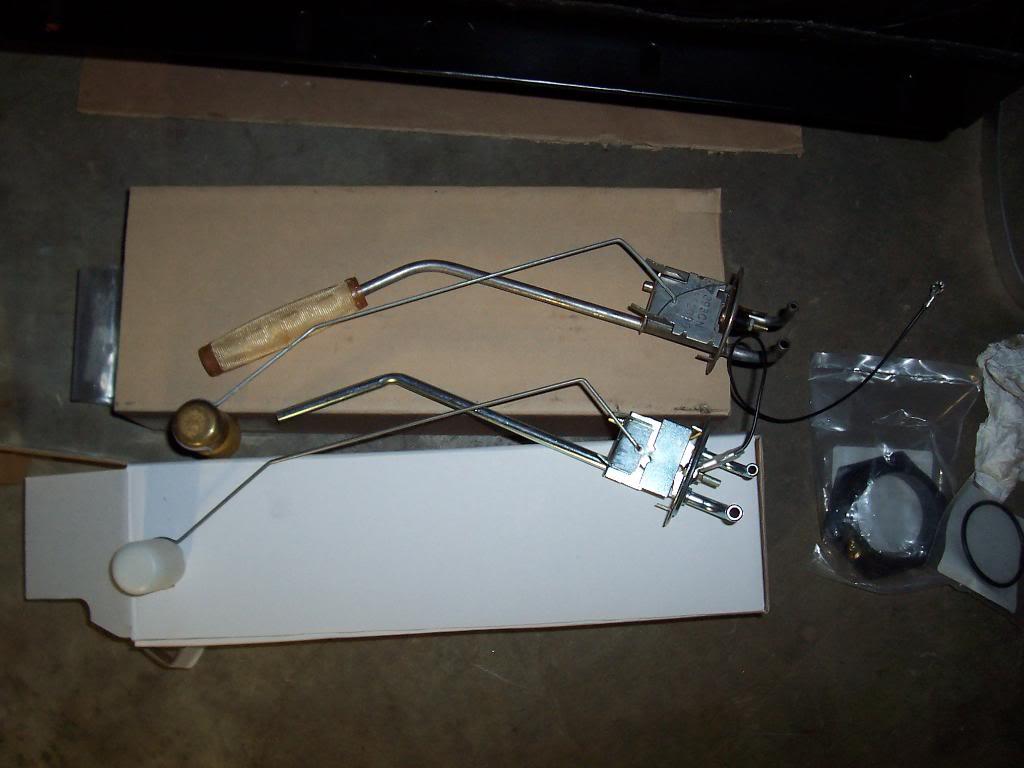
Picture of two sending units: The NOS Stewart Warner is at top, the replacement Crown version is on the bottom. They have identical dimensions, even though the picture makes them look like they have different length float arms. The Stewart Warner version's float is supposedly superior to the Crown versions plastic float. You could probably easily adapt the old style float to the Crown sending unit with a little soldering.

01117-1.jpg


I installed the Stewart Warner sending unit. Picture of the installed sending unit. Note orientation of the fuel feed and return lines. The little tabs at the bottom of the sending unit that go into the notches in the tank position the sending unit this way. If you spin it 180 degrees, the float arm hits the side of the tank.

01217-1.jpg


Picture of the replacement fill and vent hoses.

01316-1.jpg


I purchased these hoses from the following company:

http://www.mtscompany.com/hose.htm

I bought these hoses, made to fit a YJ with a factory 15 gallon steel tank, based off of a recommendation from someone on this site. I hope they will work. One issue I have noticed, these hoses are not flared at the ends. As they are right now, there is no way they will slide over the ridge of plastic molded into the two tubes on the tank. The ID of the hose is too small, too tight of a fit. My solution:

01413-1.jpg


I used a little liquid soap for lube, and was able to twist/push in some deep sockets into the hoses. The OD of the sockets matches the OD of the filler tubes, not the OD of the ridges. I will let them stretch for a day or two, then they should slide over the plastic ridges cast into the end of the plastic tubes on the tank easier. It should hopefully be easier for the hoses to slide over the metal fill tubes at the other ends of the line, where they connect to the metal gas filler thing. The flare on the metal tubes is usually a nice, soft flare. The plastic ridges, on the other hand, are very straight and abrupt. Regardless, once these hose go on, they will be a good, tight fit.

I had my new drive shafts delivered to my office this morning.

01511-1.jpg


So, before I change tanks around, I might put the drive shafts in and take this thing for a spin.

That's it for now.
 
Picture of two sending units: The NOS Stewart Warner is at top, the replacement Crown version is on the bottom. They have identical dimensions, even though the picture makes them look like they have different length float arms. The Stewart Warner version's float is supposedly superior to the Crown versions plastic float. You could probably easily adapt the old style float to the Crown sending unit with a little soldering.

01117-1.jpg

just pop the float off. no soldering required.
 
Update from last night, sorry, no pictures:shrug:

Installed the correct Dana 300 T5 version shifter, and it clears everything perfectly.
Installed the drive shafts, bolted right in.

I then took it for a short test drive. The transmission works perfectly. All 5 gears plus reverse work great. The B&M shifter really makes for some tight, super short throws while shifting. It will take some getting used to, but that is a good thing. The T5's slightly deeper 1st gear versus the T176's higher first gear is a welcome addition, too. The only issue I have with the T5 is the Overdrive gear: With 4:10's, 35" tires, 70 MPH equals 2800 RPM in 4th gear. When I shift into 5th gear, which is a 25% overdrive, the RPM's drop to around 2100 RPM. The engine pulls fine, but it is hair too low on the RPM in my opinion. I think 2300 would be better. When I switch to slightly shorter tires, the RPM should go up slightly. But, it works perfectly, just don't expect to have much passing power in 5th gear, or try to climb long, steep grades in 5th. It could also be that I am not used to going fast at low RPM's, my DD TJ Rubicon spins around 2900 RPM at 75 MPH. I am not sure what kind of RPM my green Scrambler is turning at 70 MPH (T5, 3.31 axle gears, 30" tires), but it drives fine. I think I just need to get used to the engine not spinning so hard at freeway speeds:thumbsup:

And now for the transfer case. I didn't go off road last night, just played around in my gravel driveway some. The transfer case shifts into all gears fine. The longer/tighter detent springs on the shift rails make for very solid shifts. I don't think there is anyway for the transfer case to slide out of gear. The transfer case still exhibits the typical shifting characteristics of a Dana 300, i.e. it is best to have the transmission in gear, come off the clutch a little, to get it to shift smoothly from one gear to another, but it works fine. No grinding, bad noises etc.

And now for the best part, the new Low Range. This thing crawls now:thumbsup: When I put it in 4 Low, first gear for the first time, it made all the $$$, time, and busted knuckles worth it. My Scrambler can now crawl almost as good as my TJ Rubicon. I love it:cheers:

Red Scrambler = 4.03 x 4 x 4.10 = 66.10 compound reduction
My 05 Rubicon = 4.46 x 4 x 4.10 = 73.15 Compound reduction

I can drive my Scrambler in low range, just like my TJ, starting out in 2nd, 3rd, or 4th gear Low Range just fine. The Scrambler's slightly higher reduction should allow for a little more wheel speed in each gear, too.

That's it for now.
 
I got a little more work done this weekend on the 20 gallon gas tank installation.

Top of the tank picture, showing the fuel lines and wires. The replacement tank straps do not have the nice little metal "organizing loop" attached to make routing the lines nice and neat. As a result, I have sleeved my fuel lines inside another rubber line to protect them from chaffing against the body sheet metal (not pictured here). Also, the replacement 15 gallon tank straps are too long for the 20 gallon tanks. I had a buddy of mine cut off about 1" of length off the strap and then re weld the mounting bolt to the strap.

00138-1.jpg


Another issue: The thicker metal of the aftermarket gas tank skid plate combined with the thicker aftermarket shackles and longer bolts equals lack of clearance between the shackle bolts and the skid plate. Since these shackle bolts are greasable, i can not simply flip them around, with the bolt head facing the side of the skid plate. We cut off the excess length of the shackle bolts to install the tank/skid. I was able to turn around the center bolt, since it is not greasable. I am not 100% happy with this solution, since there are now no threads sticking out past the nut. I will probably end up taking off the RE supplied "thick" nylock nuts and replacing them with a thinner metal self locking nut, so that their will be a few threads sticking out past the nut.

Driver side. Hardly any clearance.

00240-1.jpg


Passenger side. A bit more clearance.

00335-1.jpg


For reference, factory shackles and 20 gallon tank skid combo. Note how the bolt heads face in, nuts out.

00434-1.jpg


Another reference picture, CJ8 with factory 20 gallon tank and skid, with RE 4.5 lift. There is clearance between the bolts and the side of the skid plate.

00726-1.jpg


Hopefully, I can find some thinner metal locking nuts. I am not too worried about the top bolts hitting the side of the tank skid plate, they should not be twisting too much side to side. In hindsight, I should have just flipped the center bolts around, since they are not greasable. The lower bolts should not touch the skid plate at all, due to the angle of the skid plate at the bottom. I think worse case, I will lose some paint off the side of the skid plate, which is no big deal. If I could do it again, I would do the following:

1) Use a thinner nut on the upper bolts/place washers behind the bolt head to "shorten" it.
2) Simply turn the center bolts around.
3) Leave the bottom bolts alone.

A picture of the tank installed. With the 4.5" lift springs, the tank does not hang down too far.

00824-1.jpg


A picture showing clearance between the thicker Ox Locker diff cover and the thicker gas tank skid plate, about 2". I guess if i jump the jeep off the ground, the diff cover and gas tank skid plate could touch. I will try to keep the jeep on the ground. As a side note, there is not much room between the thinner factory diff cover/skid plate, either.

01021-1.jpg


Due to the way the fuel feed line comes out of the 20 gallon tank, I had to rework my fuel pump/filter mounting. I simply slid the whole assembly over a couple of inches toward the driver side, drilled a new hole through the cross member and skid plate, and bolted it back in place. I wanted to slide it over to help prevent having too sharp of a bend in the rubber fuel line, potentially causing a kink. I just had to shorten the existing rubber line on the outlet side for this to work. Also, since the fuel feed line now come off of the passenger side of the tank, I was able to remove my metal line that ran from the driver side to the passenger side, cleaning up the whole assembly. Now, rubber line from the sending unit ties directly to the fuel filter inlet on passenger side.

00922-1.jpg


But, I still need to lower the tank assembly. The metal fuel return and vapor lines got crossed up. I want to straighten them out, so I need to lower the tank to access them. Also, I forgot to sleeve the return line, so I need to lower the assembly, again. Nothing is ever easy. At least my exhaust wont require modification.

01118-1.jpg


That's it for now.
 
I finished the 20 gallon gas tank installation last night.

Lowered the tank, straightened out the hoses, and wrapped the vent and return lines inside a larger hose to prevent chaffing. I did not take any pictures.

And I finally installed the fill and vent hoses. Based off of an Internet tip, I purchased the fill and vent hoses for a YJ Wrangler with a 15 gallon steel tank. I purchased the hoses from the following company, which now lists the correct fill and vent hoses for 83-86 CJ8's with factory 20 gallon tanks:crazy::angry::drool::shrug:

http://www.mtscompany.com/hose.htm

Any way, I was able to get these hoses to "work", and they would probably be fine, but I am not 100% happy with the results.

The hoses slipped over the filler neck end fine, and I was able to securely clamp them.

00336-1.jpg


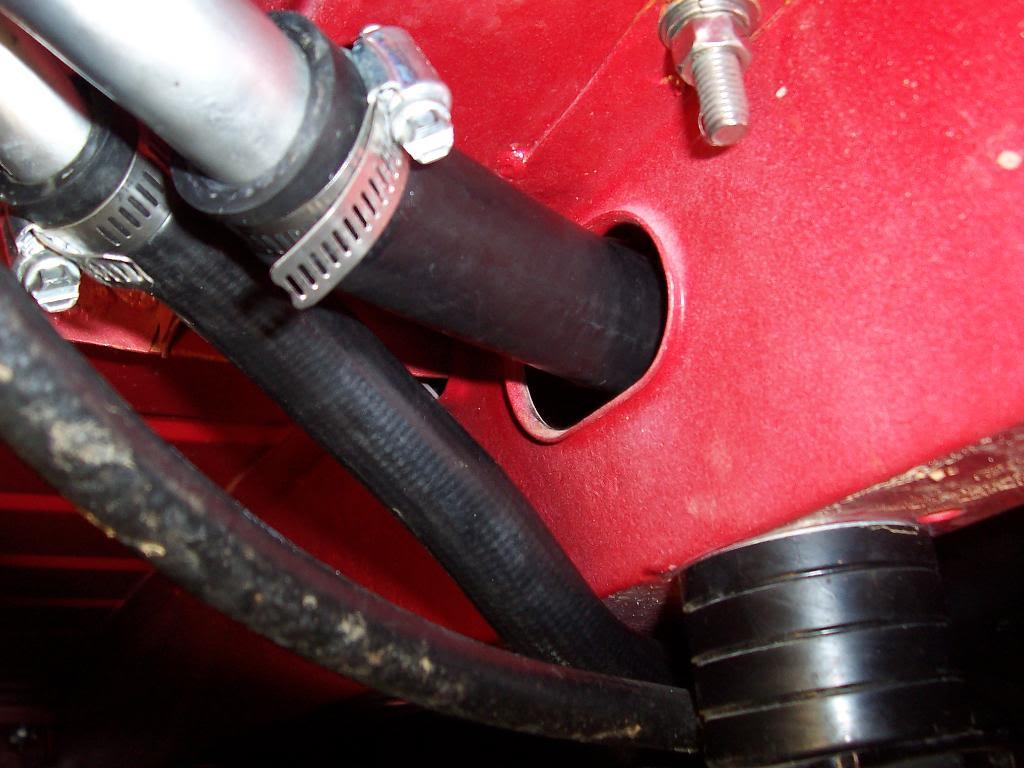
The factory hoses are molded "fatter" on the tank side, where as the YJ hoses have the same ID on both ends. I was able to put these hoses over the gas tank tubes, but I had to use a bunch of liquid soap, stretched them over some large sockets, and I had to heat them up using a heat gun. I was able to securely clamp this end, and there is now way these hoses are going to "slip" off. Note the bulge in the hoses where they pass over the molded in place ridges.

00435-1.jpg


The next two pictures show how I had to route the hoses from the tank to the filler neck. When i was in Baton Rouge at Tommy's this past weekend, I compared the YJ hoses to the factory CJ8 20 gallon tank hoses (no pictures). The hoses are the same length, but the bends are different. In order to get these hoses to work, I ran the filler hose through the hole in the body like it is supposed to go. No problems there. But, once the fill hose was in place, there is no way to run the vent hose through the body opening with the filler hose, like it is supposed to be. This is where the slightly different bends come into play. There was no way I could get both hoses through the body hole without kinking them or stretching them. So, I ran the vent hose between the body tub and the frame. It works like this, but only because I have a 1" body lift. Without the body lift, this would not work.

00139-1.jpg


00241-1.jpg


I am going to order the correct hoses and replace to replace these. These do "work", but it is kind of sketchy.

I filled the tank up with fuel, and it holds 20 gallons. The sending unit functions, but my gauge still only reads 3/4 full when the tank is full. The fuel gauge functioned in the same incorrect manner with the 15 gallon tank. I am going to have to see if the dealer will replace these gauges, since neither works correctly. The fuel gauge at least consistently works incorrectly, i.e. 1/4 tank off, but the temp gauge never moves past "C". It moves a little, but not consistently.

Nothing is ever easy.
 
The correct "fill" hose is currently available, but the correct "vent" line wont be available until around April. I will run with what I have for now:shrug:

The Jeep dealership where I purchased the Fuel/Temp gauges (same dealership where I bought my 05 Rubicon from new) is going to warranty my broken ones and give me new gauges. It pays sometimes to buy local:thumbsup: I will update the results of the replacement gauges, I hope they work:fingerscrossed:
 
I finally installed the Tuffy Stereo center console last night.

Quick picture of the console, cup holders, rear bracket, inside tray, hardware, etc.

00141-1.jpg


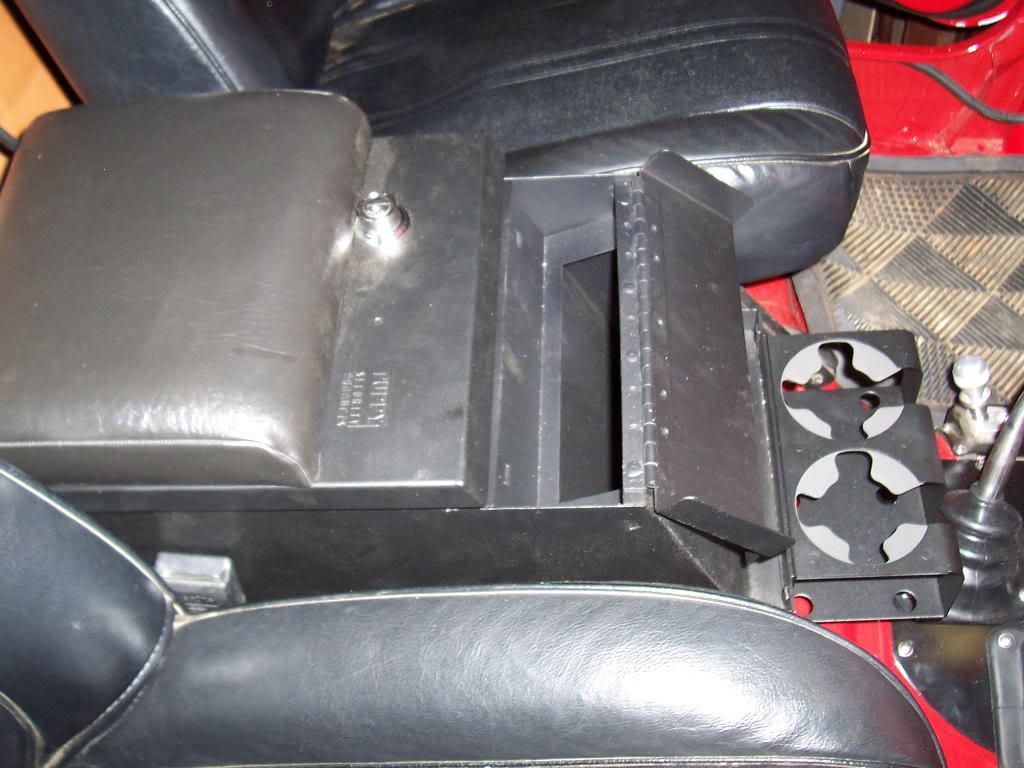
Picture of the console installed, with the radio compartment lid shut. I mounted the cup holder thing up front, but it can also be mounted on the rear of the console. The shifters clear with plenty of room.

00243-1.jpg


And a quick picture with the radio compartment lid open.

00338-1.jpg


And a picture of the inside. This console is not as long as the factory center console, but it is wider and taller. It will be able to hold a bunch of junk.

00437-1.jpg


And a picture of the straps that hold the seat belt plug in things in place. This is the only "problem" area. It is a little more difficult to access the seat belt release buttons, but it is not that bad. This console is wider and taller then the factory console, but to me the slight seat belt button access awkwardness is easily outweighed by the benefits the console brings. I think the aftermarket makes "risers" that will raise up the seat belt plug in things, if this button access bothers you.

00535-1.jpg


All in all, while I prefer the look of the factory center consoles, this is a better console choice for me. This console provides me three big "improvements":

1) I actually have an armrest now that is functional/comfortable. This is a nice luxury to have on long highway trips.

2) I wont have to cut the dash to install a radio, and the console provides me a weather resistant area for the stereo. No more leaky windshield frames ruining radios.

3) The console provides finger tip access to the radio. With my arm resting on the armrest, the radio controls are at my finger tips. No more hunching forward to reach the radio, or looking for lost remote controls.


That's it for now.
 
Updated "To Do List"

Quick list of some changes I want to make before heading to Moab:

1) Finish 4:1 Dana 300 rebuild - INSTALLED
2) Rebuild T5 transmission(s) - One is INSTALLED, the spare is on the shelf
3) Take 1" body lift off, rework clutch linkage - will wait till after tire switch, might need the 1" of extra clearance
4) Switch 35" BFG's for 33" BFG's - Going to try on a set of 33" tires this weekend to see how much clearance I have, both physical clearance and gearing "clearance"
5) Install Tuffy Stereo Console - INSTALLED
6) Install larger gas tank - INSTALLED
7) Rocker Protection - currently sitting on the floor under my green Scrambler


GETTING CLOSER, I am making the end of this month my deadline to get this thing ready for Moab:wave:
 
Last edited:
I borrowed a set of 33x12.50's, mounted on aluminum 15x10" rims this weekend for some experimentation. I was only able to drive it a little bit this weekend, but I plan on driving it all this week to feel it out. The tires measure between 31.5"-32" tall mounted on the Scrambler.

100_6799-1.jpg


100_6800-1.jpg


100_6801-1.jpg


100_6802-1.jpg


100_6798-1.jpg


The overall tire height/suspension lift amount looks fine to me. It has lots of clearance, but does not look too bad. It looks like what a "lifted" CJ should look like.

I do not like the 10" rims. While they do provide complete steering throw (no rubbing on the leaf springs) they make the tires stick out too far. I might end up going with a slightly narrower tire on an 8" rim with more offset to regain full steering throw.

The overall tire height/lighter weight rims do make the jeep feel "sportier". I will probably go with a 33" tire, and I might end up buying 8" aluminum rims, to cut down on the unsprung weight.

The 4.10 gears with 33's or 35's work fine in 4th gear. With the 35's, my 5th gear RPM at 75 mph is only around 2000 RPM. That is a little too low for the 258 to comfortably push the 35's. The 33's spin the motor around 2400 RPM at 75 mph. This is an improvement. But, while driving into very strong headwinds on the interstate (we had a front move through on Saturday with gust around 20-30 mph) it bogs the motor down. Other then strong head winds, 5th gear worked great with the 33's and 4.10 gears. 4.56 gears would pick the rpm up in 5th gear, but would be too low in every other gear with just 33's. A slightly less aggressive overdrive ratio (15% instead of the current 25%) would be a better option.

More driving is needed.
 
Back
Top