• Notice for iPhone users: DO NOT use the image size reduction option when uploading photos to the forum. This causes portrait images to post as landscape. We have added a warning to the image insert pop-up as well.

Spankrjs' 1984 Long Term Project

52e59e7ba748c6f0f0a01fab4d007380-1.jpg
8e5be4cde82a72adeb9a3df1dce2d803-1.jpg
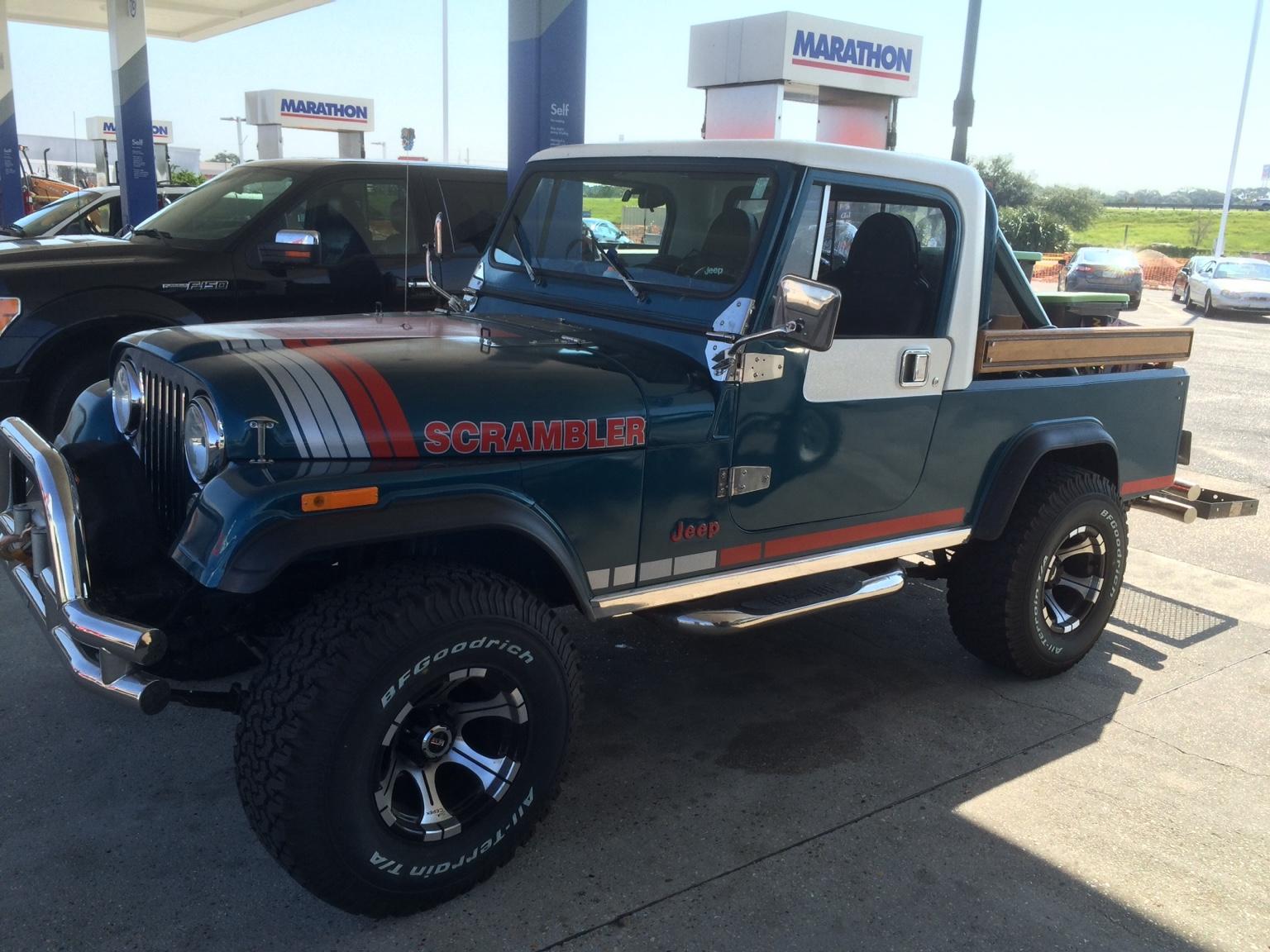
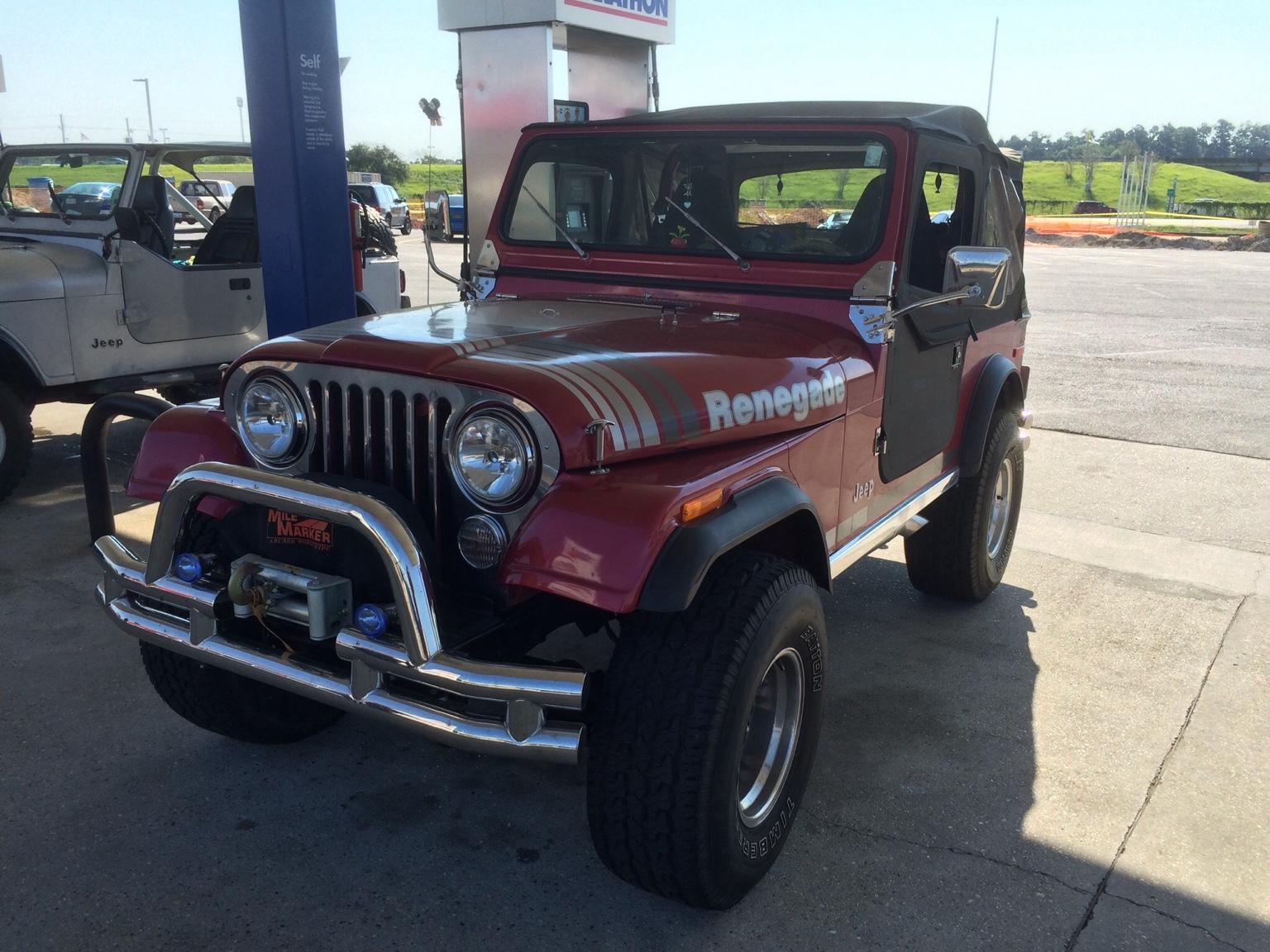
. I did end up seeing a CJ8 & also CJ7 along the road at a gas station

Sent from my iPad

Will probably be a bunch of them here next week for "Cruisin the Coast" :thumbsup::wave:
 
Right never run below 1/4 tank with in tank pump other wise you will burn up the pump from over heating. My buddy has replaced many Cherokee pumps for that reason


Sent from my iPad

Maybe :twocents:

On my 05 TJ, I would suck that 19 gallon tank down to one gallon left, for 165,000 miles, original fuel pump was fine. On my current 05 LJ, same thing, suck it down, 72,000 miles, no problem.

My external pumps run cool, even this one that quit, was outside air temp, I have never felt one "hot" on any of my Scramblers :shrug:
 
This is why I decided to go with a pump inside the tank so I wouldn't have to worry about overheating. I even go as far as refueling at 1/4 tank so the fuel pump is always in the fuel.

For an in tank pump, I would have to start carrying a floor jack around to swap out the pump, or put in an access hole in the bed, no thanks :twocents:

It only took maybe 30 minutes to swap pumps, from pulling off the road to getting back on the road. If I would have had a new pump to swap on, I probably would have kept going on my way. I swapped back on an old, super noisy pump, and it drove back home with zero problems. I even ran it 5 hours straight, no stops, no problems :banghead: If I would have know that old pump was going to work that well, I probably would have kept heading north :twocents:

I can actually easily mount a second spare pump below the current pump. I would then only have to swap two rubber fuel lines and two wires to have redundancy. I will probably do this :wave:

My Jeep philosophy is different then a lot of people. I drive these things cross country. I try to build in easily servicable components, carry spares, and try to build in some redundancy. An in tank fuel pump biting the dust 5 hours from home is no good. IF I could buy an OEM in tank pump that I could trust for this appication, I might give it a shot. But, seeing how the same companies make the in tank and out of tank pumps, crappy made in China/Mexico with zero quality control, I just can't trust them.

And, this external fuel pump was outside air temperature, not hot, even after it quit pumping, so it did not overheat :twocents:
 
I "might" be able to slightly lower the pump, but not by much. I could probably hang it below the cross member, but that would be a slight drop, might be worth it:twocents:

My thought was one of the pumps where the motor part was on top and the pump part was at the bottom (like the Holley style). Might buy a couple inches.


Quick recap on this most recent fuel issue, and some new observations, maybe a "clue" :fingerscrossed:

Left home with about 1/2 a tank, drove 2 hours, stopped for gas/food. No problems, travel time 7-9 am, so slightly cooler temperatures. Maintained 75 mph, no problems.

Left first gas stop, drove 2.5-3 hours, 75-80 mph, no stops. Toward the end of this travel time, noon, engine started starving for fuel on slight inclines, would drop speed, then pick it back up on the down hill side. After about 15 minutes of this, it quit running. Coasted to the side of the road. Would not restart. No fuel at injectors. Dumped most of my 5 gallon can of gas in the tank, just to be sure, no re-start. DUMPED A SMALL CAP FULL OF GAS DIRECTLY DOWN THE TB, IT WAS BOILING ON THE THROTTLE PLATES!!!!!!!!!!! Engine immediately started up and ran fine. Engine is running normal temperature, 200 degrees. Fuel pump is outside air temperature, NOT HOT.

After the first side of the road break down, drove fine 20 miles, refilled gas tank. No problems.

After this stop, ran fine at 75-80 mph for around 1.5 hours. Then, same as above, started fuel starving on inclines. Then, even on flat ground, would not maintain speed. Slowed to 60mph, did OK, then died on an off ramp. Would not restart. Dumped gas down TB, it instantly vaporized!!!!!Fuel pump is outside air temperature, NOT HOT.
So, I slowly poured a bottle of water directly on the TB where the fuel lines enter, and all over the TB. After cooling the TB down with two bottles of water, it started up and ran fine. Drove it about 1 mile to a gas station.

It is now around 3pm. With all of the fuel issues, I decided to turn around and limp home. I was 5 hours from home, 6 hours to my destination, and it was not getting earlier. So, I decided to take two lane back roads/highways home, maybe it would limp along OK at slower speeds. Drove about 30 minutes, ice cream stop, drove another 20 minutes. It did fine. Then, it started acting up. I could maintain 55, then only 35, then zero. So, I coasted off the road, down a nice grass embankment to the tree line (for shade), and decided to swap fuel pumps. Before I swapped pumps, checked some temperatures. FUEL PUMP COOL TO TOUCH, TB SUPER HOT AGAIN, ENGINE TEMP NORMAL. I pulled off old pump, no gas leaked out of the lines. Installed old spare noisy pump, fired right up, and drove home no problems. I was on two lane roads, so 65mph most of the way, and travel time was around 4;30 - 9:30, so cooler temperatures.

So, yes, my fuel is still getting too hot and vaporizing. But, I don't think the external pump is the culprit. It is always cool. But, I do not think the TB should be getting this hot :twocents:

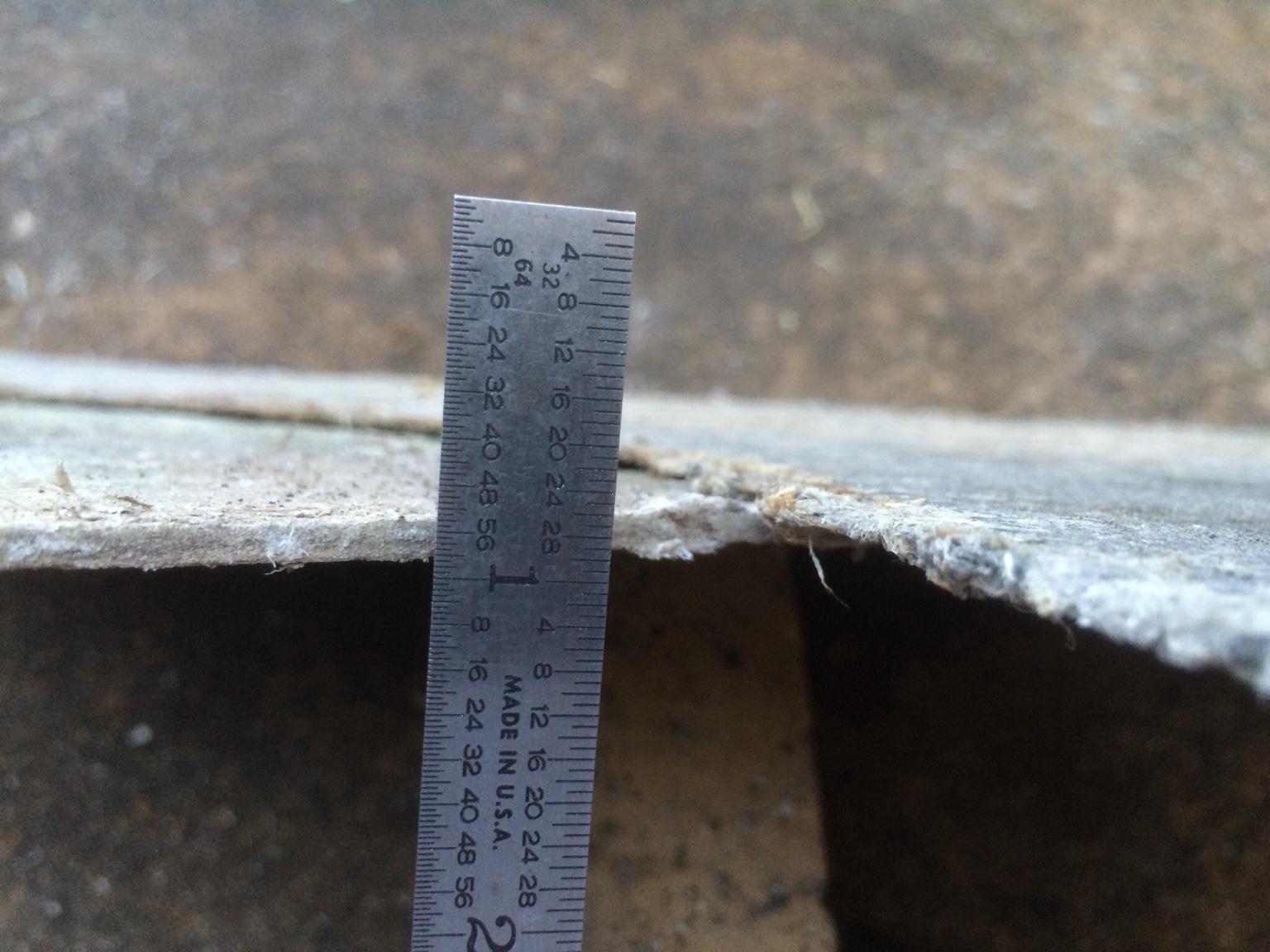
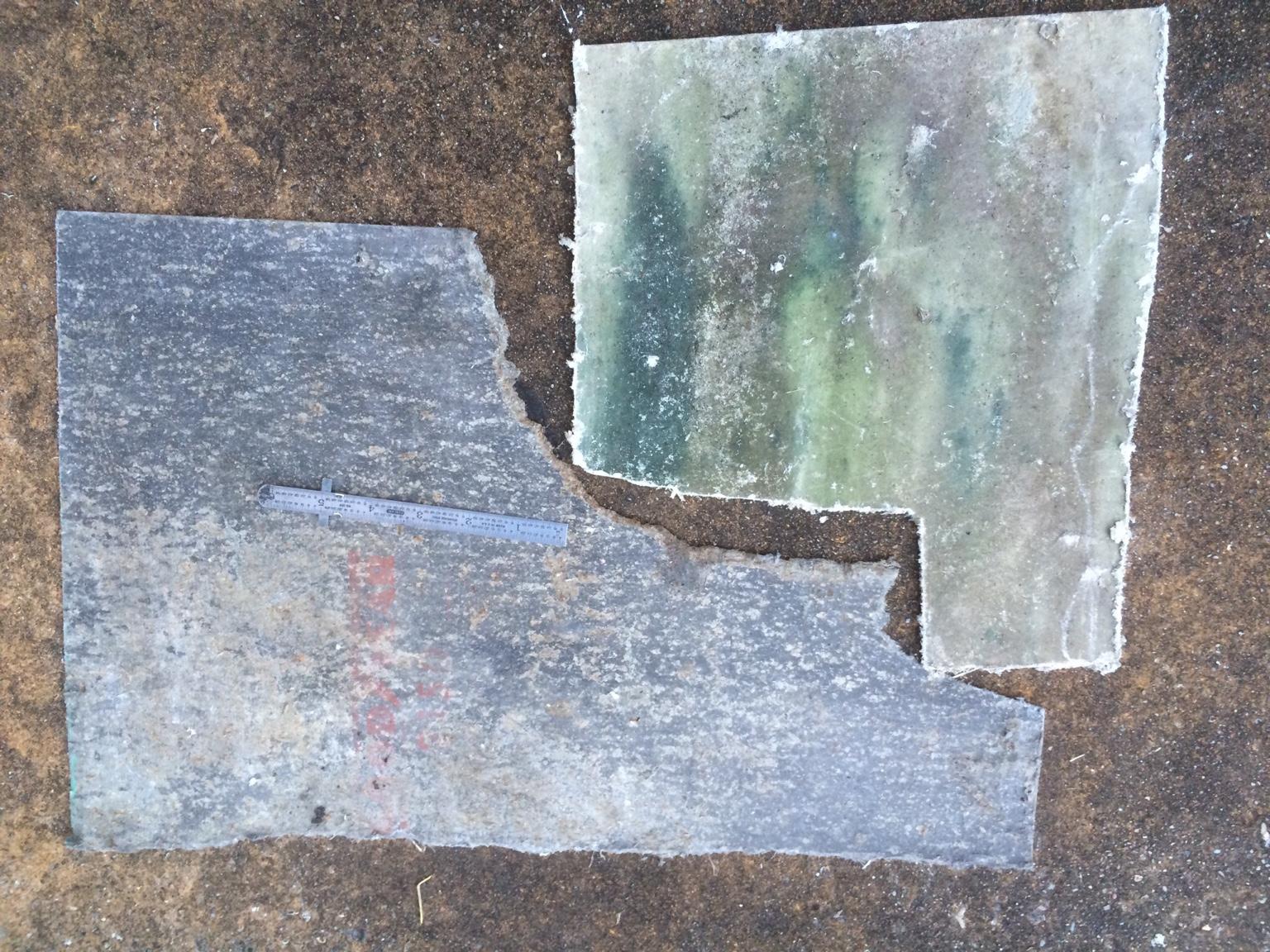
I am only running a paper gasket between the TB and the intake manifold. Did GM use some type of phenolic spacer/heat shield on these things to keep heat from the aluminum intake heat soaking into the TB:shrug:

I do not want a "Super Cool Hot Rod Aluminum TB Spacer", that would do no good, since they are Aluminum and will transfer engine heat into the TB.

I am going to try one of these:

https://www.holley.com/products/fue..._bodies/throttle_body_components/parts/508-11

Better info from Summit's site:

https://www.summitracing.com/parts/hly-508-11/overview/


It appears to be some type of composite gasket, looks slightly thicker then the thin paper gasket I am currently using. For $30, worth a shot :twocents:

Like I have said before, I am not a Chevy person, so, did GM use something like this stock? I know my AMC 258's use a thermal spacer/gasket to minimize heat transfer to the carb, I would think GM would use something similar. Maybe another junk yard fact finding mission is in order :twocents:


On my red Scrambler, 258 with Mopar MPI, external fuel pump (but higher pressure pump), I had this issue once. On the way to the National in Moab, I quit running in New Mexico. Same conditions, hot outside, pushing 75-80 mph, Scrambler died. Changed pumps, still no start. Dumped cap of gas down TB, engine fired up. But, TB was super hot, fuel was vaporizing off the throttle blade (this is a 258, intake hanging off the side of the engine, still got this hot). Even with a different pump installed, I had to slow down to 60 MPH. But, after the next fuel stop, never another issue. I "think" part of this one time problem on my red Scrambler was caused by shitty fuel, it has never had another problem, over 30,000 miles on an external fuel pump :thumbsup:

On this Scrambler, with the 350, maybe it is just too much heat transfer from the intake to the TB "bowl" area, causing the vapor lock issue. If all the other fuel system components are cool to touch, away from heat sources, maybe the thermal gasket would minimize heat transfer :shrug:
 
I think some where in this discussion it was brought up to make sure return and pickup are separated in tank so it does not pickup the hot fuel??? Mine with the same setup did have a spacer but I am sure it was aluminum. It also had a turbo city bored out throttle body and cop car injectors. Fuel pump mounted on the side of the tank (on the brace for the skid plate). I did not run down the hiway like you do but all day running trails in hundred degree heat should have heated things up. Never had any issues. A friend of mine had a flawed return line that would swell internally and slow returning fuel and cause issues. Took forever to figure that one out!!
 
How many fuel pumps have you replaced in that LJ or the old TJ? You would drive those across the world without thinking that you would have to drop the fuel tank along the way so I'm missing your logic-

Sent from my SM-G920V
 
32ba9a988de65d61131ed6fc62e77f4f-1.jpg
39a8cee1dc089380a29be8c57d46f6f5-1.jpg
. That is sure baffling. If you want to make your own I have some material you could use. I used I think the thicker material for my weber carb maybe 20 years ago. Didn't have the heat problem like you. My problem was air leaking between base and carb. Not sure but it is some type of industrial gasket material.


Sent from my iPad
 
I think some where in this discussion it was brought up to make sure return and pickup are separated in tank so it does not pickup the hot fuel??? Mine with the same setup did have a spacer but I am sure it was aluminum. It also had a turbo city bored out throttle body and cop car injectors. Fuel pump mounted on the side of the tank (on the brace for the skid plate). I did not run down the hiway like you do but all day running trails in hundred degree heat should have heated things up. Never had any issues. A friend of mine had a flawed return line that would swell internally and slow returning fuel and cause issues. Took forever to figure that one out!!

I am running a stock OEM 20 gallon sending unit, IIRC, the return does dump next to the pick up, so that could cause some issues. But, I run the same sending unit on my MPI injected red Scrambler, no issues :crazy:

I can run this tan Scrambler all day on the trails, over 100 degrees, no issues, it only happens on the highway :crazy:

I can see how that would be tough to find the swelling return line, that was probably a eureka moment :thumbsup:

I found some info on the "Third Gen" forum, a guy was showing a picture of a running change GM did on the sending units of the TPI cars, with the return line being moved as far away as possible from the pick up. This seems to be a common problem, hot fuel issues, on stock and modified GM TBI/TPI cars:

http://www.thirdgen.org/forums/tpi/619820-fuel-pump-issues-regarding.html


The funny thing about it, 99% of these guys are having the same problem as me, but they all run IN TANK PUMPS :crazy: :shrug::huh:
 
How many fuel pumps have you replaced in that LJ or the old TJ? You would drive those across the world without thinking that you would have to drop the fuel tank along the way so I'm missing your logic-

Sent from my SM-G920V

You missed a detail - the LJ and TJ are running I would presume to be "Quality" OEM in tank pumps :thumbsup:

If I knew I could buy the same quality in tank pump for this application, I think it would be worth a shot. But, I also want to keep my stock sending unit, my fuel gauge works fine, and stock 20 gallon tank. So, I would have to figure something out, might not be as "good" as an OEM system :shrug:

You probably know better then I, a lot of "replacement" parts just are not worth a cr-p, compared to OEM :twocents: So, if I have to use cr-ppy parts, I at least want them to be easily changed when they fail :crazy:

The link I posted above from the "Third Gen" forum was interesting. These guys have the same problem as me, with "In Tank" pumps. But, I bet most of these in tank pumps are replacements, not OEM, and the quality is probably lacking :eek:

Do the stock TBI systems use some type of "thermal break" between the TB and intake manifold? This seems to be where heat is being introduced into my system, i.e. water will boil off the TB when this issue occurs :eek: Fuel pump is always cool to the touch :shrug:
 
32ba9a988de65d61131ed6fc62e77f4f-1.jpg
39a8cee1dc089380a29be8c57d46f6f5-1.jpg
. That is sure baffling. If you want to make your own I have some material you could use. I used I think the thicker material for my weber carb maybe 20 years ago. Didn't have the heat problem like you. My problem was air leaking between base and carb. Not sure but it is some type of industrial gasket material.


Sent from my iPad

Thanks for the offer :thumbsup: I ordered the Holley gasket, should get it today. I have to be careful spacing up the TB, too much vertical movement will upset the TV cable, and it will have to be modified/adjusted, or I risk burning up the transmission :eek:
 

Something like that could work, too, but I would have to re-do my TV cable.

I am hoping the Holley gasket I ordered is only about 1/4" thick, I can install that and not mess up the TV cable setting :fingerscrossed:

I need to check my hood clearance, but worst case, I think I could space up the TB maybe two inches, and not hit the hood with the air cleaner, but I would definitely have to reset the TV cable.
 
I only recall the big blocks having the thick spacer.


With the pump quality, put an OEM pump in it if you would be that worried about it. Walboro also makes a quality pump too.

So if you were losing fuel pressure, wouldn't you look close at the fuel pump. It's obviously cavitating causing the lack in pressure.

Sent from my SM-G920V

Not sure I can still find an OEM pump for a GM TBI set up, they haven't been built in over 20 something years :shrug:

I am actually thinking about temporarily installing my fuel pressure testing gauge in the cab to monitor the pressure. But, I am pretty sure the pressure drops off when I have problems, no doubt about that. But, might be interesting to see if the pressure is slowly bleeding off with time until it hits a critical point.

But, before this pump failed, 10 gallons of cold fuel would immediately fix the problem.

My fuel pump is cool, the TB is boiling hot. I am "assuming" the heat transfer to the fuel is occurring at the TB, not the pump. This TB transferred heat is causing the fuel to heat, causing it to vaporize, causing the pump to cavitate.

If my theory is correct, wouldn't an inside the tank pump have the same problem, if not worse, since the pump is surrounded by heated fuel :shrug:

Not trying to sound argumentative, you obviously know your stuff, and I respect and appreciate your input greatly, and you have way more experience with this then me :bow:

I guess I can't wrap my head around how a pump surrounded by hot fuel will work better. I understand the "its sucking at the source so less head pressure" stuff, but the hot fuel is still going to be pumped to the TB, where my vapor locking is occuring. Pouring cold water on the TB and having the engine fire right back up (when the pump still worked) I thought kind of proves this :shrug:

Is the low pressure TBI system, 15-17psi, easier to vapor lock then the higher pressure MPI systems (50-65psi)? Does the higher pressure/flow rates help reduce the vapor lock issue by forcing liquid through faster? Would that explain why I don't have this issue on my 6 cylinder, the higher pressure is the only real difference, I imagine the underhood heat on both Scramblers is similar, they both run around 200 degrees?

I figure it is worth trying the Holley composite gasket/spacer, only $30. I can take some temp reading before and after installing the gasket to see if it helps any. But, I imagine after driving down the interstate at 75-80 for two hours straight, the residual engine/under hood heat is going to negate any effect the gasket might have?

Most newer MPI systems use a single fuel line, with the pressure regulator at the tank, no return line. So, the fuel only heats up at the rail, but it does not stay in there long before being injected into the engine. And, the rail fuel is constantly being updated with cold fuel from the tank. Both my systems, 258 with MPI and 350 with TBI, have return lines, so the fuel is constantly being pumped under the hood where it is hot, then back to the tank, slowly rising the temperature of all the fuel until it hits critical temperature, starts vaporizing, then cavitating, then no fuel flow??

On my red Scrambler, same speeds and temperature, no problems while running. However, after driving 3.5-4 hours at 75mph, I stop and get gas. Upon restart, slight miss first few seconds until you rev the engine up just a hair. I have heard this is caused by the fuel in the rail heat soaking while stopped after driving hard. Rev it up, force new cold fuel to flow through rails/injecters, no more vapor?

What I am leaning toward, wouldn't a single line TBI system, with regulator at the pump (ok ok, with pump/regulator inside the tank) be the best cure for all this "hot fuel" problem? Is this why the OEM's all moved to this style of system?
 
Not sure I can still find an OEM pump for a GM TBI set up, they haven't been built in over 20 something years :shrug:

I have LOTS of Walboro pumps out there running still that I have installed over 13 years ago. One of them is in a Volvo that is currently on a 2500 mile road trip. Put either a Walboro or a AC Delco pump in and go down the road. Yes, occasionally there is issues but ususlly it's because of installation issues or poor wiring/grounding points.

I am actually thinking about temporarily installing my fuel pressure testing gauge in the cab to monitor the pressure. But, I am pretty sure the pressure drops off when I have problems, no doubt about that. But, might be interesting to see if the pressure is slowly bleeding off with time until it hits a critical point.

The fuel pressure will gradually drop until it goes exponential loss. What you probably have going on is the fuel is picking up temperature from the engine and heating the fuel from continually returning it to the tank. Add in road temps and elevation to the fuel problems, then you have a failure. After probably 130 degrees, the pump fuel that we have starts to boil/gas off. Because you have an external pump, pulling up a column of fuel is aggravated by the vapor and then it will just stop pulling. It's no different than poking a hole in a soda straw and sucking thru it. You will get fuel thru it but it's aerated. Now that you have a pressure drop in the fuel lines, it has even more of a tendency to boil which is the "exponential" part. The current non-return systems run at about 58psi from the return style 42-45psi. They had to increase the pressure in the lines to keep the fuel from boiling because it is kinda stagnant sitting there picking up heat.


My fuel pump is cool, the TB is boiling hot. I am "assuming" the heat transfer to the fuel is occurring at the TB, not the pump. This TB transferred heat is causing the fuel to heat, causing it to vaporize, causing the pump to cavitate.

YES....:bacon:
 
I have LOTS of Walboro pumps out there running still that I have installed over 13 years ago. One of them is in a Volvo that is currently on a 2500 mile road trip. Put either a Walboro or a AC Delco pump in and go down the road. Yes, occasionally there is issues but ususlly it's because of installation issues or poor wiring/grounding points.


The fuel pressure will gradually drop until it goes exponential loss. What you probably have going on is the fuel is picking up temperature from the engine and heating the fuel from continually returning it to the tank. Add in road temps and elevation to the fuel problems, then you have a failure. After probably 130 degrees, the pump fuel that we have starts to boil/gas off. Because you have an external pump, pulling up a column of fuel is aggravated by the vapor and then it will just stop pulling. It's no different than poking a hole in a soda straw and sucking thru it. You will get fuel thru it but it's aerated. Now that you have a pressure drop in the fuel lines, it has even more of a tendency to boil which is the "exponential" part. The current non-return systems run at about 58psi from the return style 42-45psi. They had to increase the pressure in the lines to keep the fuel from boiling because it is kinda stagnant sitting there picking up heat.


YES....:bacon:


I will keep those two manufacturers in mind :thumbsup:

So, they did increase pressure to help with the fuel boiling on the return less systems. But, if I increase the pressure on mine, the regulator will just let it flow through (dropping the pressure back to 15 or so), or push past the regulator and make the injectors run rich, not good. I do not think a one line TBI system will work :banghead:

But, if I can keep the engine heat out of the fuel to begin with, I can solve my problem. But, I don't know if I can do much more :shrug:

1) Fuel supply and return lines on passenger side of frame, exhaust down driver side
2) Removed all the stock on engine fuel lines, now only have maybe 10" of fuel line under the hood
3) Suspended what little under hood line I have away from heat sources (engine and transmission)
4) I can still add the TB thermal gasket, sure it could help, but probably not a silver bullet
5) With more difficulty I could add a TB spacer, but I think eventually under hood temps will heat soak the TB

If I can't "beat the heat", minimize its effects with an in tank pump, to reduce cavitation. But, eventually, won't even an in tank pump succumb to the cavitation caused by heated fuel? If I can get 2-2.5 hours running hard in the heat on the interstate, will the in tank pump give me the extra 1.5 hours I am looking for? I.e., once the fuel heats up to a certain temperature, it realistically won't go much higher? And if it does, the in tank pump should handle it?

Or, and this seems more complicated/potential problems - add a low pressure (5psi) electric fuel pump BEFORE the high pressure pump, to effectively "lift" the fuel to the HP pump? Don't like this, more to go wrong :shrug: Like a diesel, where you have a lift pump before the injector pump, although diesel is much better about not boiling off.................
 
If I can't "beat the heat", minimize its effects with an in tank pump, to reduce cavitation. But, eventually, won't even an in tank pump succumb to the cavitation caused by heated fuel?

No...The fuel vapor rises and is released to the tank vent. The pump in the tank will only get fuel.


If I can get 2-2.5 hours running hard in the heat on the interstate, will the in tank pump give me the extra 1.5 hours I am looking for? I.e., once the fuel heats up to a certain temperature, it realistically won't go much higher? And if it does, the in tank pump should handle it?

With the in tank pump, you should be able to drive as long as your bladder will allow. One side effect of the fuel vapors is the stock tank venting is not large enough to deal with a full return system and the excessive vapor. I struggled with mine and ended up putting things together so I have a 3/8" vent. When it was 1/4", I could get home in the summer and get out of the Jeep and hear the tank vent "purging" vapor out the open vent for another 3-5 seconds.

Or, and this seems more complicated/potential problems - add a low pressure (5psi) electric fuel pump BEFORE the high pressure pump, to effectively "lift" the fuel to the HP pump? Don't like this, more to go wrong :shrug: Like a diesel, where you have a lift pump before the injector pump, although diesel is much better about not boiling off.................

And you're worried about failure of components?


So now you can just imagine what the conditions are like out here in the summer. With outside temps at 115-120 degrees, up to 8% Ethanol in the fuel, and 150-160 degree asphalt temps, Everything is against you out here. Now take the same vehicle adding a trailer, running at 3/4 throttle for 10-15 minutes pulling a hill at 4000 to 6000ft elevation, you get a rude awakening to vapor lock. It's pretty extreme out here and it's definitely not forgiving at all. In other parts of the country, you all can get away with a lot of things that we can not out here.......Not even close.......
 
No...The fuel vapor rises and is released to the tank vent. The pump in the tank will only get fuel.


With the in tank pump, you should be able to drive as long as your bladder will allow. One side effect of the fuel vapors is the stock tank venting is not large enough to deal with a full return system and the excessive vapor. I struggled with mine and ended up putting things together so I have a 3/8" vent. When it was 1/4", I could get home in the summer and get out of the Jeep and hear the tank vent "purging" vapor out the open vent for another 3-5 seconds.


And you're worried about failure of components?


So now you can just imagine what the conditions are like out here in the summer. With outside temps at 115-120 degrees, up to 8% Ethanol in the fuel, and 150-160 degree asphalt temps, Everything is against you out here. Now take the same vehicle adding a trailer, running at 3/4 throttle for 10-15 minutes pulling a hill at 4000 to 6000ft elevation, you get a rude awakening to vapor lock. It's pretty extreme out here and it's definitely not forgiving at all. In other parts of the country, you all can get away with a lot of things that we can not out here.......Not even close.......


The vapor rises in the tank, my fuel pick up is submerged in fuel at the bottom of the tank, just like an in tank pump. So, I would assume I am sucking up bubbles in the liquid?


As for the venting, I am running the stock CJ 20 gallon tank. IIRC, it has two 1/4" vents at the top, tied together, then run into a steel 1/4" return line that runs to under the hood. My vents/rubber line are new, OEM steel line is clean/clear. I am running a GM Vapor charcoal canister under the hood. A very simple one. Vent line from tank to can. Purge line runs directly below throttle blades. Air In fitting on top. No electric/thermal/vacuum controls/ Once the throttle is cracked, manifold vacuum pulls through the canister. My system is based off an '89 GM Suburban. I never have an excess pressure issue. No fuel smells, no "woosh" when pulling fuel filler cap, nothing. Seems to work fine :shrug: This last trip, after having the "hot fuel issue", I loosened the cap, problem still present.


Yeah, the lift pump idea brings a bunch more potential problems to the table, just throwing it out there :thumbsup:


As for heat, we are around 100 for most of the summer, with usually 90-100% humidity, so it gets really toasty/suffocating here, too. We just don't have the added altitude issue :thumbsup: Even today, September 27, we are at 85 degrees, 75% humidity, feels like 94 :evil: Once the temps get below 90, or I am north of AL/MS/AR, I have never had this issue, even at higher altitudes. It is definitely a product of heat. I could drive 4 hours straight across South Dakota, at the end of June, 85-90mph, not a whimper, engine running at 195. Down here, 2-2.5 hours max :( As for "peep" and fuel, 4 hours is about my max, the Jeep will be empty, and I will be shortly thereafter :rotfl:

I am going to try the thermal gasket thing from Holley, worth a shot, easy to install, can't hurt :twocents: But, I will be amazed if it 100% fixes my hot fuel problem. I assume beside engine heat, just the fuel constantly circulating through the lines heats it up, too. The 90+ degree temps are just the final nail in the coffin. I guess I could move up north, might be easier than convincing me to get an in tank pump :rotfl:

In all seriousness, thanks for the input/recommendations/suggestions/knowledge :thumbsup::wave:


Another question - why does this only happen at high speeds on the interstate? I never have had a problem crawling through the woods in August down here in 100+ heat? Pump output is consistent across the RPM range, so I would assume I have just as much fuel (or more) flowing back to the tank at low speeds, less at higher speeds? Never a problem in stop and go city hell hole gridlock traffic? Besides heats, high speeds seem to be the other necessary factor ??
 
Back
Top