Think I finally figured this out.
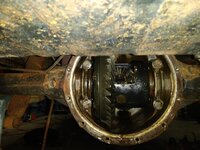
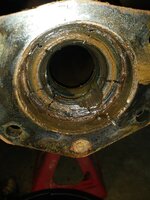
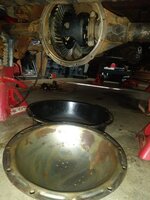
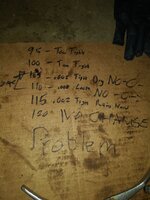
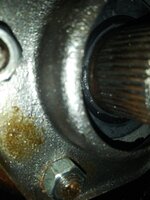
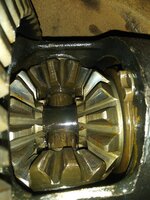
Looking at the centering block in the differential, notice how the gap between the hole in the centering block/centering block is offset: driver side axle needs to come in some more, passenger shaft needs to slide outward.
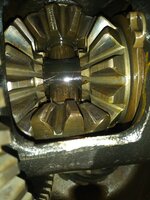
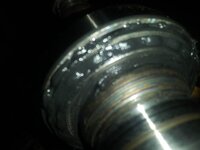
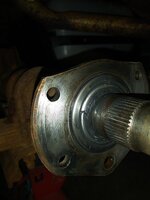
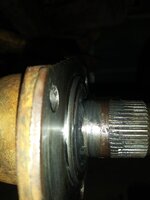
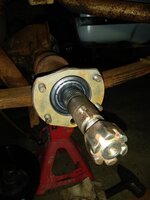
The only way this can happen: if the passenger side bearing is not pressed all the way on.
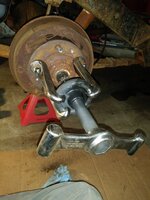
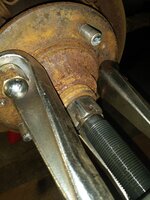
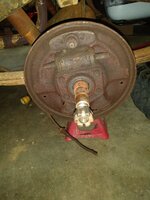
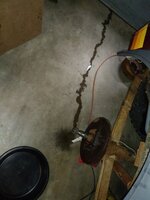
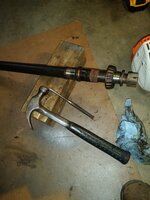
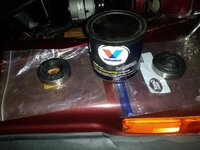
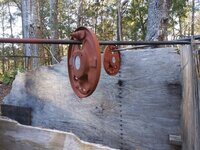
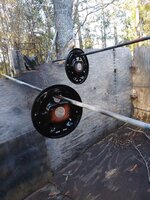
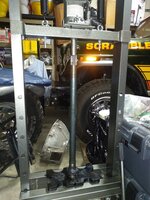
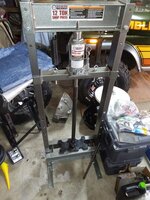
Don't try this at home:
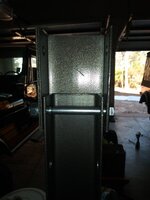
It fit, I think it pressed on a hair more.
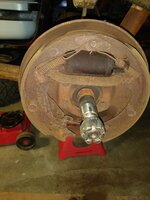
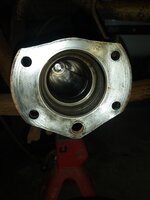
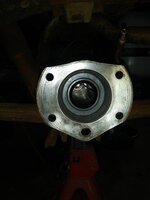
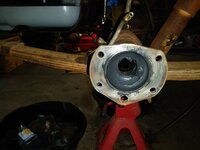
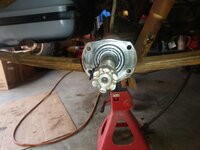
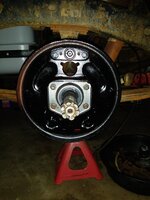
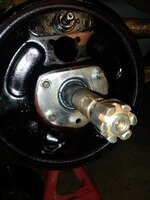
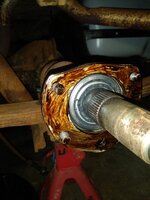
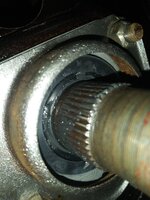
Passenger side axle reinstalled, completely bolted together. Slid in driver side axle, tapped outer race in as far as it would go. Centering block appears to be centered now:
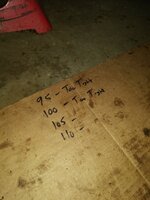
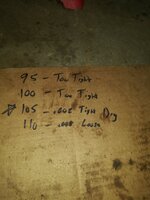
Messed around with shimming, finally got it.
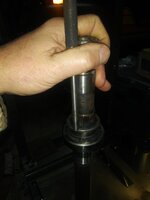
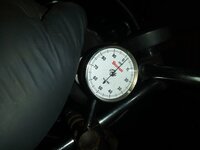
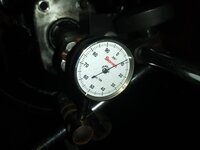
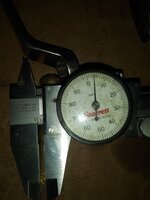
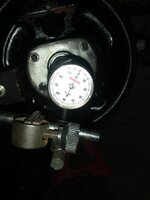
Pushed in all the way, dial centered:
Pulled out as hard/far as I could:
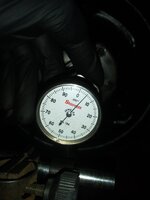
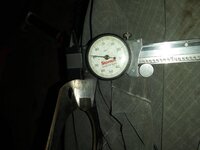
.004 to.008 OK, .004 preferred, I'm at .005. As good as I can get it with the shims I have, and to be honest, not sure I would try to chase down .001 in this application.
This is where it gets interesting. The above readings were taken with the shims/backing plate dry, and more importantly, without the outer seal bolted into place on the driver side.
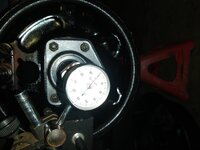
With the driver side seal bolted/torqued down, note the change:
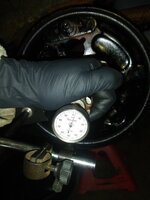
I'm now at .003!!! What happened? As best as I can explain:
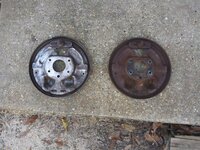
Outer race is held in place against the brake backing plate. Inner race/bearing is pressed on to axle shaft. The outer seal fits through the brake backing plate, and part of the rubber on the seal wipes the face of the bearing. When the seal was not in place, the bearing could move .002 more outward. With the seal in place, it can not.
Now, am I worried about being .001 too tight? NO. New bearing, new seal, new grease, cold outside means rubber a hair stiffer then it would be under operating conditions.
I'm done with the bearing set up, finally!!!!
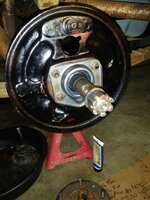
The shafts turn fine, bearings turn fine, no binding or rough spots. End play can hardly be felt by hand, but it is present.
That's it for now