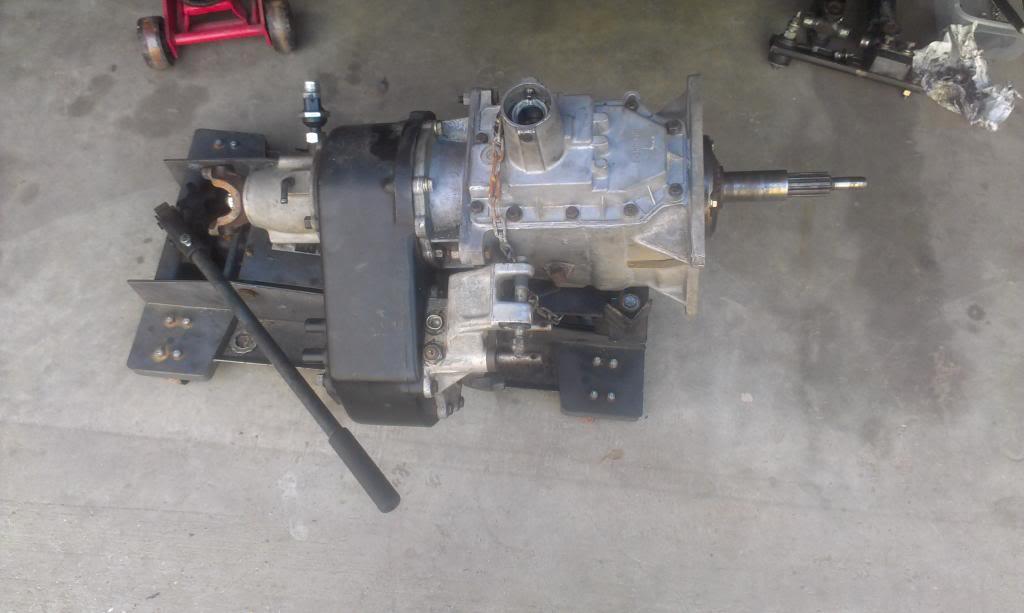
Ok, about to dive into some pretty deep stuff, probably way more then what is ever necessary for 98% of all Jeep owner's

The instructions from Novak were very clear about checking the "crank to bell housing bore" run out. In a nut shell, in a perfect world, the center of the crank should be located in the exact dead center of the front bearing retainer hole in the bell housing. The transmission input shaft should be perfectly aligned with the crank center, give or take .005" or so. This is all fine and good, makes sense to me, should be. If there is an alignment issue, you can have all kinds of problems: vibrations, wore out pilot bushings, wore out front transmission bearings, wore out synchronizers, clutch sticking issues, high rpm shift problems, etc. etc.
Now, I have just recently blown up three T5 transmissions, so I am being super extra anal about installing this brand new AX15. With that being said, on all 3 blown up T5's, I had no bearing wear, synchronizer problems, shifting problems, etc. On the first two blown T5's, the pilot bushing was still perfect. The last blown up T5 took out the pilot bushing, but I think that had something to do with the fact that I drove a blown up transmission 200 miles at 70mph!!
Ok, so this is what I did:
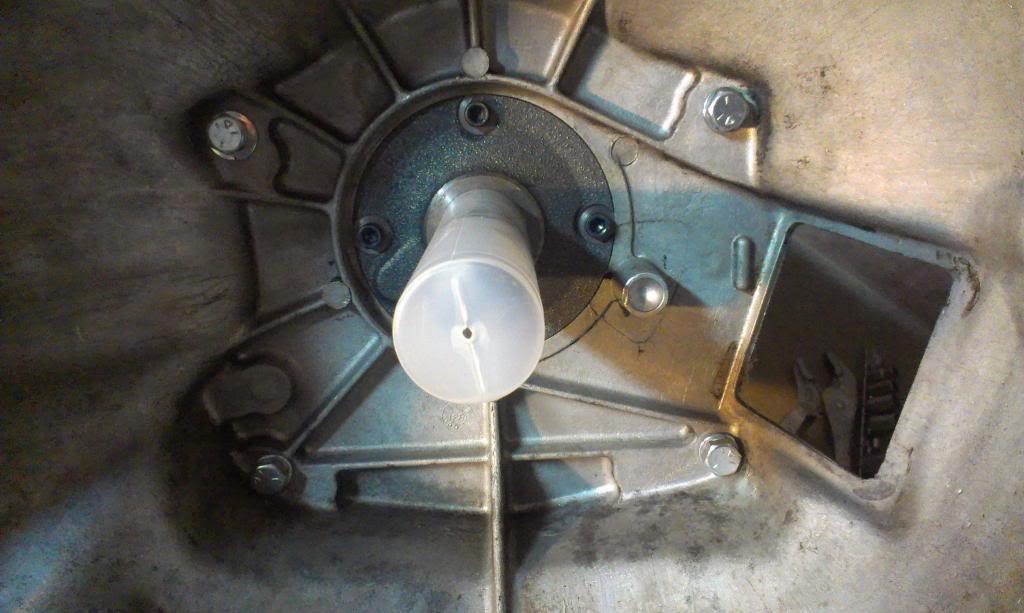
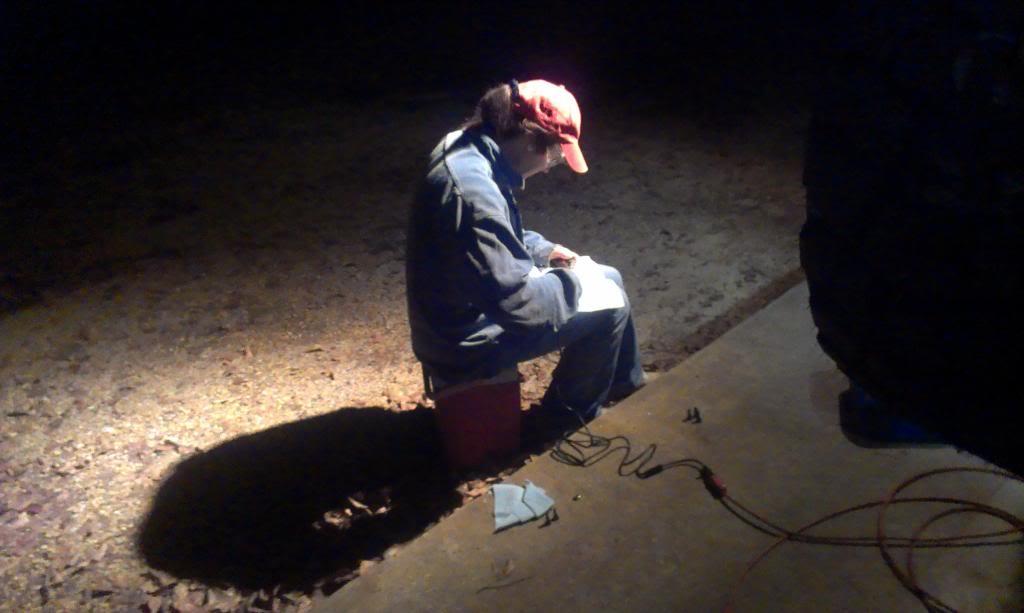
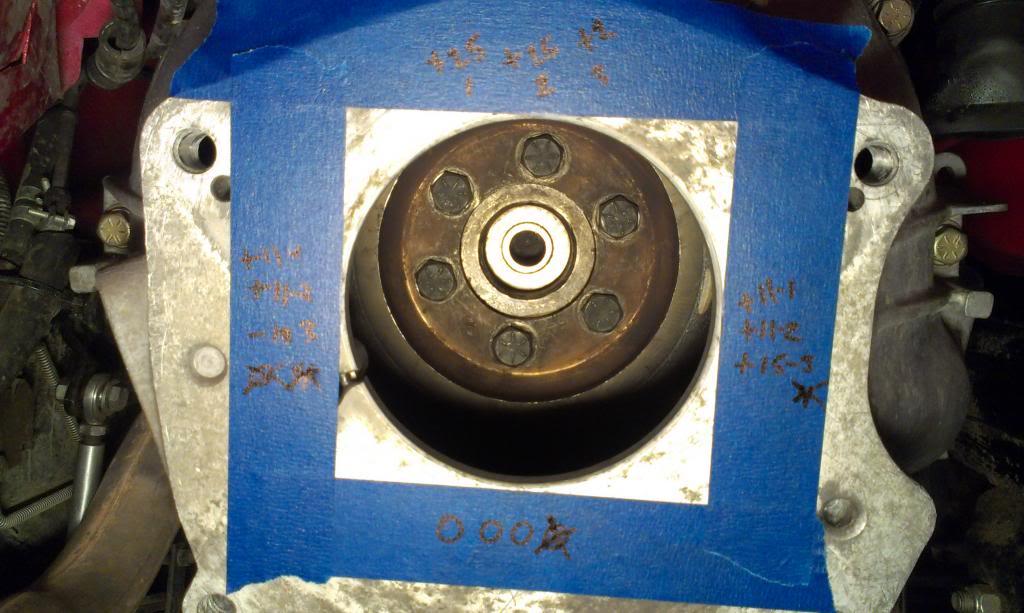
I wish that picture would have shown the dial indicator, sorry. I stuck the dial indicators base to the flywheel/center of the crank, and checked the run out on the inner lip of the bell housing bore. I checked the run out all the way around, and recorded it at 12, 3, 6, and 9 o'clock. To check the run out, I turned the engine over by hand, thus spinning the crank/flywheel, which rotates the dial indicator around the bell housing lip. I zeroed the dial out at the 6 o'clock position. I stuck blue tape on the bell housing to record what I found.
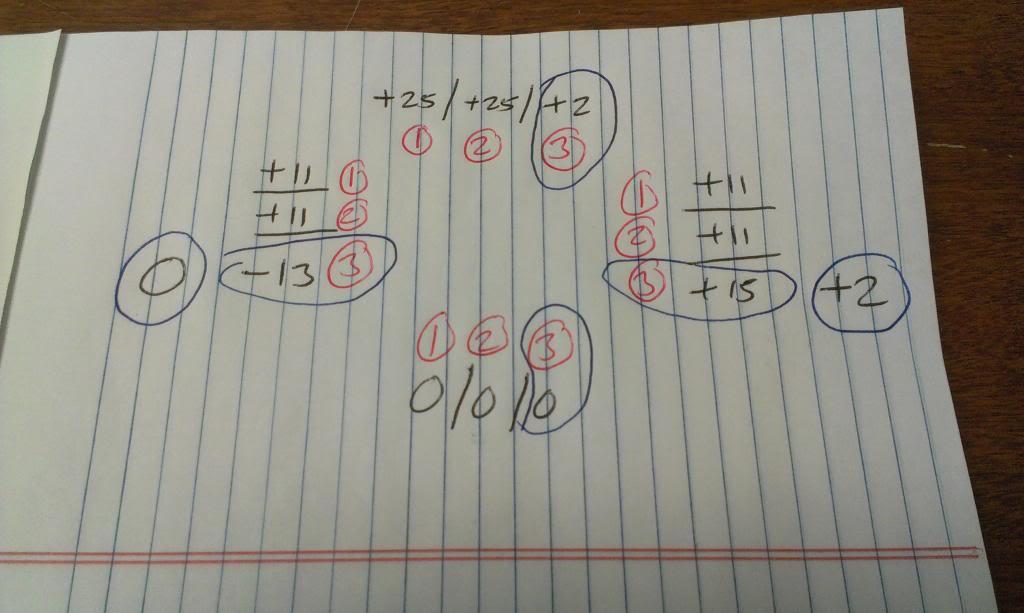
The above picture is hard to read, here is a better picture:
The black numbers represent the run out, in .00"'s.
The red numbers next to them represent which time I recorded (I did this about 20 times)
The circled ones are the most important.
The first two times I did this, I had really weird readings. I was getting +25 thousandths out between 12 and 6, and getting +11 thousandths out in both the 3 and 9 o'clock positions which is really messed up.
BIG IMPORTANT NOTE: Everything needs to be super clean, and torqued down correctly, or you are wasting your time.
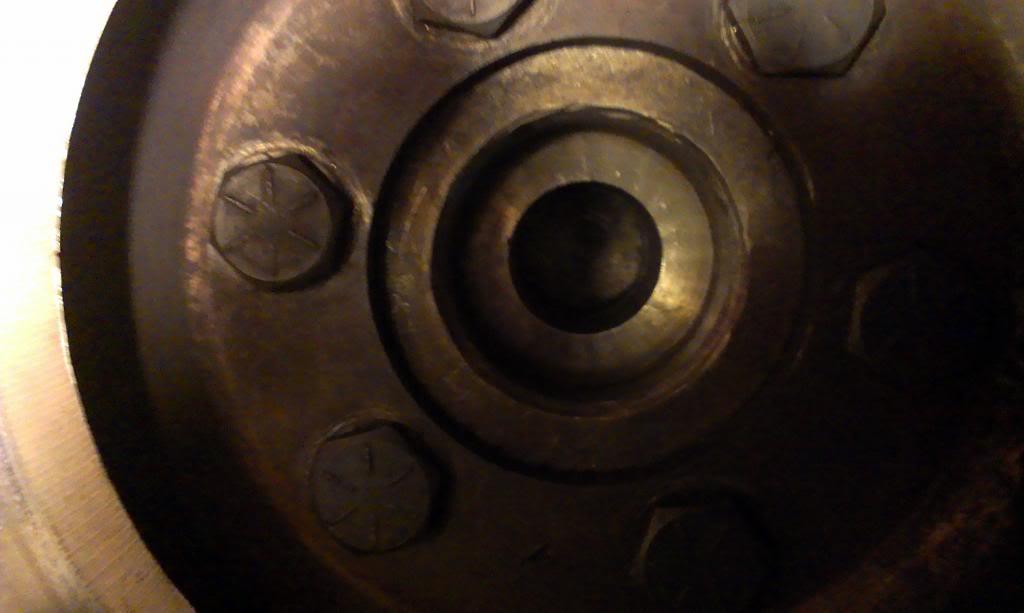
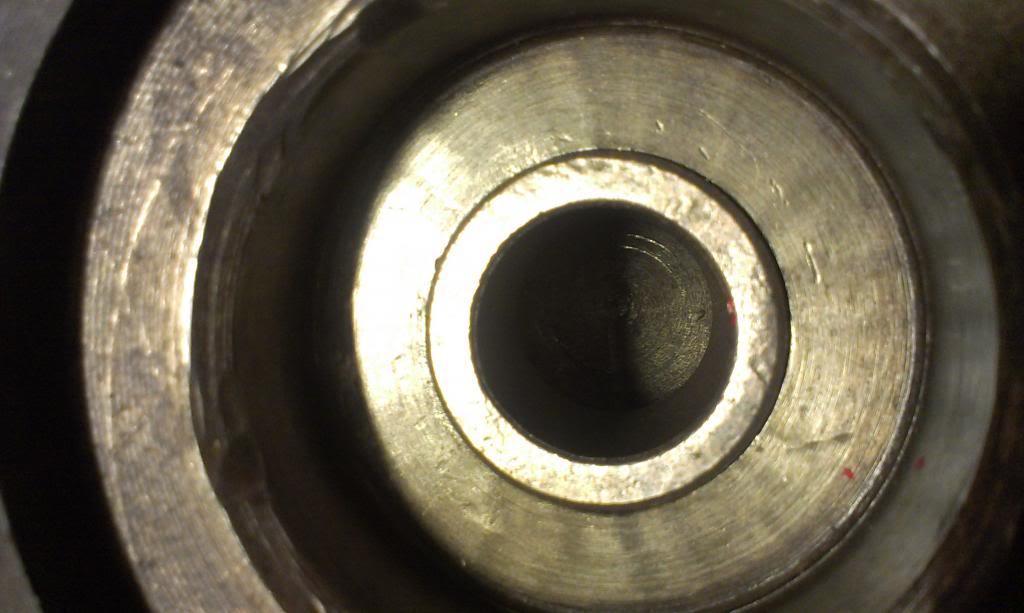
So, I took it all back down, cleaned the face of the bell housing, back of the block, and both sides of the spacer ring. I also lightly sanded the bell housing bore down with some super fine emery cloth, to knock down any burrs, and to polish it.
Third time was the charm.
With the dial zeroed at 6 o'clock, I am reading +2 thousands of an inch at 12 o'clock, super.
Now, the reading at 9 o'clock is -13 thousandths, and +15 thousandths at 3 o'clock, seems weird. But, when you go back and zero the dial at 9 o'clock, you get +2 thousandths out at 3 o'clock, super.
Confused? Think about it, -13 + 15= =2 thousandths. Since the dial is not centered, you are just checking for run out between two points. Also, you should add the readings up and divide by 2:
12 + 6 o'clock/2
9+ 3 o'clock/2
So, I am approximately 1 thousands of an inch out, well within the .005-.010 range, depending on who you talk to. To make mine perfect, you would have to use offset dowels to shift the bell housing. Not necessary if you are under .010
So besides a broken dial indicator ($125) and a couple of hours of my time, I guess I gained piece of mind

But in all seriousness, how many of you have ever done this? I never have. And in my 21 years of driving/owning/breaking/fixing CJ's, I have never had any problems that were caused by a misaligned crank to bell housing. I am sure it happens in the AMC/Jeep world, but must be rare
This does seem to be a problem with Chevrolet/GM engines/bell housings, so this might be worth the time to do if you are swapping in a GM engine/manual transmission. Seems to be more of an issue with very high horsepower applications.
Now, back to me. So, everything is just peachy. Maybe
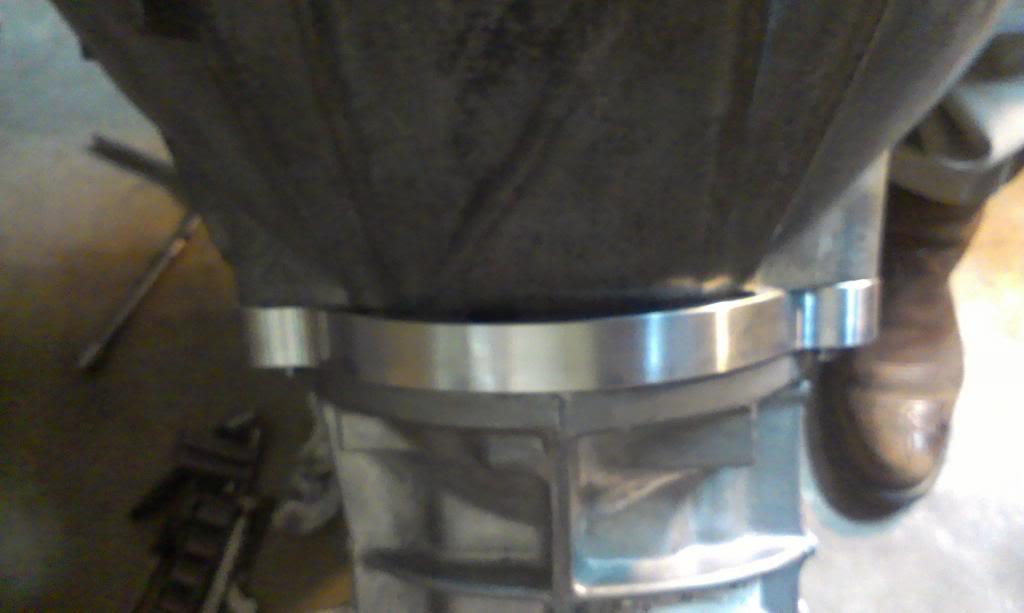
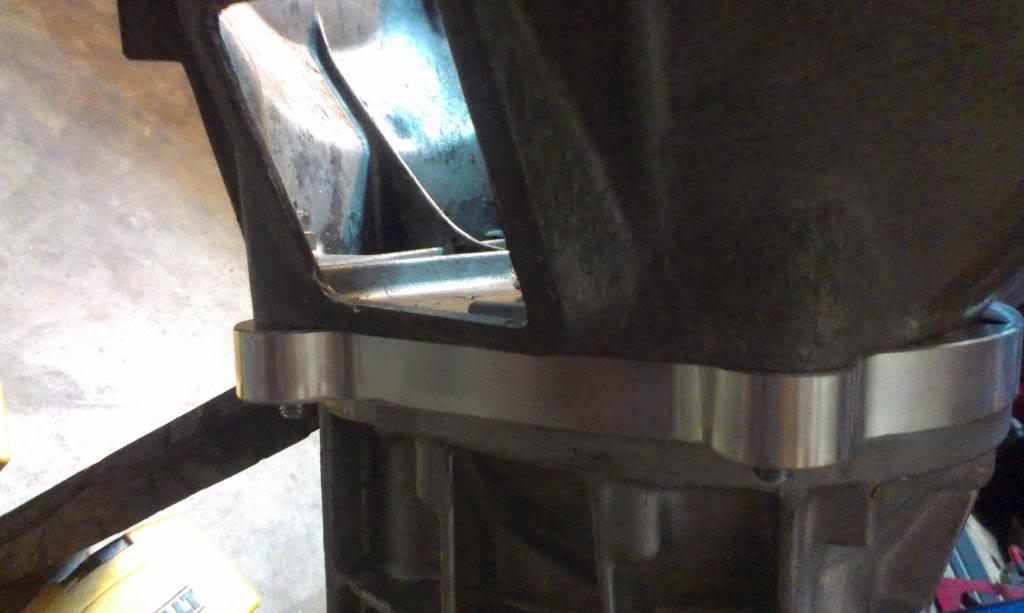
My bell housing actually bolts to Novak's adapter, which is bolted to the face of the transmission. There is an indexing ring that is built on to the adapter, which fits into the bell housing bore. But, it is NOT a super tight fit, so theoretically there could be an alignement issue here, adding some itsy bitsy's.
Also, you should check your crank run out. If the crank has play, you are adding more itsy bitsy's.
Also, the bolt holes in the bell housing could be slightly wallowed, adding even more itsy bitsy's.
Also, check to see if the bell housing face is parallel to the crank, adding more itsy bitsy's.
So, just because I am fine at one point, you are stacking itsy bitsy's. If enough itsy bitsy's stack up, you can have problems
OK, so I am fine now, But, when I pull off the bell housing to install the clutch, maybe the bell housing will shift slightly, changing this measurement. Think about it, the bell housing to block bolts DO NOT FIT SUPER TIGHT though the holes in the bell housing. They are tight, but not that tight. The same thing can be said for the block to bell housing dowels fitment, it is tight, but not .0000001 tight
After all of that, I should be fine. Feel free to discuss. My mechanic at work, who has been working on all kinds of stuff for over 50 years, knew what I was talking about, but he has never checked this run out, or had issues, be it with Ford, Chevrolet, Jeep, Chrysler, Case, John Deere, Kobelco, etc. etc.
Maybe somebody that messes with high performance aplications can add something here

Going shopping in TX this weekend, but will start some the install work soon, that's it for now.