• Notice for iPhone users: DO NOT use the image size reduction option when uploading photos to the forum. This causes portrait images to post as landscape. We have added a warning to the image insert pop-up as well.

Belizeit's 1984 CJ-7 Engine Swap/Upgrade

Good Morning,
I just ordered the 3/4 Novak slave to replace my 7/8 Novak slave.
How is the pedal pressure and engagement point ?
With the my Iron Duke 13/16 bore master clutch master and 7/8 bore slave combo, pedal pressure was nice but engagement point was right at fire wall with slave rod adjusted for throw out bearing gap .
I figure with 3/4 slave it will be harder pedal pressure but higher pedal engagement point.
Thanks for the help guys
 
With the old 3/4 on the AMC 4 cyl. it was probably a couple inches from floor and fairly light pressure.
 
I have only messed with it a little bit, and obviously have not driven it, BUT:

Engage/Disengage is from around 35% off floor to 90% all the way up
Easier than mechanical linkage to push in
Not as light as the 1985 4 cylinder CJ7 in my yard with parts store replacement master/slave cylinder
 
Nothing too exciting, just some wiring notes.

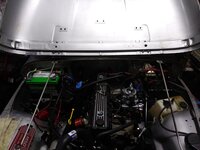
Empty right now:

1.jpg

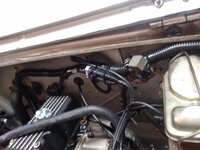
I have identified three separate "12 volt on start AND run" wires under the hood, BUT the 3rd one is a dud.

The first one, the big red/white wire that originally fed the ICM;

2.jpg

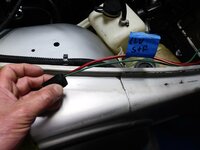
The second one, the red wire (with the black line to the immediate left) on this 6 pin connector:

3.jpg

And this one is the "dud", the positive coil wire:

4.jpg

With the battery hooked up, starter wire not hooked up, and cranking the key over, this wire will show battery voltage on Start AND Run.

BUT, on this 1985 4 cylinder CJ7, everything hooked up and the engine running, you will NOT get full battery voltage.

Battery voltage:

5.jpg

Voltage at positive coil wire, engine running:

6.jpg

Roughly the same as off this post on the starter solenoid, give or take:

7.jpg

This is due to the OEM resistor wire:

8.jpg

9.jpg

The coil will get a full 12 volts on START ONLY. Once it drops to run, the resistor wire comes into play. Or something like that.

So, just make sure you check your "12 full volts at Start AND Run" wires" to ensure compliance. I need two sources, one for the MSD 6AL ICM and one for the Holley Sniper.

Now, I will tell you a dirty secret. On both of my Scramblers, with the Mopar MPI, I hooked up my "12 volt on Start AND Run" wire to the original coil red wire. So, I am not actually getting full 12 volts on Run. So, how does this work?? Well, just guessing, but on the Mopar MPI harness I assume the only thing this "switched wire" does is trip the relays for the fuel pump. So, at Start it sees 12 full volts, opens relay, and even though the voltage drops to 10 while running, that is enough to keep the relay open. Just a guess. Not right, but it works, I will fix them both one of these days!!!! Red Scrambler has been running fine for over 65k miles like this, but it is still not "correct". Unless the resistance wire was removed, I'll take a look one of these days!!

I will wire it "correctly" on this one :crazy:
 
One other tid-bit.

This is a factory 4 cylinder Jeep with a swapped in 258. The AMC 4 cylinder models did not use an "oil pressure switch" to enable certain circuits to power up. The AMC 4 cylinder Jeeps use a relay which is tripped by the alternator spinning. 258's use oil pressure, AMC 4 cylinder Jeeps use the alternator spinning over. I do not have a spare oil pressure block/switch, and the OEM 4 cylinder wiring is in great shape, so I will use the OEm 4 cylinder wiring.

And really, the only thing that is "needed" by all of this is the intake manifold heater, which probably really isn't needed anymore. But, the Sniper is a "wet intake" form of fuel injection, like a carburetor, so it can't hurt to hook it up, Besides all the wiring is intact and functional, so easy enough to hook it back up.

I need to buy another relay for this, but by "jumping" this connector (like if the engine was spinning):

10.jpg

I will get signal to this relay (coolant temperature switch in the intake will control when the heater is on/off, need to install this switch):

11.jpg

On the 1985 in my yard, I replaced the impossible to find OEM style relay with a more modern replacement relay, which functions fine:

12.jpg


Post #201 on this thread talks more about this particular to the AMC four cylinder model Jeeps relay:


I call it a choke relay, but on this 1984 it is also needs to be in place/functional for the intake manifold heater to function.
 
Worked on this one some Friday night and Saturday, mainly all the under hood wiring (OEM/MSD/Holley Sniper).

Just some random pictures/notes from the journey.

For some reason, the Holley Sniper harness uses tiny wires, which require tiny connectors, so be prepared. NAPA keeps these connectors in stock, AutoZone/Advance Auto Parts/O'Reilly do not:

20221014_174537.jpg

20221014_184521.jpg

The above picture is of the Holley Sniper wire tying into the MSD 6AL box. Check the Sniper instructions, multiple ways to install this system. On Andy's, I am using an MSD 6AL ignition box and and MSD distributor. I am not using the Sniper to control timing, at this time.

Hooking up the ignition coil to the MSD 6AL:

20221014_184527.jpg

Hooking up the MSD 6AL "12 volt start AND run" wire to the OEM ICM power wire:

20221014_184542.jpg

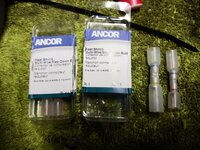
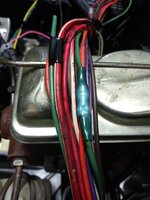
Found these at a West Marine store, very handy for connecting different sized wires together:

20221014_184548.jpg

Repairing the OEM tach signal wire, which I don't need:

20221014_185648.jpg

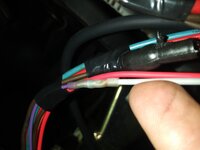
De-pinning the OEM "6 Pin Connector", cutting off unneeded wires, using the one wire at this connector that is hot on run AND start:

20221014_190559.jpg

Using the above "12 volts Start AND Run" wire to feed the Holley Sniper:

20221014_192649.jpg

Messy, drawn out process:

20221014_230154_HDR.jpg

But worth it in the end, IMO:

20221015_132814_HDR.jpg

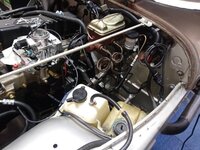
I chose to try to install all this electrical stuff as cleanly as possible. So, I routed all of the MSD and Holley Sniper wiring into the OEM harness, as much as possible. This way takes longer, but is much cleaner then just half-ass running wires all over the place. In the end there is only so much that you can do, due to the size/location of some of the Sniper wire harness connectors. I did the best I could do, short of cutting apart/off the Sniper end connectors and modifying/fabricating them. About 5 hours of work and ass scratching, but worth it IMO.
 
One of the big ass Holley Sniper electrical connectors:

20221015_132818.jpg

This is what they refer to as the "10 pin connector". This can connect various outputs to user installed devices (tach signal, electric fan relays, AC stuff, etc). I am only going to use the tach output for an aftermarket tach, so kind of a waste of this big ass connector. But, what do you do? About all I can do is connect this huge output connector to the OEM harness as neatly as possible. No way to hide this size connector, and would be worse if you tried to.

Another gripe, the O2 sensor wiring harness:

20221015_132826.jpg

The harness of the O2 sensor and the corresponding Holley Sniper TB harness are like 10' long. For a kit that is supposedly custom made for Jeep CJ's, kind of retarded? I could hook the O2 sensor up in the tail pipe and still have slack!!!!!!!!!!! Anyway, just routed the wires as neatly/cleanly as possible. O2 sensor harness to DS fender, tied to OEM light harness, connector up by firewall electrical connector. Holley Sniper O2 harness tan rear to the fire wall, over the master cylinder, looped up excess at the OEM main electrical connector at firewall.

Tied the Holley Sniper "power" harness connector to the OEM wire harness, next to the OEM intake manifold heater relay. Again, very large connector, can't hide it. The small connector above it is for the Sniper LCD screen, which I will mount inside the cab.

20221015_132830.jpg

MSD ignition component wiring, and OEM harness routing:

20221015_132841.jpg

Not 100% happy with this, BUT both MSD and Holley repeatedly ad-nauseum declare that if you do not hook up their components directly to the battery you will burn in hell forever. So, two batt + and two battery - wires directly to the battery.

20221015_132845.jpg


Once everything is up and running I will revisit this. On a Jeep CJ, the + battery cable goes directly to the starter solenoid. I can easily conceal both these wires inside the OEM harness loom. On the grounds, same thing. Big battery cable goes directly to the engine block, I can easily route these two ground wires through the OEM harness loom and ground them at block, which is connected directly to the negative battery post via a heavy gauge wire.

Not much you can do with the original CJ alternator/starter solenoid wiring at the end of the line, is what it is. Waiting on my relay that will power the intake manifold heater circuit.

20221015_132858.jpg


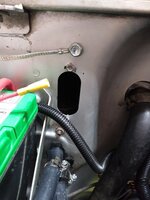
Need to plug this big hole, either with OEM piece or a small metal plate. I will use this hole to run the Sniper LCD wire harness through, plus any other needed in cab wires:

20221015_132907.jpg
 
Last of the wiring, for now.

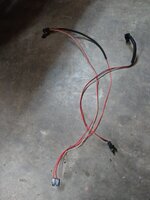
The OEM 4 cylinder T4/T5 reverse/4wd light harness.

20221015_133819.jpg

On the AMC 4 cylinder models you have an extra separate wire harness looped into this one. These wires originally went to a transmission mounted "top gear switch" that tied into the dash mounted "up shift" light wiring circuit. This is no longer needed/usable due to the T176 transmission swap and the fact that I am no longer using the OEM feed back carburetor/emissions system.

20221015_133827.jpg

The other issue:

20221015_134028.jpg

T4/T5 reverse light switch connectors are different from T176? Regardless, this connector is toast, so easy decision to simply cut it off and install two female spade connectors:

20221015_141159.jpg

I am now almost finished with all the wiring, EXCEPT:

1) fuel tank/pump harness (chassis ground, battery ground, gauge sender, fuel pump power)
2) VDO aftermarket temperature gauge (in addition to the OEM temperature gauge)
3) VDO aftermarket oil pressure gauge (easy to do)
4) aftermarket dash mounted tachometer
 
Plugging up the original EGR crossover tube ports.

Andy doesn't want the EGR, and I do not have a cross over tube, so I will plug the ports. A few issues:

20221015_144657.jpg

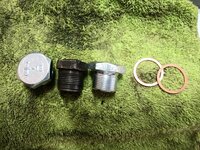
The OEM crossover tube connectors are 7/8-18 thread, regular bolt thread, NOT pipe. I purchased two Dorman oil pan drain plugs in this size to plug the holes.

Some people smash the tube inside the original connector, and weld it shut, like so:

20221015_144705.jpg

Kind of sketchy, and an easy place for an intake/exhaust leak.

With a bolt installed, the head does not sit flush to the manifold:

20221015_145710.jpg

Not a problem. This is the exhaust manifold, but the same on the intake:

20221015_145758.jpg

The OEM connector, and the bolt, seal the hole shut by bottoming out against the inner recessed ring. It is a flat, so the flat end of the bolt seals flat to this seat. I have used these same bolts before, to do the same thing, no problems.


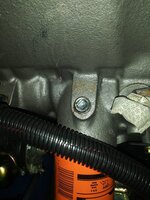
Finally plugging up this hole, above the oil filter:

20221015_150951.jpg

I wanted a recessed plug, like above. The only problem: the plug I ordered has a 5/16" by 5/16" square drive. So, I purchased a short piece of 5/16" square stock to install this plug. Cheaper then buying a 5/16" square drive socket!!!!! Sealed the threads with the pictured sealant.

20221015_150723.jpg

Installed a new OEM temperature gauge sending unit:

20221015_152144.jpg


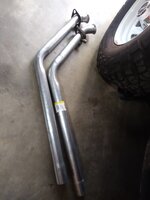
I had to get an exhaust "head pipe" fabricated. I had an aftermarket pipe in my garage that let the exhaust shop use as a mock up. These Walker/ADP exhaust pipes are impossible to find now (Walker part 44872). I did not have the air injection nipple installed on Andy's pipe since it is not needed:

20221015_160223.jpg

The tail pipe/muffler should arrive this week. Once they do, I will switch from wiring to piping, need a wiring break!!!!!!!!!!!!!!!!!!!!!!!!!

Installed the front bumper, looking good IMO:

20221015_160232.jpg

That's it for now :wave:
 
Knocked out some relatively easy tasks last night.

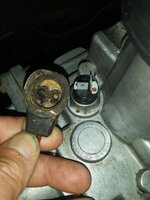
Removed a plug from the intake manifold, installed an OEM temperature switch for the intake manifold heater circuit:

20221017_173429.jpg

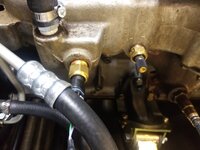
Removed a plug from where the original thermal vacuum switch was installed and installed a VDO temperature sending unit for an additional temperature gauge. We are not going to use the EGR system, the TAC system (Thermal Air Cleaner), or the canister purge delay system, so this is a good place to put a sending unit. It is to the right of the Sniper temperature sending unit.

20221017_173434.jpg

Removed the OEM oil pressure sending unit, installed a VDO sender unit and wired it up:

20221017_173442.jpg

20221017_182643.jpg

Installed the plastic piece on the grill where the air cleaner intake hose will mount, and routed/secured the coolant overflow bottle hose:

20221017_182550.jpg

Nothing big, but picking away at my to do list.

That's it for now :thumbsup:
 
Installed the new fuel vapor canister. I have been using this particular model canister successfully with TBI engines.

20221018_175319.jpg

Very simple install:

20221018_175328.jpg

The vapor line from the tank goes to the "TANK" port.
The "PURGE" port goes to ported vacuum.

Early model Chevrolet TBI trucks use this simple set up. Later model trucks, and cars, started to use electrical purge delay valves. I just hook it up to ported vacuum, have not had any issues.

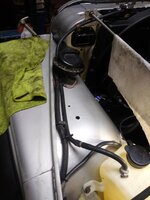
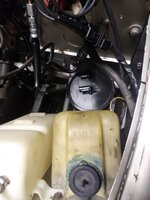
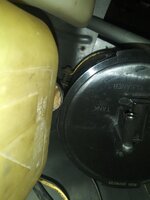
The canister is taller then the OEM canister, but it fits in the OEM bracket and just clears the electric pump on the bottom of the windshield squirter reservoir. IIRC I installed the canister, tightened the clamp, then gently pushed the assembly back toward the fire wall. I then reinstalled the squirter reservoir.

20221018_180548.jpg

20221018_180557.jpg

While I was doing "plumbing work", my finger is pointing at the OEM chassis mounted fuel return line. Andy installed a new Holley fuel tank and fuel pump module, which has the pressure regulator/return line inside the tank. So, I won't have to use this line, and will need to plug off the return port on the Sniper throttle body.

20221018_180606.jpg

Vapor canister hooked up, put a little rubber plug on the return line to keep it clean. You never know, might be needed in the future.

20221018_184447.jpg

Hooked up the canister purge line to the "ported vacuum" port on the Sniper:

20221018_184452.jpg

Installed and routed the PCV valve/hose, and the vacuum advance hose:

20221018_184501.jpg

I am going to hook up the distributor vacuum advance to "manifold vacuum", the 258's seem to respond best hooked up like this IMO.

Some simple stuff, but chipping away.
 
Andy purchased a new MSD Po Billet distributor for his Jeep, so that is what I am going to install. I am going to use the distributor to control the timing. This distributor is very user tuner friendly. I am going to match the new distributor advance curve to a OEM 1982 non-computer controlled timing curve.

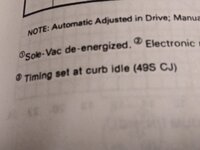
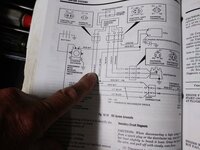
From the '82 FSM, I am using information for 49 state CJ's (NO feedback system):

20221018_201949.jpg

Make sure you read the fine print!!!

20221018_201958.jpg

So, set the initial timing to 8 degrees +/- 1 degree at idle speed.

On the OEM distributor, the mechanical advance comes on fast, and only gives you around 12 degrees additional advance at 2000 RPM:

20221018_202010.jpg


The vacuum advance really ups the total advance, close to 26 degrees at 18" vacuum:

20221018_202025.jpg

On both of these advance charts, kind of confusing. I believe they are taking into consideration your "initial" timing adjustment of 8 degrees. If you start the engine, set the timing to 8, disconnect and plug the vacuum advance, and increase the RPM to the specified RPM markers, you should get the mechanical advance readings IF the mechanical advance is functioning properly. I have done this in the past and hit all the markers, if a bit closer to the high end of the allowable graph space. The FSM also mentions that "total" advance (initial+mechanical+vacuum) will be anywhere from 32 to 39 degrees. This makes sense if you look at the two charts. Add the 12 degree maximum mechanical advance with the 26 degree total vacuum advance (measured with the engine off idle slightly, but not enough to get the mechanical advance into play) you get 38 degrees total advance.

Compared to how the MSD distributor is set up from the factory, the biggest difference is how fast the 258 mechanical advance comes on fast and hits it's 12 degree maximum at 1800 RPM:
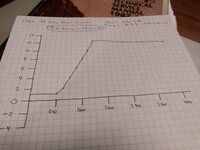
20221018_204526.jpg

If you add the 8 degree initial advance to the totals below, you will be anywhere from 38 to 45 degrees total advance.

20221018_204535.jpg

The MSD has way more mechanical advance, but it does not come on until around 3-4000 RPM. So, with the MSD I can get way more mechanical advance, but only 12 degrees of added vacuum advance.

20221018_212255.jpg

With the 21 degree stop bushing, and 12 degrees added vacuum advance, and initial 8 degree timing, I will have a total of 41 degrees timing advance. A hair above what I need, maybe. But, I can install the 19 degree (purple) stop bushing to limit the total mechanical advance:

20221018_212738.jpg

20221018_212721.jpg


I forgot to take a picture, but I will also change out the installed stiff advance screws to a lighter set. This will get the mechanical advance to be all in at a lower RPM range, better matching the stock 258 advance curve.

I am still thinking, but pretty sure I will swap out the 21 degree advance stop for a 19 degree stop, and install lighter springs (that are included). The instructions show 24 potential curves (different advance stop bushing and spring combination on 6 charts). Pretty sure I will go with the "E" chart, purple stop bushing to start. If no pinging, I can always go a bit lighter on the springs, and/or reinstall the smaller stop bushing.

This is a very nice/customizable distributor, way more then what I am used to. So, I will take advantage of its tuning capabilities. In the future, the vacuum advance AND the mechanical advance can be locked out completely, and the Sniper can control the timing, if desired.

 
Nothing too exciting last night, just wanted to check on some things.

Andy bought/installed a new fuel tank and fuel pump module from Holley. I dropped the tank just to check on a few things.

Looks stockish. Only one fuel line, 4 pin electrical connector:

20221019_181545.jpg

Lock ring installed correctly:

20221019_181602.jpg

High pressure fuel line/clamps installed (6.9 bar is around 100psi):

20221019_181623.jpg

Easier to check and see with an empty tank. Reinstalled the tank, finalized in my mind how I am going to route the fuel pump module wiring harness.

That's it for now :thumbsup:
 
Back
Top